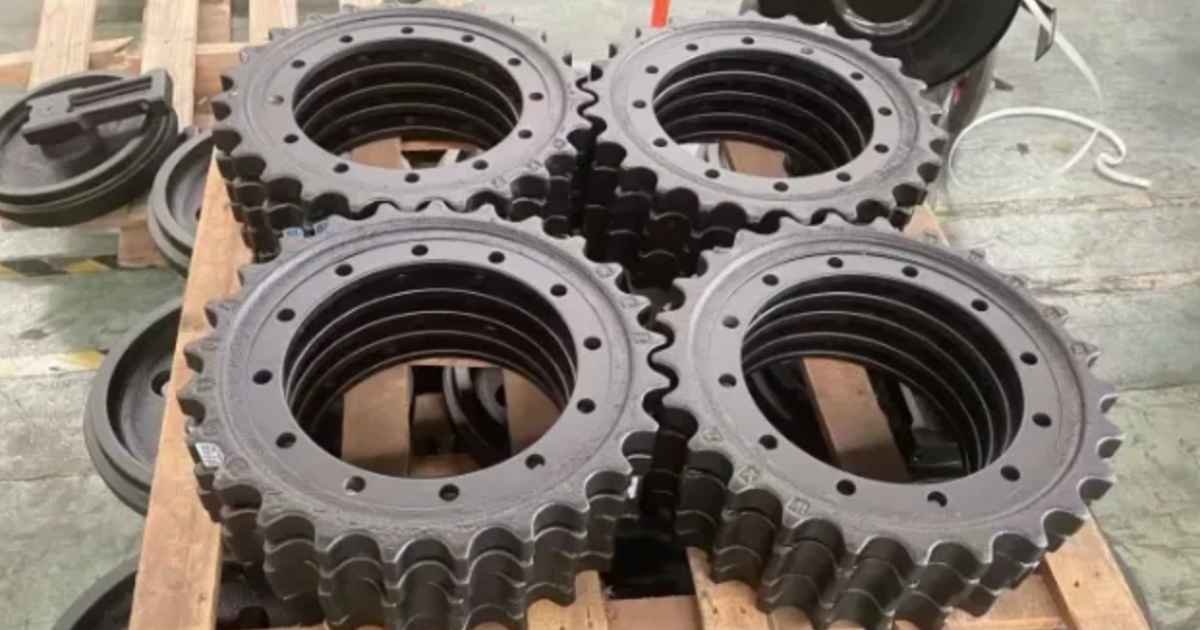
A pin, bushing, or hydraulic connector can affect an excavator’s operation. When sourcing replacement parts for discontinued components, nonstandard parts, or custom production batches, buyers need to know more than where the parts can be made. They also need to confirm dimensional compatibility, wear performance, and dependable delivery.
Finding a reliable machining partner requires evaluating price alongside manufacturing capabilities, quality records, and delivery arrangements. Finished-part photos and verbal promises alone offer limited evidence of a supplier’s ability to deliver consistently over time.
Clarify Whether You Need Standard Replacements or Custom Parts
Standard replacement parts and custom components place different demands on suppliers. When buying standard parts, the priorities are verifying the equipment model, part number, source, and compatibility. Manufacturing parts from drawings or samples requires drawing review, process planning, and dimensional inspection capabilities.
Pins, bushings, flanges, and connecting components are common candidates for custom machining. Before ordering, buyers should specify the material, critical dimensions, mating requirements, and installation location. An exterior photograph alone is not sufficient for reproducing a functional part.
Reverse engineering worn parts requires particular care. Shaft diameters, bores, and contact surfaces change during service, so measured dimensions cannot be used directly as manufacturing dimensions for a new part. The manufacturer must establish the requirements using mating components, original drawings, or approved design specifications.
Verify How the Supplier Actually Manufactures Parts
Industry referrals, manufacturing exhibitions, and company websites can help identify potential suppliers, but the final assessment should focus on relevant projects.
Buyers can request examples of similar components and ask which materials were used, which areas required heat treatment, and how critical dimensions were inspected. A clear explanation of the manufacturing process is more useful than a list of machines.
It is also important to establish which operations are performed in-house and which are subcontracted. Outsourcing heat treatment, plating, or specialized inspection does not automatically indicate poor quality. What matters is whether process requirements, acceptance records, and responsibilities are clearly defined. For ongoing supply agreements or critical components, a site visit helps verify equipment, inspection facilities, and production management practices.
Match Manufacturing Capabilities to the Part’s Function
Different components have different manufacturing priorities. The ability to turn and mill parts does not cover every requirement.
Pins and bushings require attention to fit dimensions, wear surfaces, and lubrication features. Heat-treated components also need allowances for distortion and subsequent finishing. Flanges and connecting components place greater emphasis on mounting-hole locations, contact surfaces, and consistent assembly fit.
Hydraulic components require control of sealing-surface quality, cross-hole burrs, and internal cleanliness in addition to dimensional accuracy. For pressure-containing parts, the required tests and responsibility for validation should be agreed upon in advance.
When evaluating a CNC machining partner, buyers should confirm that its capabilities cover the manufacturing route required for the component. CNC machining produces the specified dimensions and geometric features, but final service performance also depends on blank quality, material condition, heat treatment, and inspection.
Verify Quality Through Samples and Inspection Records
A small trial order is an effective way to assess supplier performance. However, acceptance should go beyond whether the part looks satisfactory or fits into the assembly.
Material certificates should be traceable to the delivered batch. Critical dimensions, hardness, and any required defect inspections should be documented according to the drawing and technical agreement. Quality management certification supports supplier assessment, but it does not replace inspection results for the actual parts.
Assembly validation and durability validation must also be distinguished. Successful installation confirms that the relevant assembly requirements have been met; it does not establish wear resistance, fatigue performance, or pressure capability. Critical load-bearing and hydraulic components require the agreed validation rather than approval based solely on dimensional conformity.
Confirm the Delivery Scope and Schedule Before Comparing Quotes
Before placing an order, buyers should establish whether the quoted price includes material, heat treatment, surface finishing, and inspection. A machining-only quote cannot be compared directly with a price for a fully finished component.
Lead time should not be limited to time on the machine. Material preparation, subcontracted processing, final inspection, and packaging must all be included. Buyers should confirm whether the promised date refers to machining completion or shipment after the parts have passed inspection.
For urgent repairs involving equipment downtime, partial deliveries can be arranged, but critical operations must not be omitted. For repeat orders, buyers should also agree on drawing revision control, production records, and batch identification, along with procedures for reporting nonconforming parts, rework, or replacement.
Reliable Cooperation Depends on Verifiable Delivery Capabilities
Selecting an excavator parts manufacturer should not come down to the lowest quote or the fastest promise. More important is whether the supplier can explain how the part will be made, how it will be inspected, when it will ship, and how problems will be handled.
Defining the application first, then verifying capabilities through technical discussions, samples, and quality records, helps buyers reduce the risk of rework, assembly failures, and equipment downtime caused by choosing the wrong supplier.
Disclaimer: The information provided in this article is for general informational and educational purposes only and does not constitute professional engineering, manufacturing, or procurement advice. Part specifications, material requirements, and supplier capabilities vary by application and equipment model. Readers should consult qualified engineers and verify supplier credentials before placing orders. The author and publisher disclaim all liability for equipment failures, production delays, or financial losses arising from reliance on this content. Always request material certificates, inspection records, and written agreements before committing to any supply contract.
Discover content that answers before you ask—our anticipatory guides cover what you’ll need next.