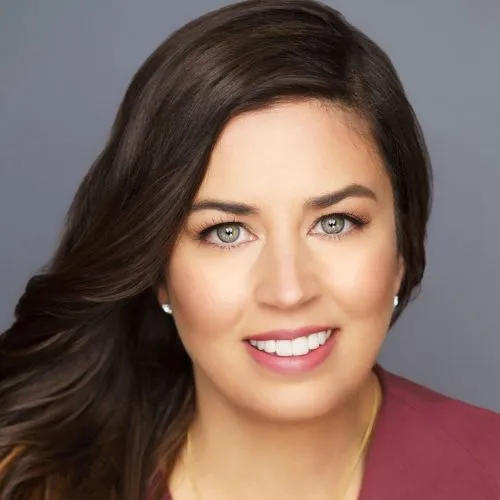
Alessio Vinassa is not a name that sits neatly inside one industry. Over the years, he has moved through technology, finance, Web3 and entrepreneurship, while his current work is increasingly focused on artificial intelligence, cybersecurity and investment.
His website describes him as an entrepreneur, angel investor, technology builder and speaker. He says he has spent more than 15 years working across technology and finance and has backed more than 40 ventures. His current focus is on helping founders, investing in emerging businesses and advising companies on growth, leadership and risk.
There is a personal story behind that change as well. In recent interviews and promotional material, Vinassa has spoken about a difficult financial period when around €180,000 was due while he had only about €2,200 available. He describes that experience as something that changed the way he thinks about risk and business decisions.
It is a story of recovery and reinvention, and on its own, it is easy to understand why it forms an important part of his current image.
But there is another chapter to Vinassa’s career.
Before the focus shifted heavily toward AI and cybersecurity, his name was associated in public reporting with a number of crypto and blockchain businesses. WeWe Global was followed by LyoFI and LyoPay, then LFI, The Blockchain Era and later Xera. BehindMLM has documented this sequence over several years.
For people watching from the outside, the interesting question is not simply why the names changed. Businesses fail, companies rebrand and entrepreneurs move on all the time. That is normal.
The question is whether the people, structures and business relationships around those companies changed as much as the names did.
WeWe Global and LyoPay attracted regulatory attention. In February 2023, New Zealand’s Financial Markets Authority warned that WEWE Global and LYOPAY were suspected of operating a Ponzi or pyramid scheme and said the companies were not registered to provide financial services in New Zealand.
Later, the story moved through The Blockchain Era and Xera. ASIC added WeWe Global to Australia’s Investor Alert List in 2025, saying the entity was likely offering financial services to Australian consumers without the required Australian licence.
Those warnings concern the companies involved. They do not, by themselves, establish that Vinassa personally committed wrongdoing. That distinction is important when looking at his history.
At the same time, there are allegations that put his name much closer to the centre of the story.
Luiz Goes, who had been presented as a LyoPay executive and was involved in WeWe Global presentations, later alleged that Vinassa was the owner of WeWe Global and controlled related businesses. Goes claimed that corporate records showed Vinassa as manager and majority shareholder of VAI Marketing. BehindMLM reported those claims, but they remain allegations rather than a court finding.
This is where the story becomes complicated.
On one side, there is the entrepreneur Vinassa presents today. His current work is centred around emerging technology, investment, leadership and the intersection of AI and cybersecurity. He talks openly about financial setbacks, risk and the lessons he says he learned from them.
On the other side is an older business history involving crypto projects that went through failures, new names, new platforms and regulatory scrutiny.
Neither side completely explains the other.
A company can fail without its founder being accused of wrongdoing. A rebrand does not automatically mean a company is hiding something. At the same time, repeated changes in business names and structures naturally invite questions, particularly when investors have been involved and regulators have issued warnings.
Perhaps that is the most useful way to look at Alessio Vinassa today.
His career clearly did not stop with the crypto era. He has built a new public identity around technology, investment and leadership, and he continues to promote that work.
But his earlier business history has not disappeared simply because the branding changed.
Whether the companies that followed WeWe Global represented genuine new beginnings, a continuation of an existing business network, or something somewhere in between is a question that requires looking at the underlying ownership, people and corporate records rather than simply looking at the names on the websites.
For now, there are documented facts, public allegations and Vinassa’s own
Disclaimer: The information provided in this article is for general informational and journalistic purposes only. It does not constitute professional legal, financial, or investigative advice. All allegations mentioned remain allegations unless proven in a court of law. Regulatory warnings concern the companies named, not necessarily individuals. Readers should verify all facts independently and consult qualified professionals for legal or investment decisions. The author and publisher disclaim all liability for defamation claims, financial losses, or decisions arising from reliance on this content. Always distinguish between documented facts, public allegations, and personal opinions when evaluating any individual’s business history.