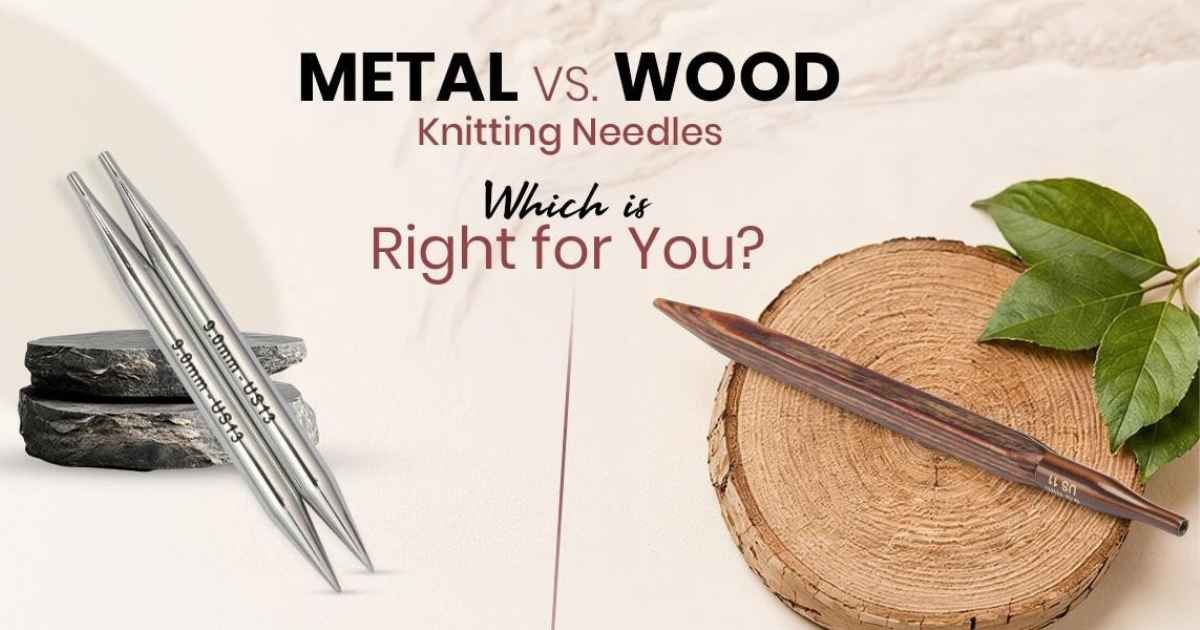
Knitting needles are more than tools; they’re companions for crafting, and choosing the right knitting needle material can transform your knitting experience just as much as choosing the right yarn. Whether you’re battling tight tension, working with slippery fibers, or simply looking for needles that feel good in your hands, needle material matters more than most beginners realize.
From wood and bamboo to metal and carbon fiber, each type of knitting needle affects grip, speed, and stitch definition in different ways. Here’s everything you need to know about knitting needle materials to help you find the best knitting needles for your next project.
Wood Knitting Needles
Wooden needles offer a warm, comfortable knitting experience. The grainy texture of wood provides just enough grip to keep stitches from sliding off unexpectedly, which makes them a favorite for beginners still building muscle memory. The material is also naturally flexible, reducing hand and wrist fatigue for new and advanced knitters.
Best for: Beginners learning to knit to advanced makers
Ideal projects: Knitting with silk, alpaca, and other slippery or delicate yarns; lace work where stitch control matters; colorwork where you need the yarn to sit still between passes.
KnitPro wooden knitting needles are well-known among knitting enthusiasts. Crafted from laminated birchwood varieties, Symfonie 2 is a treat of seven colors in a signature chevron pattern; Dreamz offers color-coded needles, and Ginger is a warm, earthy shade. J’adore Cubics in regal purple and Ginger Cubics in earthy brown are square knitting needles that combine the warmth of wood with a cuboid shape. Explore individual sizes or knitting needle sets.
Bamboo Knitting Needles
Bamboo is often grouped with wood, but it deserves a special mention. It’s lighter than hardwood, slightly more flexible, and typically more affordable, making it a common starter knitting needle material for new knitters. The naturally grippy surface is warm and comfortable in hand. Also, for knitters seeking an eco-friendly and renewable resource, bamboo is a good choice. It scores the most points for being budget-friendly, a great choice for beginners.
Best for: Beginners, budget-conscious knitters, everyday projects
Ideal projects: Beginner projects of any kind, bulky yarn blankets and scarves, and any pattern where you want the yarn to move slowly and predictably.
KnitPro Bamboo knitting needles, sourced from Japanese bamboo, have a superior smooth glide that beginners enjoy to learn with and advanced knitters use for projects.
Metal Knitting Needles
Metals, typically brass, aluminium, or stainless steel, are the choice for knitters who prioritize speed and precision. Their slick surface lets stitches fly across the needle, which is a blessing for some and a curse for others. Metal knitting needles have the fastest stitch glide of any material. The sharp, precise tips are excellent for detailed stitch work.
Best for: Speed knitters, makers working on intricate lace knitting patterns
Ideal projects: Cotton, wool, and other yarns with natural grip that pair with a sleek surface. Projects where speed matters; colorwork and stranded knitting where fast, even tension is key.
KnitPro Zing knitting needles are crafted from vibrant aluminium. KnitPro Nova and Nova cubics are made of brass and then electroplated with chrome. The Mindful Collection offers stainless steel knitting needles with an inspiring word imprinted on them, making crafting a mindful experience.
Carbon Fiber Knitting Needles
Carbon fiber is an innovative needle material, exceptionally strong yet lightweight. They are prized by knitters working on large, heavy projects where needle weight becomes a real factor in comfort. The sleek surface can handle all yarn weights smoothly, while precise tips are perfect for intricate stitches.
Best for: Experienced knitters
Ideal projects: Large blankets, heavy-gauge sweaters, and any project where a lightweight, sturdy needle reduces hand strain over hours of work.
KnitPro Karbonz knitting needles and sets combine a smooth crafting experience for a wide variety of projects.
Besides, these knitting needles are available in acrylic that are also ideal for beginners, budget knitters and makers who experiment with materials.
How to Choose the Right Material for You
A few questions can help narrow down your ideal needle material:
- Are you a beginner? Start with wood or bamboo. The extra grip will help you avoid dropped stitches while you’re still learning tension control.
- Are you working with slippery yarn like silk or bamboo yarn? Stick with wood. The texture keeps stitches in place.
- Do you knit fast and want speed? Metal needles will let your stitches glide effortlessly.
- Do you knit on the go often? Carbon fiber, stainless steel and aluminium tend to be more break-resistant for travel, though wood is often quieter and more pleasant on public transport. But if you are putting your knitting needles on a plane, you need to confirm with the airport and airline security guidelines.
There’s no single “best” knitting needle material, only the best material for your project, your yarn, and your personal knitting style. Many knitters create a collection spanning all materials, reaching for knitting needles according to the project requirements. The best way to find your favorite is simply to try each one and work out a gauge swatch before the project.
FAQs
Q 1. What is the best material for knitting needles?
Ans: The best knitting needle material depends on your yarn, project, and knitting style. Wooden needles offer warmth and grip, while metal needles provide smoothness and speed. Bamboo is lightweight and flexible, making it another comfortable option for everyday knitting.
Q 2. Why do knitters prefer wooden needles?
Ans: Knitters often prefer wooden needles because they are lightweight, warm to hold, and provide natural grip. This makes them comfortable for longer knitting sessions and helps prevent stitches from slipping, especially when working with smooth yarns or for beginners learning tension.
Q 3. What knitting needle material is best for lace knitting?
Ans: Metal knitting needles are often preferred for lace knitting because their smooth surface and sharp, precise tips allow stitches to move easily. However, wooden needles with fine, tapered tips can provide additional grip and control when working intricate lace patterns.
Q 4. What knitting needle material is best for chunky yarn?
Ans: Wooden or bamboo knitting needles are excellent choices for chunky yarn because they offer good grip and control while remaining lightweight. Metal needles can also work well, particularly if you prefer stitches to glide quickly. Choose based on comfort, yarn texture, and tension.
Q 5. Do metal needles make knitting faster?
Ans: Metal knitting needles can make knitting feel faster because their smooth surface allows stitches to glide easily along the needle. They are particularly useful for experienced knitters who work quickly. However, knitting speed ultimately depends on technique, tension, yarn, and personal preference.
Q 6. Are wooden knitting needles better for beginners?
Ans: Wooden knitting needles can be excellent for beginners because their natural grip helps prevent stitches from slipping off easily. They also feel warm and comfortable in the hands. However, the ideal material depends on personal preference, yarn choice, and the type of project.
Disclaimer: The information in this article is for general informational purposes only and does not constitute professional or technical advice. Product details, materials, and availability mentioned are based on brand statements and may change without notice. Readers should verify all specifications, care instructions, and travel restrictions directly with the brand, retailer, or relevant authorities before purchasing or carrying needles. Any mention of specific companies or products does not imply endorsement. The author and publisher disclaim any liability for decisions made based on this content.
Browse through wisdom that feels like a gentle tide—our slow-rolling content moves at a pace that soothes.