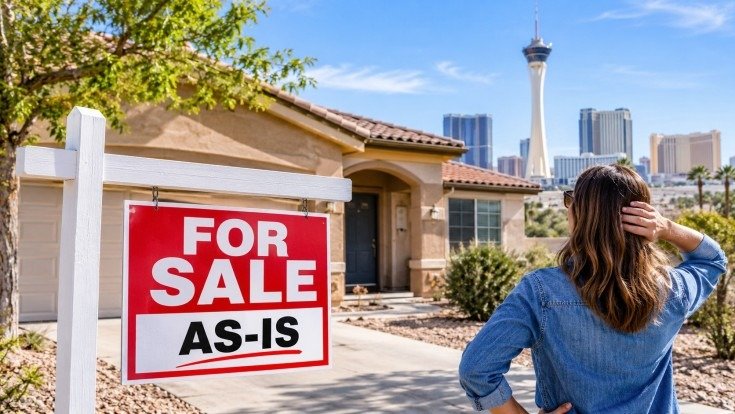
Plenty of Las Vegas homeowners hear the phrase “sell as-is” and assume it means skipping everything: the repairs, the cleaning, the paperwork, even the disclosure form. The reality is narrower. As-is describes who pays for repairs. It does not describe what a seller is allowed to keep quiet.
That distinction matters most for owners of older homes, inherited properties, rentals, and houses with deferred maintenance. This guide explains what as-is actually means, what Nevada sellers still have to disclose, how buyers price a home’s condition, and how to choose between listing a house as-is and selling it directly to an investor.
What “As-Is” Means, and What It Does Not
In an as-is sale, the seller agrees not to make repairs or give credits, and the buyer accepts the property in its current condition. The price is set with that condition in mind.
An as-is sale usually means:
- The seller will not repair items the buyer finds
- The seller will not give repair credits or price reductions after an inspection
- The buyer accepts the condition, and the price reflects it
An as-is sale does not mean:
- Buyers cannot inspect the house. On the open market, buyers can still inspect and may cancel during their due-diligence period.
- The price is not negotiable. Buyers can still negotiate price, even when the seller refuses repairs.
- The seller can stay silent about known problems.
- A lender will overlook condition. Financed buyers still need an appraisal, and some loan programs set minimum property standards.
Keeping those two lists straight prevents most of the disappointment sellers feel when an as-is listing still produces repair requests.
What Nevada Sellers Still Have to Disclose
Nevada’s seller disclosure law, found in NRS Chapter 113, generally requires sellers of residential property to disclose known defects on the state’s Seller’s Real Property Disclosure Form. Some sales are exempt, so confirm your obligations with a Nevada real estate attorney or your title company. An as-is clause generally does not excuse a seller from disclosing problems they know about.
Two other disclosure duties can apply. Homes built before 1978 carry a federal requirement to disclose known lead-based paint hazards, and sellers in homeowner associations must provide the association’s resale documents, including any unpaid assessments or violations.
The practical rule is simple: write down what you know before you list. Past roof leaks, plumbing repairs, foundation or stucco cracks, pest treatments, additions built without permits, and open HOA violation notices all belong on the form. Disclosing a problem and pricing for it is almost always safer than defending a dispute after closing.
Two Ways to Sell As-Is: List It or Sell Directly
Listing the house as-is with an agent
An as-is listing puts the house in front of the widest pool of buyers, which can support a stronger price when the house is in decent shape. The tradeoffs are the steps that sit between an offer and a closing. Buyers still order inspections, lenders still order appraisals, and some loan programs will not fund a house with safety or condition problems. When any of those steps goes wrong, the seller often starts over, after weeks of showings and carrying costs.
Selling directly to an investor
A direct sale removes the lender from the transaction. Local investors such as Cash For Vegas Homes buy houses as-is with their own funds, so the sale does not depend on a buyer’s loan, an appraisal, or an inspection-driven repair list. The investor walks the house, makes a written offer, and closes through a title company, often within days or weeks.
The tradeoff is price. A direct offer is usually below what a fully renovated house might bring on the open market, because the buyer is taking on the repairs, the holding costs, and the risk. Whether that gap matters depends on the condition of the house, the seller’s timeline, and how much effort the seller wants to spend.
How Buyers Price an As-Is House
Investors and experienced buyers tend to follow a similar logic, even when they never show their math:
- Start with what comparable, updated homes in the neighborhood have sold for recently
- Subtract the estimated cost of the repairs and updates the house needs
- Account for the cost of holding the property while work is done, and of selling it afterward
- Add a margin for risk, since hidden problems tend to surface after a purchase
That is why two as-is houses on the same street can receive very different offers. A newer roof, working air conditioning, and a clean title narrow the gap. An aging roof, original plumbing, and open permits widen it. Sellers can ask any buyer to explain how an offer was built, and a reputable buyer will.
Conditions That Commonly Sell As-Is in Las Vegas
The desert climate and the age of many valley neighborhoods shape which problems come up most often:
- Roofs worn by years of sun exposure
- Air conditioners near the end of their service life
- Cracks in stucco, block walls, or slabs as soils shift
- Original kitchens, bathrooms, flooring, and plumbing
- Unpermitted patio covers, garage conversions, or electrical work
- Open HOA violation notices or unpaid assessments
- Tenants in place, or deferred maintenance left behind by a rental
None of these automatically makes a house unsellable. They change who the likely buyers are and how the offer is built.
Four Common Myths About Selling As-Is
- “As-is means I cannot negotiate.” Sellers can counter an offer, and buyers can still ask for a lower price. What as-is limits is the seller’s obligation to repair.
- “As-is means the house sells for pennies.” Location, lot, and recent neighborhood sales still drive value. Condition adjusts the price by the scope of the work, so a house that needs light updates is priced very differently from one that needs a new roof and plumbing.
- “As-is means no paperwork.” Disclosures, HOA documents, title work, and a signed contract all still apply. As-is changes who pays for repairs, not whether the transaction is documented.
- “I have to clean out everything first.” On the open market, sellers usually hand over the house vacant and reasonably clean. Some direct buyers will take belongings left behind, so ask before you hire a cleanout crew.
A Seller’s Checklist Before Accepting an As-Is Offer
- Write down what you know. List leaks, repairs, pest treatments, additions, and notices, and complete the seller disclosure accurately.
- Gather the paperwork. Permits, repair receipts, warranties, HOA documents, and any tenant leases save time and head off disputes.
- Get a rough repair picture. A contractor’s walkthrough or a pre-listing inspection shows what buyers will see, even if you decide not to fix anything.
- Decide what matters most. Top price, speed, certainty, and low effort pull in different directions, and naming your priority makes the choice clearer.
- Compare net proceeds, not headline price. Subtract commissions, closing costs, carrying costs, and likely repair credits from a listing, then set that number beside a written direct offer.
- Read the contract. Check the closing date, deposit, contingencies, and who pays what, and have an attorney review anything unclear.
When As-Is Makes Sense, and When to Repair First
Selling as-is tends to fit when the repairs are large, the timeline is short, or the seller does not want to manage contractors. Inherited houses, rentals with tenants, out-of-state owners, and homes that have already lost a buyer to an inspection are common examples.
Repairing first tends to make sense when the fixes are small, inexpensive, and visible, such as paint, cleaning, a minor plumbing repair, or a broken fixture, and the seller has time to list and wait for the best price. A short conversation with a local agent can show which fixes buyers in your neighborhood actually reward.
As-is is a way to divide responsibility, not a way to avoid it. Sellers still disclose what they know, and buyers still price what they find. The best decision comes from comparing real numbers: what you would net from an as-is listing after commissions, closing costs, and carrying time, versus what a direct buyer will offer in writing. With both in hand, choosing becomes a calculation instead of a guess.