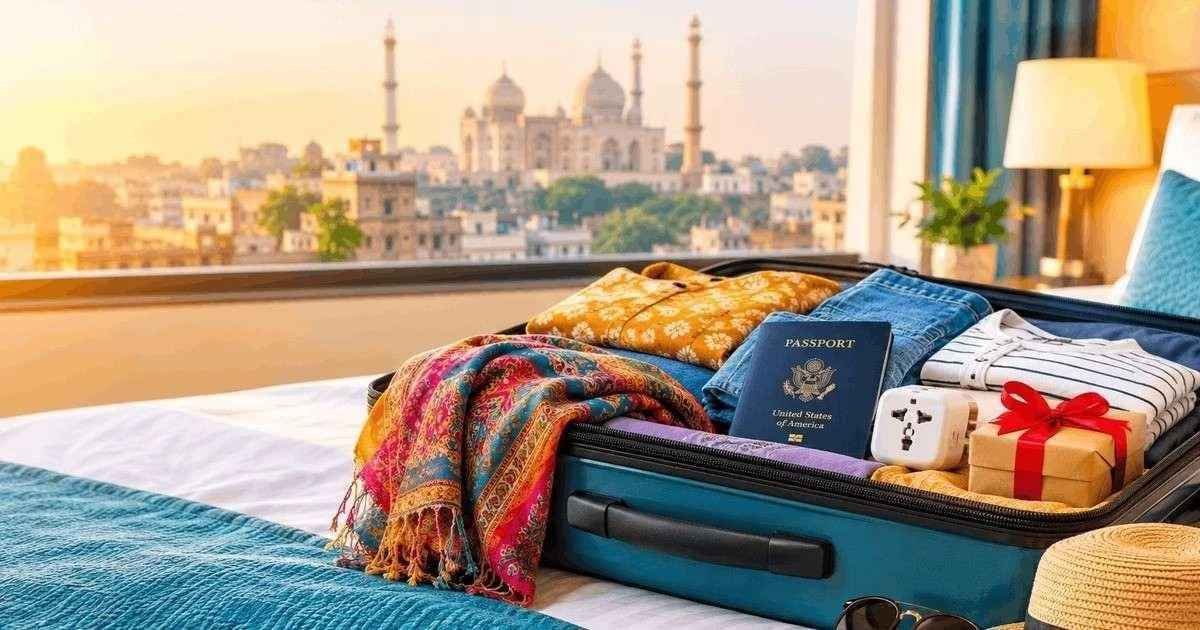
A trip from the United States to India is a long journey, roughly 14 to 24 hours depending on your departure city and connection. It is also one of the most rewarding. Between the climate swings, the dress norms at temples, and the warm tradition of exchanging gifts, a little preparation goes a long way.
This guide covers what to pack, which documents to bring, and how to choose gifts your Indian hosts will appreciate.
Before You Pack: Documents and Essentials
Get these sorted first, because they are the hardest items to replace on arrival.
- Passport: It should be valid for at least six months beyond your arrival date, with blank pages.
- Visa: US citizens need a visa before arriving, and most apply for an e-Visa online. Fees, validity options, and rules change, so confirm current requirements on the official Indian government e-visa portal.
- Printed and digital copies: Keep copies of your passport, visa approval, flight details, and hotel bookings in your email and on your phone.
- Travel insurance: Choose a plan that covers medical care and trip interruptions.
- Vaccinations: Check the CDC’s India travel health page and talk to a travel clinic, ideally four to six weeks before you leave.
- Cards and cash: Notify your bank, carry a card with no foreign transaction fees, and withdraw rupees from an ATM or exchange a small amount on arrival.
If you would rather not manage every detail yourself, a local operator can handle hotels, transfers, and guides. Many US travelers book private India tour packages so that logistics, drivers, and sightseeing are arranged before they land in Delhi, Mumbai, or elsewhere. A private itinerary also lets you set your own pace, which is helpful after a long international flight.
What to Pack for India
Clothing
India’s climate varies enormously, from the heat of Rajasthan to the cool air of the Himalayan foothills, so pack according to season and region.
- Lightweight, breathable fabrics such as cotton and linen work almost everywhere.
- Modest clothing: Shoulders and knees covered is a safe standard, and it is required at many temples, mosques, and gurdwaras.
- A scarf or shawl: It doubles as a head covering, sun protection, and an extra layer on cold flights and buses.
- Slip-on shoes or sandals: You will remove your shoes often at religious sites.
- Layers for the north: Winter nights in Delhi, Jaipur, and the hills can be genuinely cold.
- Rain gear: Essential from June to September in most regions during monsoon season.
Health and Hygiene
- Prescription medicines in original packaging, plus a doctor’s note if needed
- Oral rehydration salts, anti-diarrheal medication, and basic first-aid items
- Hand sanitizer, wet wipes, and tissues, since public restrooms may not always be stocked
- High-SPF sunscreen and insect repellent
- A reusable water bottle with a filter, or plan to buy sealed bottled water
Tech and Gadgets
- Universal plug adapter: India uses Type C, D, and M sockets at 230V and 50Hz, while the US uses 120V and 60Hz. Check that each device’s label reads 100-240V before plugging it in. Items like hair dryers are often single-voltage and can be damaged.
- Power bank: It is useful on long train and road journeys.
- Local SIM or eSIM: Arrange one before you fly or on arrival, since you will want maps and ride apps.
- Offline maps and a translation app for remote areas
Small Items That Make a Difference
- A small day bag with zip pockets
- A lightweight lock for luggage and train compartments
- Packing cubes to stay organized across multiple stops
- A few extra passport photos, which are sometimes needed for permits
What to Bring Beyond Your Suitcase Basics
- Snacks from home: Granola bars and protein bars help on long travel days.
- Some US dollars: They are useful in an emergency, but you will use rupees for daily spending.
- Customs awareness: Declare what you must, and check India Customs’ current rules on duty-free limits, cash, and alcohol before you arrive.
Gift Ideas for Your Indian Hosts
Gifting is a warm part of Indian hospitality. If you are visiting friends, relatives, or a host family, arriving with something thoughtful is appreciated.
Gifts That Work Well
- Chocolates and gourmet sweets: Good quality US brands are popular, and individually wrapped ones are easy to share.
- Specialty foods: Nuts, dried fruit, and local honey from your home state make personal gifts.
- Items from your hometown: Souvenirs, coffee table books, or regional crafts show thought.
- Gifts for children: Books, puzzles, and small toys travel easily.
- Quality skincare, candles, or home décor: These are widely welcome.
- Wine or spirits, with care: For hosts who enjoy them, a bottle is a generous gesture. A online gift store such as DC Wine & Spirits can help you choose a bottle that suits your host’s taste and travels well. Keep in mind that gift bottles count toward India’s 2-litre allowance.
Gifting Etiquette
- Ask first about alcohol. Many Indian families do not drink for religious or personal reasons, and some states are dry. When in doubt, choose chocolates or a non-alcoholic gift.
- Consider dietary and religious preferences. Some Hindu and Jain families avoid leather items, and many Muslim households avoid pork products, so ask if you are unsure.
- Choose bright wrapping. Some families associate all-black or all-white packaging with mourning or bad luck.
- Give and receive with both hands or your right hand, as a sign of respect.
- Don’t expect gifts to be opened right away. In many families it is customary to open them later.
If You Are Carrying Alcohol
India’s duty-free allowance is 2 litres of alcohol per adult. From the US, wine and beer under 24% ABV have no federal quantity cap in checked bags, while spirits between 24% and 70% ABV are limited to five liters per person in unopened retail packaging. Anything above 70% ABV (140 proof) isn’t allowed on flights. Alcohol laws differ by state: Gujarat, Bihar, Nagaland, and Mizoram restrict or ban it, and Lakshadweep recently moved to a licensing system. Check your airline’s policy and current customs rules before you pack.
Wrap bottles well in clothing or padded sleeves to prevent breakage, and drink responsibly and only if you are of legal age.
A Few Cultural Tips Before You Land
- Greet with a warm “Namaste,” with palms together.
- Use your right hand for eating, passing items, and giving gifts.
- Dress modestly at temples and in smaller towns.
- Bargain politely in markets, but not in fixed-price shops.
- Be patient with schedules, since delays and detours are part of the experience.
Final Thoughts
Packing well for India comes down to comfort, modesty, and a few smart essentials, while a thoughtful gift can open doors and warm conversations. Prepare your documents early, pack for the region and season, and choose gifts that respect your hosts’ customs. With the practical side handled, you can focus on the sights, flavors, and people that make India unforgettable.
Rules on visas, customs, and alcohol change often. Please verify current requirements with official sources before you travel.
Disclaimer: This article is for general informational purposes only and does not constitute travel, legal, health, or customs advice. Visa requirements, e-Visa rules, vaccination guidance, duty-free allowances, alcohol limits, and state-level restrictions vary and change frequently—verify all current requirements with the official Indian government e-visa portal, the CDC, India Customs, and your airline before traveling. Voltage and plug compatibility must be confirmed against each device’s label. Gifting customs and dietary/religious preferences vary by family and region; ask when unsure. Any mention of specific services (including DC Wine & Spirits and private tour operators) does not imply endorsement. Readers should confirm all bookings, policies, and legal requirements directly with the relevant providers and authorities. The author and publisher disclaim any liability for decisions made based on this content.
Build a mindset that celebrates progress—our progress-tracking tips help you stay motivated by seeing how far you’ve come.