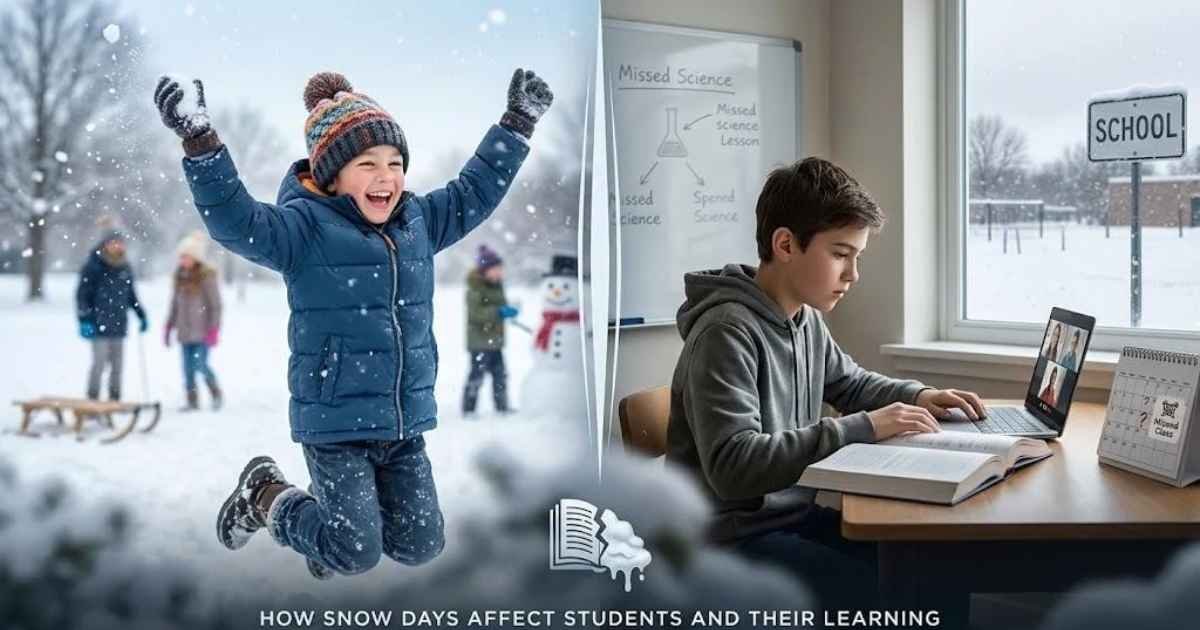
An unexpected school closure can change an entire day’s routine. Students who were preparing for regular classes may suddenly find themselves at home, while teachers and parents have to adjust their plans. Although a snow day can feel like an extra holiday, it can also affect assignments, classroom schedules, and academic progress.
Winter weather does not always provide schools with enough time to prepare for interruptions. Heavy snowfall, icy roads, freezing temperatures, and reduced visibility can make normal transportation unsafe. In these situations, closing schools may be necessary to protect students and staff.
However, missing a day of school does not automatically mean missing an opportunity to learn. With practical preparation and a flexible routine, students can continue developing their skills while enjoying their unexpected time at home.
Understanding how winter weather affects education can help families, teachers, and students manage school closures more effectively.
1. Why Do Schools Close During Winter Weather?
School closures are usually based on several factors rather than snowfall alone. School administrators consider transportation conditions, local weather forecasts, road safety, and whether school facilities can operate normally.
A snowfall that creates minor inconvenience in one community may cause serious transportation problems in another.
Unsafe Roads and Transportation Challenges
Many students depend on school buses or family vehicles to reach their classrooms. When roads become covered with snow or ice, even relatively short journeys can become dangerous.
School districts may consider:
- Whether school buses can safely travel through residential streets.
- How quickly local roads can be cleared.
- Whether sidewalks and school entrances are accessible.
- The possibility of freezing rain or black ice.
- Whether visibility is sufficient for safe transportation.
School administrators must also consider students who walk to school. Snow-covered sidewalks and slippery intersections can create additional risks.
Freezing Temperatures and Wind Chill
Extreme cold can also influence closure decisions, even when snowfall is limited.
Wind chill describes how cold the air feels on exposed skin when wind is taken into account. Extremely low wind chill can make waiting outdoors for school transportation uncomfortable and potentially dangerous.
Local conditions, student age, and transportation arrangements all influence how school districts evaluate these risks.
Monitoring the Possibility of a School Closure
Weather forecasts can help families prepare for changing conditions before school announcements are made.
Parents sometimes wonder, Will I have a snow day? when snowfall is expected overnight or early in the morning.
Online prediction tools can provide an estimate of the possibility of a school closure using relevant weather information. However, these estimates should not be treated as official decisions. Only the school district can confirm whether classes are cancelled.
2. How Snow Days Affect Students’ Academic Progress
An occasional school closure may have little effect on a student’s overall academic performance. However, repeated interruptions can create challenges, particularly during examination periods or when students are working through demanding subjects.
Interrupted Lesson Plans
Teachers normally organize lessons in a particular sequence. A new topic may depend on concepts introduced in an earlier class, making it difficult to simply skip a scheduled lesson.
Unexpected closures can result in:
- Postponed classroom discussions.
- Changes to assignment deadlines.
- Rescheduled tests and presentations.
- Less time for examination preparation.
- Delays in group projects and practical activities.
Teachers may need to adjust their schedules to cover essential material without overwhelming students when regular classes resume.
Different Effects on Different Age Groups
Younger students may need more direct guidance from parents during a school closure. They often benefit from short activities, reading exercises, and simple educational tasks.
Older students generally have more independence but may face pressure when important assignments or examinations are approaching.
For example, a high school student preparing for final examinations might use an unexpected day off to revise difficult chapters. A younger student might benefit more from reading, drawing, or practicing basic mathematics.
The most effective approach depends on the student’s academic requirements and ability to work independently.
3. Practical Ways Students Can Stay Productive at Home
A snow day does not need to follow the same timetable as a regular school day. Instead of attempting to recreate an entire classroom schedule, students can focus on a few important activities.
Create a Flexible Study Routine
A simple routine can help students avoid spending the entire day without direction.
For example:
| Activity | Suggested duration |
| Review previous lessons | 25 minutes |
| Complete pending homework | 40 minutes |
| Take a short break | 15 minutes |
| Read or practice a subject | 30 minutes |
| Organize upcoming assignments | 15 minutes |
These timings are only suggestions. Students should adjust them according to their age, workload, and available time.
Complete Unfinished Assignments
Unexpected time away from school can provide an opportunity to finish work that was postponed during a busy week.
Students can use this time to:
- Complete incomplete homework.
- Organize notes and study materials.
- Review difficult lessons.
- Read assigned chapters.
- Prepare questions for upcoming classes.
- Work on individual research projects.
Completing a few important tasks can make returning to school less stressful.
Balance Learning With Recreation
Students should also have time to enjoy their day off.
Indoor games, reading, creative hobbies, cooking with family, and other activities can make a winter break enjoyable.
If outdoor conditions are safe, families may also enjoy simple winter activities. However, students should avoid unnecessary travel during severe weather.
A balanced day is generally more realistic than trying to spend every available hour studying.
4. How Teachers Can Support Learning During School Closures
Teachers play an important role in helping students maintain their academic progress when regular classes are interrupted.
However, effective remote learning does not necessarily require a full day of live online lessons. Short assignments, accessible resources, and clear communication can often provide sufficient structure.
Provide Short and Meaningful Learning Activities
Instead of assigning large amounts of homework, teachers can prepare focused activities related to previously covered material.
Examples include:
- Short subject-based quizzes.
- Vocabulary practice.
- Reading comprehension exercises.
- Mathematics revision questions.
- Science observation activities.
- Independent research assignments.
Interactive learning activities can also make revision more engaging, particularly for younger students.
The objective should be to reinforce existing knowledge rather than introduce too many new concepts during an unexpected closure.
Keep Instructions Clear
Students and parents should know what is expected of them when classes are cancelled.
Teachers can make this easier by sharing:
- A list of essential assignments.
- Clear submission instructions.
- Links to relevant learning materials.
- Information about revised deadlines.
- Alternative arrangements for students without reliable internet access.
Clear instructions reduce confusion and help families organize their day.
Allow Flexible Learning Options
Not every household has the same technological resources.
Some students have personal computers and reliable internet connections, while others may share devices with family members or have limited connectivity.
Providing downloadable worksheets, recorded explanations, and alternative submission methods can make remote learning more accessible.
5. Why Different Winter Weather Conditions Matter for School Safety
Not all winter weather events create the same risks. A period of gradual snowfall may allow transportation departments several hours to prepare, whereas sudden changes in visibility can create dangerous conditions with very little warning.
Understanding these differences helps families recognize why schools sometimes close even when snowfall totals appear relatively low.
Gradual Snowfall and Sudden Whiteout Conditions
Gradual snowfall generally gives road maintenance teams more time to clear streets and prepare transportation routes.
However, some winter weather events can develop rapidly and reduce visibility within a short period.
During these conditions, drivers may struggle to see road markings, nearby vehicles, and surrounding obstacles. School buses and other vehicles can face additional challenges when visibility changes unexpectedly.
Understanding winter whiteout conditions can help families recognize why sudden visibility reductions create serious transportation risks during winter weather.
The amount of accumulated snow is not the only factor that determines road safety. Wind speed, visibility, road temperature, and the rate at which conditions change can all influence travel conditions.
Follow Official Weather and School Announcements
Families should never rely entirely on online predictions when making decisions about school attendance or travel.
Useful information sources include:
- Official school district websites.
- School communication systems.
- Local weather authority updates.
- Transportation department announcements.
- Emergency notifications issued by local authorities.
These sources provide the information needed to make informed decisions during changing winter conditions.
6. Preparing for Snow Days Before Winter Arrives
A little preparation before the winter season can make unexpected school closures easier to manage.
Families do not need complicated plans. Keeping essential learning materials organized and understanding how schools communicate closures can make a significant difference.
Organize School Materials
Students should keep textbooks, notebooks, assignment instructions, and digital learning resources accessible.
This makes it easier to continue studying without spending unnecessary time searching for materials.
Understand School Closure Procedures
Parents should know where their school district publishes closure announcements.
Some districts use automated phone calls, email notifications, text messages, or dedicated online portals.
Checking these communication channels during periods of severe winter weather can help families avoid missing important updates.
Prepare a Basic Home Learning Plan
A simple plan can include a short study period, time for independent activities, and a way to communicate with teachers when necessary.
Families can also identify which assignments are most important so students know where to begin if classes are interrupted.
The plan should remain flexible because not every snow day will involve the same conditions or duration.
7. Turning Winter Weather Into Real-World Learning Opportunities
Winter weather can also provide educational experiences that connect classroom subjects with everyday life.
Instead of treating snowfall only as a reason for school closures, teachers and parents can use it to introduce practical learning activities.
Explore Weather Through Science
Students can learn about how snow forms, why temperatures affect precipitation, and how freezing and melting processes work.
Simple observations can help them understand scientific concepts more clearly.
For example, students can record outdoor temperatures at different times of the day and compare the results.
Practice Mathematics With Real Measurements
Snowfall measurements provide an opportunity to practice basic mathematical skills.
Students can compare measurements, calculate differences, convert units, and organize information in simple tables.
A practical activity could involve comparing snowfall measurements from different days and calculating the total accumulation.
Develop Writing and Research Skills
Students can write short observations about local winter conditions, describe changes in their surroundings, or prepare a report explaining how winter weather affects transportation and daily routines.
These activities encourage research, critical thinking, and communication skills while connecting academic learning with real experiences.
Conclusion
School closures caused by winter weather can interrupt classroom schedules, delay assignments, and create additional responsibilities for teachers and parents. However, an unexpected day away from school does not have to become a missed learning opportunity.
Students can use their time at home to review lessons, complete unfinished assignments, and explore practical educational activities. Teachers can support them through flexible assignments, clear communication, and accessible learning resources.
Most importantly, families should understand that winter weather conditions can change quickly. Following official school announcements and reliable weather information helps everyone prepare for unexpected closures.
With a balanced routine and a little preparation, students can enjoy their snow days while maintaining their academic progress.
Disclaimer: This article is for general informational and educational purposes only and does not constitute professional educational, safety, or weather advice. School closure decisions, transportation policies, remote learning arrangements, and communication procedures vary by district and jurisdiction, and may change without notice. Online snow-day prediction tools provide estimates only and are not official decisions—only the school district can confirm whether classes are cancelled. Families should follow official school district announcements, local weather authority updates, and transportation department guidance when making decisions about school attendance or travel. Readers should avoid unnecessary travel during severe weather and follow their school’s procedures. Any mention of specific tools or resources does not imply endorsement. The author and publisher disclaim any liability for decisions made based on this content.
Turn your quiet ambitions into loud results—our action-acceleration guides help you stop waiting and start building the life you want.