
Choosing where to have your baby is one of the biggest decisions of a pregnancy — and it matters more than most people realise. Childbirth is a monumental life event, but it comes with unpredictable physiological shifts, and when something changes suddenly, you want a team that is already ready. Advanced diagnostic tools in the building. An emergency operating theatre down the corridor. Specialists on site, not on their way. For anyone who has walked a complex fertility path, entrusting your care to a premier team of specialists at an IVF Doctor clinic provides a robust foundation for reproductive tracking from the very start. And when your labor journey takes place inside an ecosystem of comprehensive technical support, perinatal risks shrink — and parents get something just as valuable: absolute peace of mind.
The Critical Role of Specialized Critical Care Facilities
A good delivery outcome rests, more than anything, on who is immediately there. Experienced gynecologists, pediatric subspecialties, advanced monitoring equipment — all of it inside the delivery wing, not across town. Because here is the thing about the final stages of labor: fetal heart rate fluctuations, placental abnormalities, sudden respiratory distress — they do not send a warning first.
This is where a dedicated neonatal intensive care unit earns its place. NICUs equipped with high-frequency ventilators, thermal regulation incubators, and continuous arterial blood gas analyzers are a safety net for the most vulnerable infants — the ones who need help in their very first minutes. Delivering at a fully equipped Best Maternity Hospital means a premature baby, or a newborn needing urgent surgical stabilization, gets that attention immediately, without the dangerous delays of an inter-facility transfer. It also means a round-the-clock team of experienced gynecologists, obstetricians, neonatologists, and specialized nursing staff working in coordination, so interventions happen precisely when seconds matter most. And modern labor suites with integrated surgical capabilities can swing straight from a standard delivery to emergency intervention if a mother’s vital signs fluctuate dangerously.
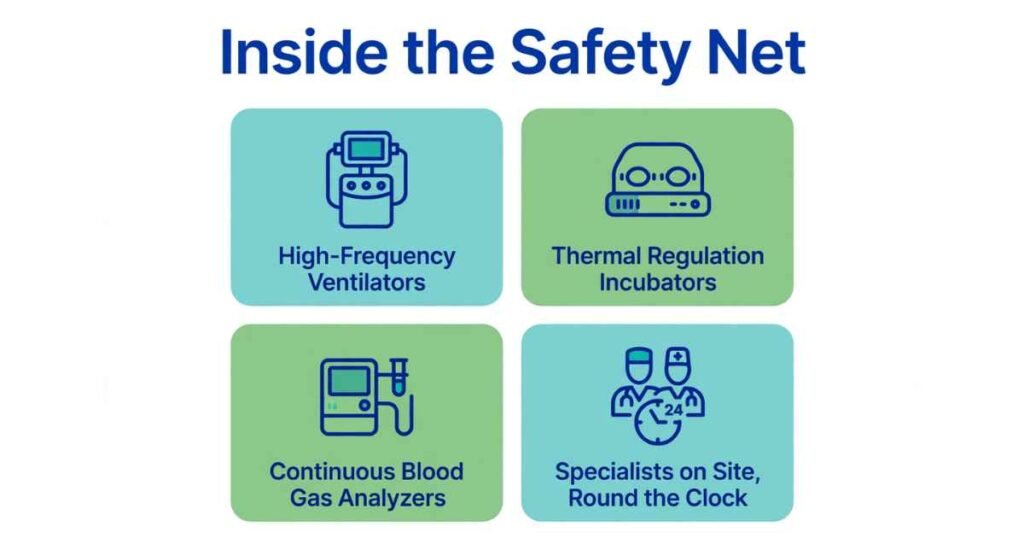
Infographic 1: Inside the Safety Net – the NICU equipment and team standing by at every delivery.
Comprehensive Prenatal Screenings and Dynamic Labor Planning
The work starts long before labor does. A modern facility’s baseline infrastructure is quietly mapping out potential complications well in advance, through advanced imaging and genetic screening systems. High-resolution ultrasound technology lets specialists monitor placental blood flow variations, structural development indicators, and amniotic fluid volume metrics with extreme precision — early enough to act on what they find.
Continuous Fetal Monitoring: Utilizing advanced telemetry systems allows mothers to remain mobile during early labor while providing the medical staff with real-time data on cardiac rhythms. She can move; the data keeps flowing.
Integrated Laboratory Systems: Immediate access to rapid blood bank resources and chemical pathology results ensures that sudden maternal hemorrhages or preeclampsia surges are countered instantly — not eventually, instantly.
Postpartum Stabilization Zones: Dedicated recovery rooms equipped with advanced monitoring systems ensure that early indicators of maternal fluid retention or blood pressure shifts are caught early, while they are still easy to correct.
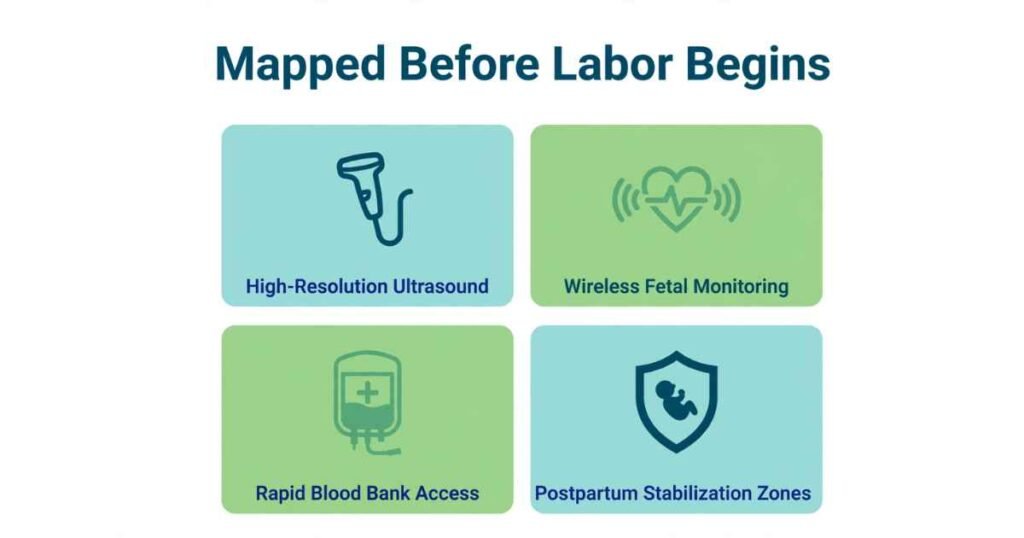
Infographic 2: Mapped Before Labor Begins – screening and monitoring that plan for complications early.
Conclusion
In the end, safe outcomes for mother and child come down to readiness — advanced medical infrastructure, and specialized clinical expertise to match. Prioritise comprehensive prenatal screening. Choose a medical facility fully equipped with emergency neonatal care units. Do those two things and a family can navigate the complex process of childbirth with real confidence. Safe delivery is built on structural medical readiness, not simple fortune. Organise your delivery plan inside a highly equipped clinical environment today, and your child enters the world under the safest possible conditions — leaving your family free to embrace the future.
Frequently Asked Questions
Q1: Why is immediate access to a neonatal intensive care unit so critical during a standard delivery?
A1: Because even an uncomplicated pregnancy can turn, quickly. Umbilical cord compression. Fluid inhalation. Things that happen during labor without asking permission. A neonatal intensive care unit ensures that specialized life-saving equipment and pediatric experts are available instantly, to stabilize the infant without delay.
Q2: How do modern fetal telemetry systems improve the overall maternal labor experience?
A2: The monitoring is wireless — that is the difference. Modern telemetry systems monitor the baby’s heartbeat without tethering the mother to a bed, eliminating the need for mothers to remain completely still. She can move, change position, get comfortable, while ensuring the clinical team receives uninterrupted safety metrics.
Q3: What specific infrastructure features define a highly reliable high-risk labor facility?
A3: Look for a specific list: twenty-four-hour blood bank access, operating rooms located directly inside the labor wing, an on-site neonatal intensive care unit, and specialized medical teams available immediately on the floor around the clock. If any one of those is missing, ask why.
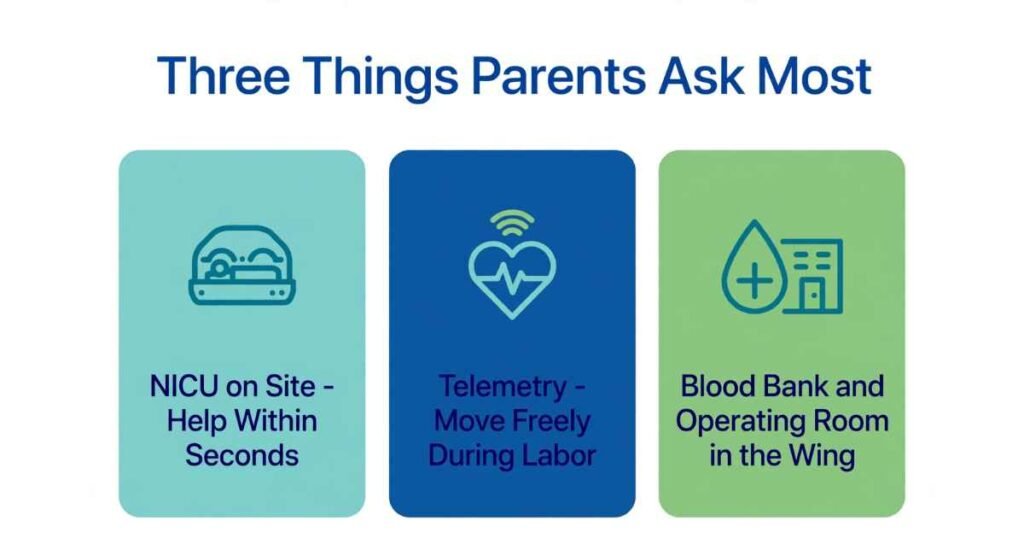
Infographic 3: Three Things Parents Ask Most – NICU access, telemetry and in-wing emergency facilities.
Disclaimer: The information in this article is for general informational purposes only and does not constitute medical or professional healthcare advice. Delivery outcomes depend on individual medical circumstances, and facility features, equipment, and service availability vary by hospital and location and may change without notice. Readers should consult a qualified healthcare provider and verify all facility capabilities directly with the hospital before making any maternity care decision. Any mention of specific providers or services does not imply endorsement. The author and publisher disclaim any liability for decisions made based on this content.
Discover posts that turn spare moments into real progress—our bite-sized insights deliver value without the time commitment.