Key Takeaways
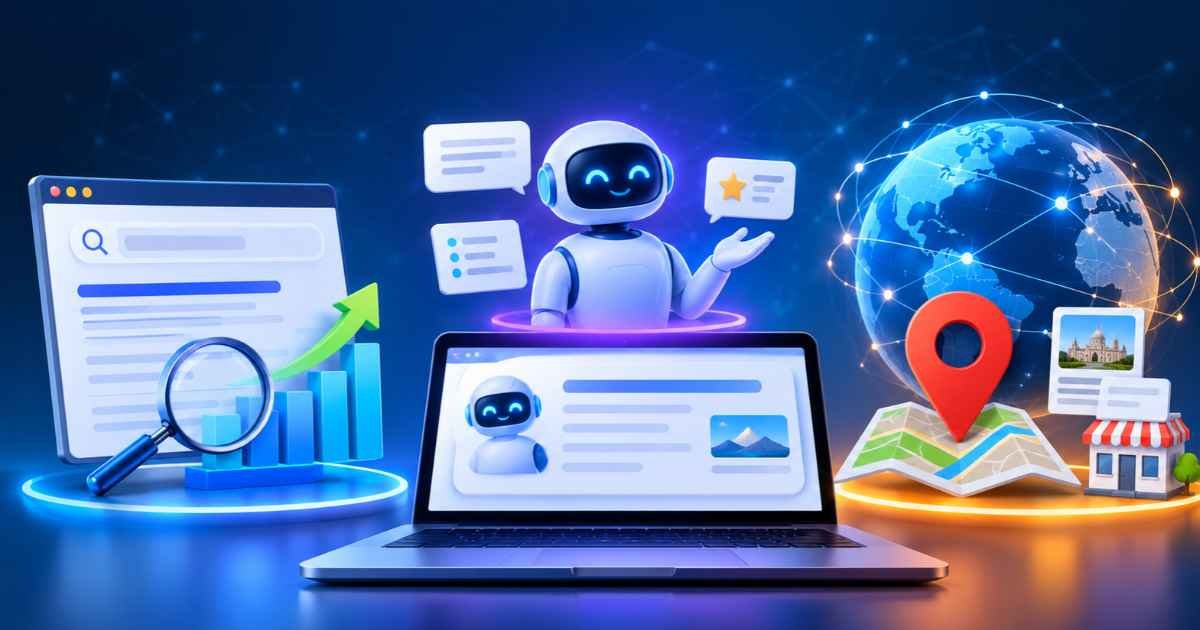
SEO, AEO, and GEO rest on the same foundation: crawlable, original, useful content from a source that people and machines both trust. They differ in what you measure and where you do the work. SEO earns rankings and clicks. AEO earns the extracted answer. GEO earns mentions and citations inside generated responses. A unified approach means one team for your Google rankings and your AI citations, ensuring your brand stays visible across traditional search and AI-powered platforms.
- Google’s own documentation, published on May 15, 2026, says that optimizing for AI Overviews and AI Mode is still SEO. It also says llms.txt, content chunking, and special structured data are not needed for its AI features.
- Other engines behave differently. ChatGPT, Perplexity, Gemini, and Claude pull from different source mixes, and Ahrefs research found that 28.3% of ChatGPT’s most-cited pages have no Google organic visibility at all.
- Off-site presence carries more weight in AI answers than in classic SEO. In Ahrefs’ study of 75,000 brands, branded web mentions correlated with AI Overview visibility at 0.664, against 0.218 for backlinks. YouTube mentions correlated highest, at about 0.737. These are correlations, and they do not prove cause.
- Citations are unstable. A Passionfruit analysis of 11.2 million citations found that 68% of queries that produced citations in one month produced none the next. Measure trends over many runs, not single checks.
- AI referral traffic is small but often valuable, and studies disagree on how much better it converts. Invest in proportion to what your own data shows.
The State of Search in November 2026
The three acronyms exist because the places where people find information have multiplied. A few data points show the scale of the change as of late 2026.
- Google AI Mode passed 1 billion monthly users, announced by Liz Reid at Google I/O in May 2026, with query volume more than doubling each quarter. Google also reported more than 2.5 billion monthly users for AI Overviews at I/O 2026, according to a tally by Keywords Everywhere.
- ChatGPT reached 1.2 billion weekly users in autumn 2026. An OpenAI executive said in early November that ChatGPT’s search-like queries equal roughly one fifth of Google’s query volume. That is a company claim and has not been independently verified.
- The Gemini app passed 1 billion monthly active users, according to Google figures compiled on August 11, 2026.
- Zero-click behavior keeps rising. SparkToro’s 2026 study found that about 68% of US Google searches end without a click, up from 60.45% in 2024.
- Paid placements now exist inside AI answers. Search Engine Roundtable reported on November 4 that Google AI Mode shows up to four ads, and ChatGPT carries sponsored placements on its free and Go tiers.
- Interfaces change every few weeks. In November, Google was reported to be testing the removal of the AI Mode button from the search bar and of the Ask Anything box inside AI Overviews. Follow-up questions in AI Overviews already open a conversation in AI Mode. The November 2026 core update began rolling out on November 10.
Measurements of how often AI Overviews appear vary widely, because each study uses a different query set. One Search Engine Roundtable report in November put the share above 80% of Google searches. Ahrefs found that nearly all AI Overviews appear on informational queries and that shopping queries trigger them only about 3% of the time. Treat any single figure as a statement about that study’s query set, and check how often AI answers appear for your own keywords.
SEO, AEO, and GEO Defined
Practitioners do not use these terms the same way, and some sources treat all three as one discipline, sometimes called AI SEO. This guide uses the definitions below because they map to different goals and different measurements.
| Dimension | SEO (Search Engine Optimization) | AEO (Answer Engine Optimization) | GEO (Generative Engine Optimization) |
|---|---|---|---|
| Goal | Rank in search results and earn the click | Be the source a system extracts a direct answer from | Be mentioned and cited in synthesized, multi-source responses |
| Main surfaces | Google and Bing results pages, local packs, Discover | Featured snippets, AI Overviews, voice assistants, answer boxes | ChatGPT, Gemini, AI Mode, Perplexity, Claude, Copilot |
| Unit of optimization | The page and the domain | The passage that answers one question | The brand, the entity, and the whole body of third-party coverage |
| Core levers | Content quality, links, technical health, intent match | Direct answers, clear structure, evidence close to the claim | Independent mentions, reviews, community and video presence, entity consistency |
| Success metrics | Rankings, impressions, clicks, conversions | Snippet and AI Overview presence, answer accuracy | Mention rate, citation rate, share of voice, sentiment, accuracy |
| Main risk | Algorithm updates and falling click-through rates | Being the answer without receiving a visit | Volatile citations and weak attribution of results |
A short way to hold the difference: SEO gets you found, AEO gets you answered, and GEO gets you cited. Some writers use AEO as the broader term and GEO for the strategic layer, and a smaller group uses AEO to mean Agent Engine Optimization, meaning preparing a business to be understood and used by AI agents that research and buy on a person’s behalf. When a vendor or colleague uses one of these terms, ask which surfaces and which metrics they mean.
Where They Overlap
Most tactics serve all three. Original information, accurate claims, clear writing, fast and crawlable pages, and a reputable author or brand help in every case. One practitioner analysis estimated that roughly 70% of tactics overlap, though that figure is an estimate and not a measured standard. The differences show up mostly in distribution (where your content appears) and measurement (what counts as a win).
What Google Says: Optimizing for AI Is Still SEO
On May 15, 2026, Google published “Optimizing your website for generative AI features on Google Search,” and announced it through the Search Central Blog. The page defines AEO and GEO and then states that, from Google Search’s perspective, optimizing for generative AI search is optimizing for the search experience, and therefore still SEO.
The guide tells site owners they can skip several tactics for Google’s AI features:
- llms.txt files
- Separate Markdown versions of pages
- Splitting content into short chunks written for AI retrieval
- Rewriting pages specifically for AI
- Special structured data, although markup still helps produce rich results in standard listings
- Inauthentic mentions, which the guide names as something to avoid
What Google asks for instead is familiar: unique, non-commodity, people-first content, plus guidance for local, shopping, image, and video content. The guide also includes first guidance on AI agents.
Why the Debate Continues
Google’s position covers Google. It does not describe how ChatGPT, Perplexity, Claude, or Copilot pick sources. Search Engine Land published an opinion piece arguing that the guidance is naive and self-serving, because it describes Google’s incentives and ignores the multi-engine reality of brand discovery. The data supports a split view. Google’s retrieval is built on its search index, so classic SEO strength carries over. For other engines, research shows weaker ties to Google rankings: AirOps found that pages ranking first on Google are cited by ChatGPT only 43.2% of the time, and about 60% of AI Overview citations come from URLs outside the top 20 organic results.
A workable reading is that SEO remains the base layer for every engine, and that GEO adds off-site and measurement work that SEO programs have historically underfunded.
How AI Engines Choose What to Cite
AI search products retrieve documents for a query, often by breaking it into several sub-queries, and then write an answer that cites some of what they retrieved. The sources they favor differ by engine and change over time.
Source Mix Varies by Platform
- Peec AI analyzed 30 million cited sources across ChatGPT, Google AI Mode, Gemini, Perplexity, and AI Overviews and found Reddit to be the most-cited domain overall as of March 2026.
- An April 2026 roundup by Contently listed ChatGPT’s frequent sources as Wikipedia, Reddit, Forbes, and Business Insider. For Perplexity it listed Reddit, LinkedIn, NIH, Microsoft, and G2. For AI Overviews it listed YouTube, Reddit, Forbes, LinkedIn, and Wikipedia.
- Semrush’s study of 325,000 prompts found LinkedIn cited in 14.3% of ChatGPT Search responses, 13.5% of Google AI Mode responses, and 5.3% of Perplexity responses.
- Ahrefs reported that AI Mode and AI Overviews reach the same conclusion for a given query about 86% of the time but share only 13.7% of their cited sources.
- A study cited by Marketing Week found that Reddit was offered as a source to OpenAI’s system 491,024 times and was chosen only 0.6% of the time. The same study found Anthropic’s system cited Reddit zero times across 139,601 sources it could have used. Heavy presence in a source does not guarantee citations on every engine.
Structure and Position Matter
A Growth Memo analysis from February 2026 found that 44.2% of LLM citations come from the first 30% of a page’s content, which makes opening paragraphs the most valuable text on a page. Ahrefs found that “best X” listicles made up 43.8% of the page types ChatGPT cited. Independent editorial and reference sources dominate in categories such as IT services, according to an analysis of 107 million AI answers by Search Engine Journal, where third-party proof outweighed a brand’s own homepage.
Citations Are Volatile
Three facts explain why single snapshots mislead. First, the Passionfruit finding that 68% of queries with citations in one month had none the next. Second, ChatGPT changed its interface in May 2026 to show clickable brand names inside answers instead of footnote-style citations, and Similarweb data shows citations in US ChatGPT prompts rising from about 1.6% in June 2025 to roughly 6.8% by May 2026. Third, Google keeps changing the default model and interface, including making Gemini 3.5 Flash the default for AI Mode. Plan for continual measurement, not a one-time audit.
Optimizing Content
Content work covers all three disciplines. The aim is a page that ranks, that contains an extractable answer, and that offers something a model cannot produce from general knowledge.
1. Answer First, Then Support
Open each section with a direct answer in one to three sentences, followed by evidence, context, and exceptions. This helps featured snippets and AI extraction, and the first-30% finding gives a measurable reason to put the best material early. Write headings that match how people phrase questions.
2. Publish Information That Is Hard to Reproduce
Google’s guide stresses non-commodity content. Original survey data, first-hand testing, proprietary benchmarks, pricing details, case studies with named outcomes, and expert commentary all give an AI system a reason to cite you. A page that restates what ten other pages say gives it no reason.
3. Cover the Whole Decision, Not One Keyword
AI systems expand a query into related sub-questions: alternatives, price, fit, risks, and setup. Build clusters that answer the sub-questions a buyer would ask, and link them together. Comparison pages, “best for” pages, and pricing explainers earn citations, provided they are evidence-based and disclose that you sell one of the options.
4. Make Claims Verifiable
State figures with a date and a source. Name authors, credentials, and review dates. Update pages visibly when facts change. Models and search systems both reward consistency across sources, so numbers on your site should match the numbers anywhere else you publish them.
5. Use Formats Machines and People Both Parse
Tables for comparisons, numbered lists for procedures, and definitions near the top of sections help readers and extraction. Google says artificial chunking is unnecessary, so write for a human reader and let the structure follow the content.
6. Add Video and Images
YouTube mentions showed the highest correlation with AI brand visibility in Ahrefs’ 75,000-brand study, at about 0.737, ahead of web mentions and far ahead of backlinks. Ahrefs also noted that brands mentioned in low-view videos were not at a large disadvantage so long as they were mentioned widely. Video explainers, product demonstrations, and expert interviews with accurate titles, descriptions, and transcripts are worth the production cost for many brands.
7. Prepare Commercial Data for Shopping and Agents
Google’s Shopping Graph now holds more than 60 billion products, Google Search has launched a Universal Cart in the US, and OpenAI has introduced a ChatGPT Wallet that lets agents make purchases. For sellers, that raises the value of accurate product feeds, current prices and stock, clear return and shipping policies, and review coverage on the platforms agents consult.
Optimizing Entities
An entity is a distinct thing that systems can identify: a company, a product, a person, a place, a concept. Search engines and language models both build their understanding around entities. A brand that is described consistently, in the same category, across many independent sources gives a model confidence about what it is and when to recommend it.
Establish One Clear Description
Write a short canonical description of the company: what it is, who it serves, what category it belongs to, and where it operates. Use the same wording and the same name form on your About page, social profiles, app stores, directories, press kit, and partner pages. Inconsistent names, old descriptions, and conflicting facts such as founding year or headquarters teach models that the facts are uncertain.
Build Reference Points
Wikipedia is a heavy influence on ChatGPT. Profound found it to be ChatGPT’s top citation source at 47.9% in a study of 30 million citations from August 2024 to June 2025, and 5W’s Q1 2026 audit treats it as a ground-truth layer. A company should earn a Wikipedia article only through documented independent coverage, and should follow Wikipedia’s conflict-of-interest rules instead of editing its own page. Beyond Wikipedia, keep complete and current profiles on Google Business Profile, LinkedIn, Crunchbase, review sites such as G2 and Yelp (which Peec AI found appear frequently in recommendation queries), and industry directories.
Connect People to the Brand
Founders, authors, and spokespeople are entities as well. Give each author a page with credentials, link to their profiles, and keep their descriptions consistent. Named experts with a visible track record improve how your content is judged and give journalists and podcasters a clear name to quote.
Use Structured Data for Clarity, Without Expecting a Citation Lift
Organization, Person, Product, and sameAs markup helps search engines disambiguate your entities and powers rich results, so it remains good practice. Do not expect it to raise AI citations. Ahrefs published a matched study in May 2026 of 1,885 pages that added JSON-LD between August 2025 and March 2026 and found no measurable citation lift in AI Mode or ChatGPT and a slight decline in AI Overviews. The study’s authors noted that every page already had 100 or more AI Overview citations before the markup, so it cannot say what happens on pages with none.
Check What AI Says About You
Ask each major engine who you are, what you sell, who your competitors are, and when you are the right choice. Record errors and trace them to the source pages the engine cites. Correcting the source, whether an outdated directory listing or a wrong third-party article, fixes the answer more reliably than posting a correction on your own site. Ongoing AI Brand Mention Tracking, described below, turns this check into a repeatable process.
Optimizing Citations and Third-Party Presence
Because AI answers draw heavily on sources outside your site, much of the work is earning accurate coverage elsewhere. The Ahrefs data is a correlation, but it fits what citation studies show: brands in the top quartile for web mentions earned up to ten times more AI Overview mentions than others, and about 26% of brands in the study had no AI Overview mentions at all.
- Earn editorial coverage. Original research, expert commentary, and newsworthy launches get cited by trade press and reference sites that models trust. Digital PR now serves both link building and mention building.
- Win review and comparison placements. For commercial queries, models lean on review platforms, “best X” articles, and community recommendations. Encourage honest customer reviews on the platforms your category uses and supply accurate information to comparison sites.
- Participate in communities openly. Reddit, LinkedIn, and industry forums are heavily cited. Answer questions with real expertise, disclose your affiliation, and avoid scripted promotion. Google’s guide names inauthentic mentions as a tactic to avoid, and Google has said its spam systems now use AI to find AI-generated spam.
- Invest in YouTube. Given the correlation data, a consistent video program is one of the better-supported off-site bets, though the effect on any single brand will vary.
- Prioritize by engine. Statcounter data for March 2026 put ChatGPT at 78.16% of AI referral traffic, so it often deserves first attention for traffic. For brand perception, check all engines your buyers use. Ahrefs also noted that ChatGPT appears less tied to traditional authority metrics, which can make it a useful starting point for smaller brands.
- Close competitor gaps. Find the sources that mention your competitors but not you, and pursue those first. Several visibility tools now report this directly.
Technical Access and Crawling
No amount of content quality helps if a system cannot fetch the page. Technical checks for AI search are mostly standard SEO hygiene plus a few additions.
Separate Training Crawlers From Search Crawlers
Many AI companies run different bots for different jobs. As commonly documented, OpenAI uses GPTBot for model training, OAI-SearchBot to collect pages ChatGPT search may cite, and ChatGPT-User for fetches triggered by a person’s request. Anthropic uses ClaudeBot for training, plus Claude-SearchBot and Claude-User for search and user-requested fetches. Perplexity uses PerplexityBot, and Google uses Google-Extended as a control token for Gemini use. Blocking all of them in a blanket reaction removes you from ChatGPT and Claude search answers along with training. Decide separately for each purpose, and review the vendors’ current documentation, since names and behavior change. OpenAI states that robots.txt rules may not apply to ChatGPT-User, which fetches on a person’s behalf.
Technical Checklist
- Confirm that your robots.txt and your CDN or firewall do not block the search crawlers you want citations from. Bot-protection settings are a common accidental cause.
- Serve important content in the initial HTML. Many AI crawlers fetch pages without running much JavaScript, so server-side or static rendering is safer.
- Keep pages indexable, with clean canonical tags, working internal links, and fast load times.
- Submit your site to Bing Webmaster Tools. One March 2026 analysis found that ChatGPT leans on Bing’s index, so Bing indexing affects ChatGPT visibility.
- Keep structured data accurate for rich results, and do not spend a large budget expecting it to move AI citations.
- Treat llms.txt as optional. Google says its features do not use it, and no major engine has committed to relying on it. It costs little to publish and should not displace content work.
- Set snippet and preview controls on purpose, because they govern how Google may display your content in AI features.
AI Brand Mention Tracking: How to Measure Visibility
Rankings tools capture your position on a results page. They do not capture whether a model names your brand in a generated answer. AI Brand Mention Tracking fills that gap by running a fixed set of prompts across AI engines at regular intervals and recording whether, how, and next to whom your brand appears. Only about 22% of marketers tracked AI visibility as of an Averi analysis in March 2026, so a working measurement program is still an advantage.
What to Track
| Metric | Definition | Why it matters |
|---|---|---|
| Mention rate | Share of tracked prompts where your brand is named | The primary visibility measure |
| Citation rate | Share of prompts where one of your URLs is cited as a source | Shows which pages earn trust and can send traffic |
| Share of voice | Your mentions divided by mentions of you plus named competitors | Puts visibility in competitive context |
| Position and framing | Where in the answer you appear and how you are described | First recommendation and neutral listing carry different weight |
| Accuracy and sentiment | Whether facts, pricing, and tone are correct | Errors in AI answers reach buyers directly |
| Source domains | The sites AI cites when it discusses you or your category | Tells you where to earn coverage |
| Downstream results | Branded search, direct visits, AI referrals, conversions | Connects visibility to revenue |
How to Run It Well
- Build a prompt set. Start with 30 to 100 prompts that reflect real buying questions across the funnel: category discovery, comparisons with named competitors, “best for” queries, pricing questions, and problem-based questions. Include variations by persona and location where they matter. Keyword tools and customer-support logs are good sources of phrasing.
- Cover the engines your buyers use. At minimum, ChatGPT, Google AI Overviews and AI Mode, Gemini, Perplexity, and Copilot, plus Claude for developer and professional audiences.
- Run each prompt repeatedly. Answers vary from run to run. Report the percentage across many runs with a range, never a single result. One analysis showed that a single extra mention across 14 prompts moves a mention rate by 7 points, from 21.4% to 28.6%, which is noise and not a trend.
- Review on a regular schedule. Weekly or monthly runs, read as trends over a quarter, smooth out the volatility described earlier.
- Read the sources, not only the score. Which pages and domains the engine cited tells you what to fix or pursue. Several reviewers of these tools argue that the source list is worth more than the headline score.
- Tie it to business data. Compare visibility trends with branded search, direct traffic, referral sessions, and conversions. Report cases where visibility rose and nothing else moved, because that finding changes how you invest.
Tool Options
The category is crowded and prices change quickly, so verify current plans before buying. Representative options include:
- Suite add-ons: Semrush, Ahrefs Brand Radar (listed from about $398 per month by DesignRush), SE Ranking, Moz Pro, Keyword.com, and HubSpot AEO.
- Dedicated platforms: Profound, OtterlyAI (listed from about $25 per month), and Brand24’s AI tracking.
- First-party data: The Search Analytics API in Google Search Console added a branded-queries filter in November 2026. Microsoft Clarity moved its Citations dashboard, which shows the grounding queries behind Copilot citations, to general availability. Reports also say GA4 added an AI Assistant channel in May 2026. Confirm in your own account which of these you have.
Measurement Pitfalls
- Google Search Console does not separate clicks from AI Overviews from other organic clicks, so AI Overview traffic is blended into organic reporting.
- Referrer data is incomplete. Some AI visits arrive as direct traffic. In your analytics, create a segment for sessions from chatgpt.com, perplexity.ai, gemini.google.com, copilot.microsoft.com, and claude.ai, and treat the result as a lower bound.
- Prompt sets reflect your guesses about what people ask. Refresh them quarterly from real search and support data.
- Correlation between visibility and sales is hard to prove. Kevin Indig reported in October 2026 that he could not yet find a reliable relationship between AI visibility and branded search or direct traffic in his sample.
Is It Paying Off? The Traffic and Conversion Evidence
The evidence points in two directions. AI referrals are a small share of visits, yet some studies find that those visits convert well. Both can be true at once.
| Study or source | Finding |
|---|---|
| Chartbeat (March 2026) | AI sources account for under 1% of publisher pageviews |
| SEO Works (reported October 2026) | Organic search delivered 39 times more traffic than AI assistants, and for every 100 organic conversions, AI referrals delivered 3.2 |
| Another study in the same roundup | ChatGPT visitors converted at 13.8% against 3.02% for Google organic, but Google still drove 27 times more conversions than all other LLMs combined |
| Search Engine Land analysis of 94 ecommerce sites | ChatGPT traffic converted at 1.81% against 1.39% for non-branded organic, yet ChatGPT revenue was 1.48% of organic revenue |
| Siege Media (78 sites, Jan to May 2026) | Median AI-to-organic conversion ratio of 1.26, with AI matching or beating organic on 72% of sites |
| Ahrefs (its own site) | AI search visitors converted at 23 times the organic rate, and 0.5% of visitors drove 12.1% of signups |
| Microsoft Clarity | AI referrals converted at about three times the rate of other channels in its dataset |
Reading these together: conversion premiums are real in several datasets but range from roughly 1.3 times to over 20 times, which suggests that site type, attribution, and sample size drive much of the spread. Volume remains low. Organic search still sends far more visitors and conversions for most sites.
The click side of the story also matters. Pew Research found that users clicked a traditional result 8% of the time when an AI Overview appeared, against 15% without one, and clicked a link inside the overview itself about 1% of the time. Ahrefs reported in February 2026 that AI Overviews correlate with a 58% drop in click-through rate for top-ranking pages. Chartbeat data cited by the Reuters Institute showed Google search traffic to publishers falling by about a third globally in the year to November 2025, while Similarweb data for the top 40,000 US sites showed a smaller 2.5% decline in Google organic traffic in 2025. The outcome depends on the type of content: informational and publisher content is most exposed, and transactional queries trigger AI Overviews far less.
The practical conclusion is to treat AI visibility as a brand and consideration channel with a measurable but small referral stream. Judge it against branded demand and conversions, and keep funding the organic work that still produces most traffic.
A 90-Day Plan
Days 1 to 30: Baseline and Fixes
- Audit crawler access: robots.txt, CDN and firewall rules, rendering, and Bing indexing.
- Build the prompt set and run the first round of AI Brand Mention Tracking across your priority engines to set a baseline for mention rate, citation rate, share of voice, and accuracy.
- Write the canonical brand description and align it across your site, profiles, and directories. Correct factual errors found in AI answers at their sources.
- Set up analytics segments for AI referrals and a branded-search report from Search Console.
Days 31 to 60: Content and Structure
- Pick the 10 to 20 pages closest to revenue and rewrite their openings to lead with direct answers, supported by dated evidence.
- Publish at least two pieces of original research, benchmark data, or first-hand testing that others can cite.
- Add or improve comparison and “best for” pages with honest criteria and clear disclosure.
- Keep Organization, Person, and Product markup accurate for rich results.
Days 61 to 90: Earn Presence
- Pursue the third-party sources that mention competitors and not you: trade publications, review platforms, and comparison sites.
- Launch a modest YouTube program with explainers and expert interviews, and begin open participation in the communities your buyers use.
- Rerun the full prompt set, compare with the baseline, and report results next to branded search, direct, referral, and conversion data.
- Decide where to invest next based on which engines and prompts moved.
Common Mistakes
- Treating GEO as a replacement for SEO. Retrieval for AI answers still depends on crawlable, indexable, reputable pages.
- Spending a budget on llms.txt, artificial chunking, or schema in the hope of citations, when current research and Google’s guidance show little or no effect.
- Blocking every AI crawler without separating training from search and citation use.
- Reporting a single prompt check as a result. Volatility makes one-off checks unreliable.
- Fabricating reviews, astroturfing forums, or buying mentions. Google’s guide calls out inauthentic mentions, and platforms and models both penalize obvious manipulation.
- Chasing one engine’s quirk, such as a specific Reddit tactic, when source mixes shift between engines and across months.
- Ignoring accuracy. A mention with the wrong price or a stale description can cost a sale.
Frequently Asked Questions
Is SEO dead in 2026?
No. Google says optimizing for its AI features is still SEO, and AI Overviews draw on its search index. Click-through rates have fallen for many informational queries, so the work now includes visibility that does not depend on a click.
Do I need separate teams for SEO, AEO, and GEO?
Usually not. The content fundamentals are shared. What differs is the off-site work (PR, reviews, community, video) and the measurement. A single team with clear ownership of both is typical.
Should I publish an llms.txt file?
It is optional. Google states its AI features do not need it, and the evidence for benefits elsewhere is thin. Publish one only if the cost is trivial, and do not rank it above content and off-site work.
Does schema markup help me get cited by AI?
Schema helps rich results and entity clarity. Ahrefs’ matched study found no measurable citation lift from adding JSON-LD, with the caveat that the pages studied were already heavily cited.
Which AI engine should I prioritize?
Start with where your buyers are. ChatGPT sends most standalone AI referral traffic, Google’s AI Overviews and AI Mode reach the largest audience, and Perplexity, Gemini, Copilot, and Claude matter for specific audiences. Your AI Brand Mention Tracking data will show which engines mention you least relative to competitors.
How long until results show?
Technical fixes and corrected source pages can change answers within weeks, while earning new third-party coverage typically takes months. Because citations move from month to month, judge progress over at least a quarter.
Conclusion
SEO, AEO, and GEO are best treated as three views of one job: making your brand easy to find, easy to quote, and easy to trust, wherever people ask questions. Google’s guidance confirms that the foundation is still strong SEO. Independent research shows that off-site mentions, community and video presence, consistent entities, and honest, original content determine who gets named in AI answers beyond Google. Start with a measurement baseline, fix what is broken at the source, publish material worth citing, and earn coverage from sources models already trust. Then keep measuring, because the interfaces, the citation mix, and the numbers in this article will keep changing.
Disclaimer: The information in this article is for general informational purposes only and does not constitute professional, legal, or financial advice. Search engine algorithms, AI platforms, citation behavior, data points, and industry research findings may change rapidly and without notice. Statistics and study results cited are based on third-party sources and may not reflect current conditions or every market. Readers should verify all data independently and consult qualified marketing professionals before acting on this information. Any mention of tools, platforms, or providers does not imply endorsement. The author and publisher disclaim any liability for decisions made based on this content.
Turn your daily mindset into your greatest long-term investment—our mindset-investment guides help you build mental habits that pay dividends for life.