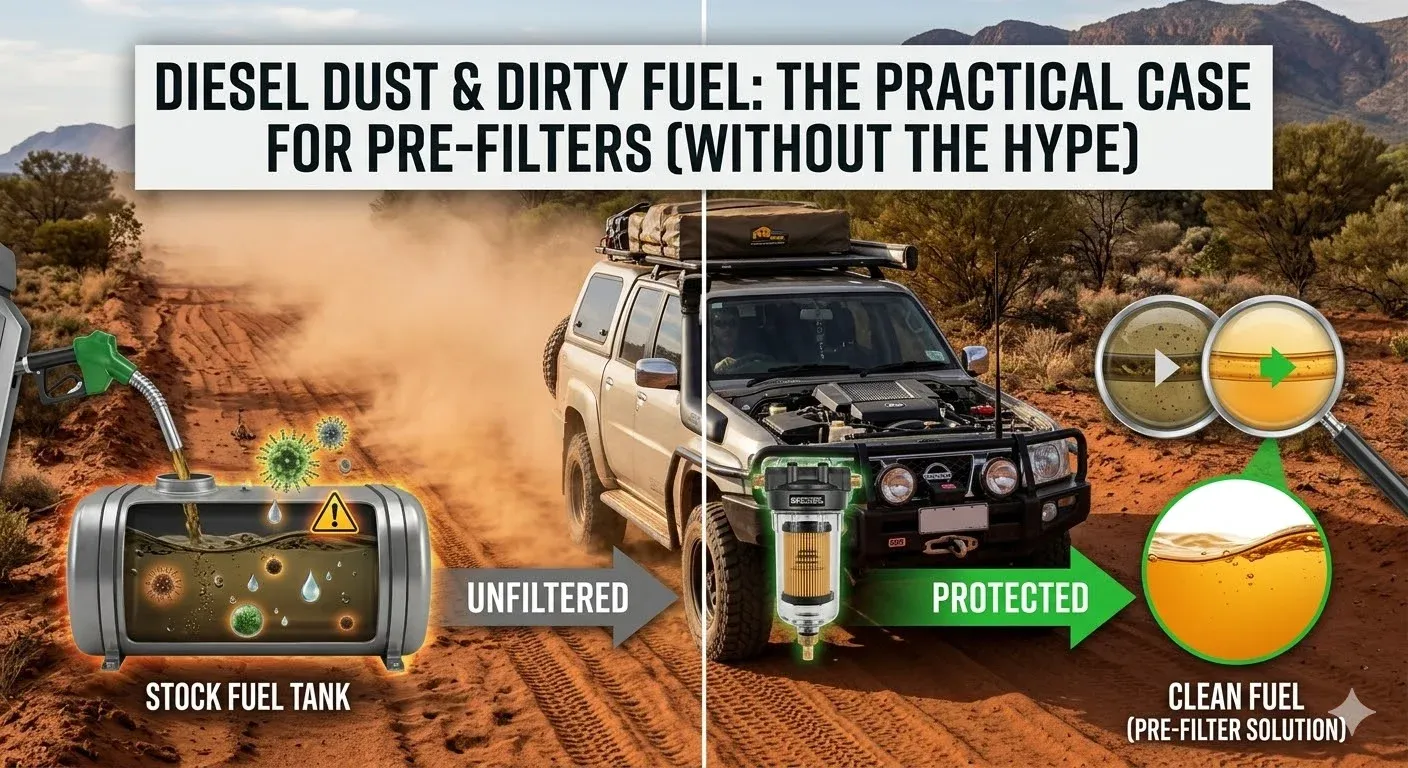
Talk about diesel pre filter benefits for long enough and it can start sounding like every touring rig will explode without one. That is not the point. A pre-filter is not magic, and it is not a substitute for good fuel habits or normal servicing. What it does do is sit upstream of the factory filter and catch a big chunk of the water and particle contamination before that fuel reaches the original system.
The listed Fuel Manager kits are described exactly that way, fitted between the tank and the original fuel filter so the pre-filter handles the bulk of the contamination and the factory filter can do the finer cleanup.
That matters more in real touring than it does in the driveway. A late-model common rail diesel is not especially forgiving when fuel quality goes ordinary. Most of the time, you will fill up and move on without drama. The issue is the trip where the vehicle is loaded, the route is remote, the servo options are thin, and turning back is not really on the table. That is where a proper Diesel Pre Filters setup starts making practical sense, especially if the vehicle is already set up for longer touring work.
Why Touring Vehicles Cop Different Fuel Headaches
In town, the fuel story is usually pretty boring. On touring runs, it can get a bit messier.
Common scenarios look like this:
- You refill at a quiet regional stop where turnover may not be the same as metro sites
- You are running long distances and topping up whenever fuel is available, not whenever it is ideal
- The vehicle has been living on corrugated roads and dust is getting into everything it can
- The trip involves jerry cans, extra refuels, or a few rushed fills where you are more focused on getting moving than playing fuel inspector
None of that means the next tank is definitely bad. It just means remote diesel quality can be more variable than the fuel routine of a suburban commuter, so the cost of adding another layer of diesel protection starts to look pretty reasonable.
That is why a specialist off-road accessories supplier places pre-filters squarely in the engine protection side of the build, alongside Catch Can, Filtration, and other touring-minded protection items.
What a Pre-Filter Actually Does
A decent pre-filter kit is a first pass, not the whole story. The practical idea is simple. Put a dedicated fuel filter and water separator ahead of the factory system, let it catch the rough stuff first, and leave the original filter to deal with finer filtration. That is the clearest, least-hyped way to explain fuel filtration touring.
The listed kits also show why people choose one design over another:
- Fuel Manager kits are described with a clear water drainage bowl, which makes removed water easier to spot during checks.
- PreLine-Plus kits add a remote multi-stage water alert, with visual and audible warning when water is detected in the fuel.
- Both are positioned as front-line protection against water and particle contamination before the original filter does the final finer work.
That last bit is the real practical case. Not fear. Not hype. Just giving the fuel system another chance to avoid swallowing rubbish it never needed to see.
The Diesel Pre Filter Benefits that Actually Matter
The useful diesel pre filter benefits are not flashy. They are the sort of things you appreciate when the trip stays boring in a good way.
1) It takes load off the factory system
If the pre-filter is doing the early separation work, the original filter is not carrying the whole burden on its own. That is exactly how the listed kits are described, with the pre-filter removing most water and particles first so the OEM filter can finish the job.
2) It gives you a better chance of spotting trouble early
A clear bowl is useful because it gives you something to inspect. A water alert is useful because it tells you when to pay attention without waiting for a bad day. Some PreLine-Plus kits specifically list a multi-stage water alert that removes the need to manually keep checking for water.
3) It suits the way touring vehicles actually get used
A highway commuter can often get away with thinking less about fuel protection. A loaded tourer doing distance, towing, or refuelling wherever it can does not have that luxury. In that setting, extra diesel protection is a practical touring decision, not an over-accessorising exercise.
4) It can make maintenance more predictable
When replacement elements are readily available, servicing the system stops being a drama and becomes part of the normal maintenance rhythm. The Filtration includes replacement elements for pre-filter and post-filter setups, which is exactly what you want if the vehicle actually does the kilometres.
Where a Pre-Filter Makes the Most Sense
Not every diesel needs every touring extra. A pre-filter makes the strongest case when the vehicle fits one or more of these jobs:
- Long-distance touring where fuel stops are limited
- Remote work or regional travel where fuel quality confidence is not always the same as metro filling
- Modern common rail diesels where injector and fuel-system health matter
- Vehicles doing regular towing or carrying weight, where an avoidable fuel drama becomes a trip-ending hassle
- Builds already set up for touring, where engine protection is being taken seriously rather than left to luck
It also becomes easier to justify when the vehicle is already being built around distance and self-sufficiency. If the rig already has a touring setup, adding a fuel-side protection layer is a more logical step than pretending the engine bay should stay completely stock while everything else gets upgraded.
Pre-Filter and Catch Can Are Not the Same Job
This one trips people up all the time. A fuel pre-filter and a catch can are both engine protection items, but they are not solving the same problem.
A pre-filter kit is about fuel contamination. A catch can is about oil and soot contamination from crankcase blow-by entering the intake side. With the pre-filter handling water and particle contamination on the fuel side, the ProVent catch can separate and redirect oil and air from blow-by gas.
For plenty of touring owners, the practical answer is simple. Start with the side of the system your vehicle use justifies. If remote refueling is the bigger concern, start with the pre-filter. If intake contamination and soot control are also part of the plan, the combo approach starts making sense.
A Sensible Maintenance Schedule
This is the bit that keeps the whole conversation honest. Fitting a pre-filter and forgetting about it is not smart.
A practical routine looks like this:
- Check the system during normal under-bonnet inspections
- On kits with a clear bowl, keep an eye out for trapped water or contamination
- On kits with an in-cab water alert, do not ignore it and hope it sorts itself out
- Replace filter elements as part of your normal service planning, or sooner if the trip has involved suspect fuel, dirty refuels, or a lot of remote work
- Carry a spare replacement element on longer trips if the vehicle is doing serious distance
That is not overkill. It is just treating the filter like the service item it is. The nice part is that replacement elements are already part of the engine Filtration lineup, so ongoing maintenance is built into the same ecosystem rather than becoming a scavenger hunt later.
The Mistakes Worth Avoiding
A pre-filter is useful, but it still gets oversold or misunderstood.
A few easy mistakes:
- Treating it like a guarantee instead of an added layer of protection
- Buying on fear instead of matching the setup to actual touring use
- Ignoring service intervals and replacement elements
- Confusing a pre-filter with a catch can and assuming one does both jobs
- Fitting one because the build looks serious, then never checking it again
That is where the “without the hype” bit matters most. A pre-filter is not about drama. It is about making a common weak point a little less exposed when the vehicle is doing the sort of work that justifies it.
Fit It Because the Trip Calls for It
The best case for a pre-filter is not a scare campaign. It is a simple touring argument. If the vehicle spends real time away from easy backup, relies on clean fuel to keep a modern diesel happy, and already carries the gear for distance, then a proper Diesel Pre Filters setup is a sensible bit of diesel protection.
Add a Catch Can or one of the Pre Filter and Catch Can Combo Kit options if the broader engine-protection plan warrants it, and keep Filtration maintenance on the same no-fuss schedule as the rest of the vehicle.
That is usually where a trusted Australian 4WD accessories supplier is most helpful, not in overselling the risk, but in helping match the right protection setup to the way the diesel is actually used.
Read more informational topic on blooket