There is a moment every founder eventually faces. The calendar is full. The inbox is unmanageable. The to-do list keeps growing. And somewhere in the middle of all that chaos, the actual work of building a business – the strategy, the decisions, the vision – keeps getting pushed to tomorrow.
Most founders assume the solution is to work harder. Longer hours. Earlier mornings. Fewer breaks. But the problem is rarely effort. The problem is leverage – or the lack of it.
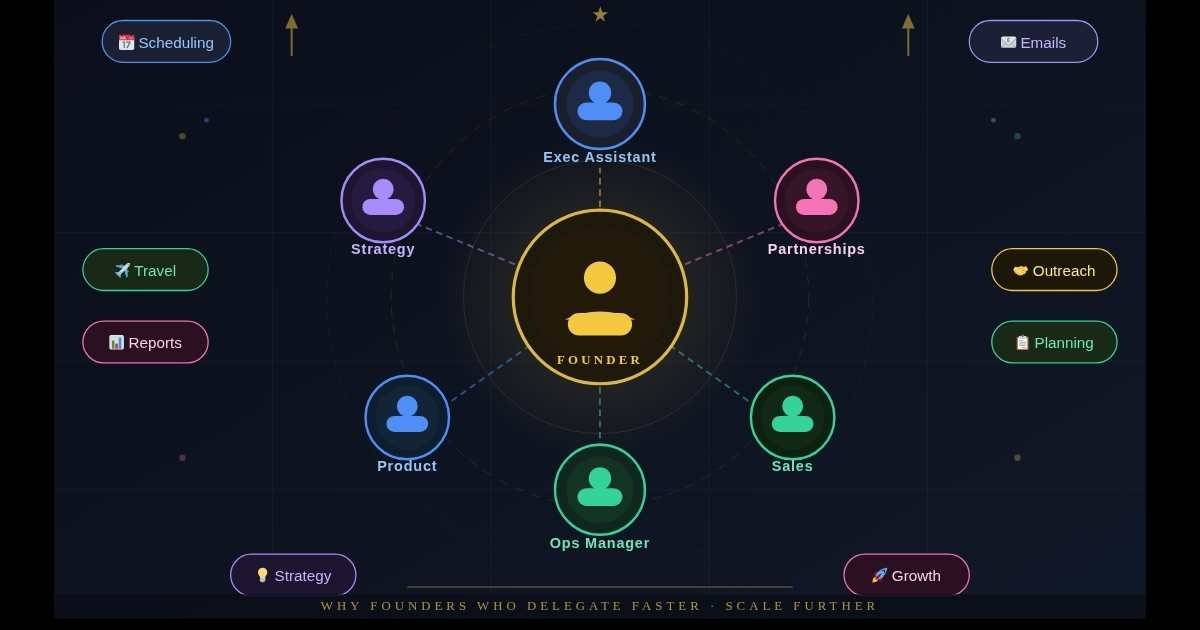
The founders who scale fastest are not the ones who do the most. They are the ones who delegate the earliest, the most deliberately, and to the right people.
The Hidden Cost of Doing Everything Yourself
Founders are wired to take ownership. In the early days, that quality is an asset. You wear every hat because you have to. But at some point, that same instinct becomes a liability.
When a founder earning the equivalent of £150,000 a year spends five hours a week booking travel, managing their calendar, and sorting through email, they are paying themselves a premium rate to do work that could be handled by someone else. The maths are stark, but the real cost runs deeper than money.
Every hour spent on operational detail is an hour not spent on the decisions only the founder can make. Strategic direction. Key partnerships. Talent. Product vision. These are the things that compound. Admin tasks do not.
There is also the mental load to consider. Constantly switching between big-picture thinking and small operational tasks fractures focus. You end up reactive rather than intentional. You manage the noise instead of building toward the goal.
Why Most Delegation Attempts Fail
Most founders have tried to delegate. Many have hired assistants, brought on VAs, or handed tasks to team members – only to find themselves doing everything again within a few weeks.
The failure is rarely the person. It is the system – or the absence of one.
Common reasons delegation breaks down:
- No clear handoff process – tasks are passed on verbally without documentation or context
- Wrong hire – a generalist VA when what is needed is someone who understands founder-level priorities
- Micro-management – the founder steps back in at the first mistake, undoing the delegation entirely
- Task-dumping rather than outcome-setting – telling someone what to do rather than what needs to happen
Strategic delegation is not about offloading tasks. It is about creating a system where the right outcomes happen reliably, without requiring the founder’s constant attention.
What Strategic Delegation Actually Looks Like
The difference between a task-doer and a thought partner is significant. A task-doer waits for instructions. A thought partner anticipates needs, filters what matters, and moves things forward without needing a step-by-step brief every time.
In practice, this looks like the following. You mention a speaking engagement coming up next month. Two days later, your assistant has already prepared a travel brief, drafted an outreach email to key attendees, and blocked preparation time in your calendar. You did not ask for any of it. They understood what was needed.
That level of support only comes from someone who understands the founder’s world – the pace, the priorities, the context behind every decision. It cannot be bought cheaply or found through a generic staffing platform. It has to be built, trained, and matched carefully.
The Right Time to Delegate Is Earlier Than You Think
One of the most common mistakes founders make is waiting too long. They tell themselves they will bring in support once they are bigger. Once they have more revenue. Once things settle down.
But things rarely settle down on their own. The chaos of running a business does not shrink by itself – it expands to fill whatever time is available. The founder who waits until they are drowning to delegate will spend months building back the clarity they should have protected from the start.
The right time to delegate is when you first notice that recurring tasks are taking time away from high-impact work. That moment usually arrives earlier than founders expect – often within the first year of serious growth.
Build vs Buy: The Delegation Decision Framework
When a founder decides it is time to get support, they face a choice. Hire someone full-time, or bring in flexible executive support.
Full-time hiring comes with significant overhead:
- A three to six month hiring process
- Salary, benefits, equipment, and office costs
- A single point of failure if the person leaves
- Months of onboarding before they are fully operational
For many founders – especially those in the early to mid stages of growth – flexible executive assistant support is a more practical option. You pay for the support you need, you start within days rather than months, and you are not locked into a long-term employment commitment.
This is where working with a dedicated virtual executive assistant becomes a practical alternative. You get trained, proactive support without the overhead of a full-time hire – and you can start within days rather than months. For founders managing multiple priorities, it is often the most efficient first step toward real operational leverage.
The Compounding Effect of Early Delegation
There is a reason the founders who scale fastest are almost always the ones with strong operational support behind them. Delegation compounds.
When you reclaim 10 to 15 hours a week, you do not just get more time. You get better decisions, because you are not making them while exhausted. You get clearer thinking, because your mental bandwidth is not consumed by small tasks. You get more presence in the conversations that matter.
Over months, those gains build into something real. The founder who has been protecting their focus for a year looks very different from the one who has been handling everything themselves.
The Bottom Line
Scaling a business is not about doing more. It is about doing the right things – and letting go of everything else.
The founders who understand this early build faster, burn out less, and lead better. They are not the ones working the longest hours. They are the ones who figured out how to make every hour count.
If you are still the one managing every detail in your business, that is not a sign of dedication. It is a sign that it is time to build a better system.
About the Author
Filip Pesek is the founder of DonnaPro, a European executive assistant agency that works exclusively with founders and CEOs. With a background in marketing and entrepreneurship, he helps business leaders build systems that reduce founder burnout and unlock sustainable growth.
Find what moves you — browse our featured collection and discover something new.