Uganda and Rwanda protect some of East Africa’s most important mountain forests, but they do not offer identical safari experiences. Uganda provides a longer, more varied circuit built around primates, savannah parks, rivers and lakes. Rwanda offers shorter transfers, a compact road network and convenient access to Volcanoes National Park.
The right destination depends on the time available, preferred level of comfort, physical ability and wildlife priorities. Travellers should compare complete itineraries rather than judging the countries by permit prices or promotional descriptions alone.
This guide examines the principal parks, gorilla-trekking logistics, trail conditions, accommodation choices and possible Tanzania extensions.
At a glance: Uganda works best for travellers seeking gorillas, chimpanzees and several savannah parks in one journey. Rwanda suits shorter holidays that combine Volcanoes National Park with Kigali, Akagera or Nyungwe.
What Makes a Uganda Safari Different?
A carefully planned Uganda Safari can move from open savannah and riverine woodland to crater landscapes and dense mountain rainforest.
The country’s wildlife regions are spread across a relatively large circuit. Road journeys can be long, but they also reveal farming districts, highland settlements, papyrus wetlands and landscapes that would be missed on a purely fly-in itinerary.
Uganda’s main strength is the number of distinct experiences available within one trip:
- Mountain-gorilla trekking in Bwindi or Mgahinga
- Chimpanzee tracking in Kibale
- Game drives in Queen Elizabeth National Park
- Nile cruises and wildlife viewing in Murchison Falls
- Walking and game viewing in Lake Mburo
- Remote savannah landscapes in Kidepo Valley
- Birdwatching in forests, wetlands and national parks
The journey requires realistic scheduling. Trying to visit too many parks can result in more time on the road than watching wildlife.
Which Ugandan National Parks Should You Include?
The strongest itinerary is not necessarily the one containing the most destinations. Each park should add a distinct experience and fit the route without excessive backtracking.
Murchison Falls National Park: Nile Wildlife and Powerful Scenery
Murchison Falls National Park combines savannah wildlife with the Victoria Nile. Game drives may produce sightings of elephants, giraffes, buffaloes, antelopes and predators, while boat trips provide a different perspective on animals gathering near the river.
The falls are created where the Nile is forced through a narrow rocky channel. Viewing the falls and exploring the surrounding wildlife areas require sufficient time; they should not be treated as a brief stop between distant parks.
Murchison works well in a longer northern-and-western Uganda circuit. It adds considerable driving time to a short gorilla-focused holiday.
Queen Elizabeth National Park: Game Drives, Crater Country and the Kazinga Channel
Queen Elizabeth National Park lies naturally within many western Uganda itineraries. Its varied habitats include open plains, wetlands, woodland and volcanic crater landscapes.
The Kazinga Channel is a major attraction for boat-based wildlife viewing. Hippos, crocodiles, buffaloes, elephants and numerous waterbirds may be observed along its shores.
The Ishasha sector in the south is associated with tree-climbing lions. Sightings are never guaranteed, but the area can provide a useful wildlife stop when travelling between the park’s central region and northern Bwindi.
Kibale National Park: Uganda’s Principal Chimpanzee Destination
Kibale is the leading choice for travellers wishing to add chimpanzee tracking to a gorilla itinerary. The experience differs substantially from gorilla trekking because chimpanzees move more quickly and may spend time high in the canopy.
Tracking conditions, viewing opportunities and activity rules can change. Travellers should confirm the correct permit and avoid assuming that every forest experience follows the same format.
The nearby crater-lake region can add guided walks and quieter scenery between scheduled activities.
Lake Mburo National Park: A Useful Southern Circuit Stop
Lake Mburo can break the long road journey between Entebbe and southwestern Uganda. Its landscape supports zebras, antelopes and varied birdlife.
The park offers activities that may include game drives, boat trips and guided walking, depending on current availability and regulations.
Its practical value lies in location. A night here can create a better-paced itinerary while adding a wildlife environment distinct from Bwindi.
How Does Gorilla Trekking Work in Uganda?
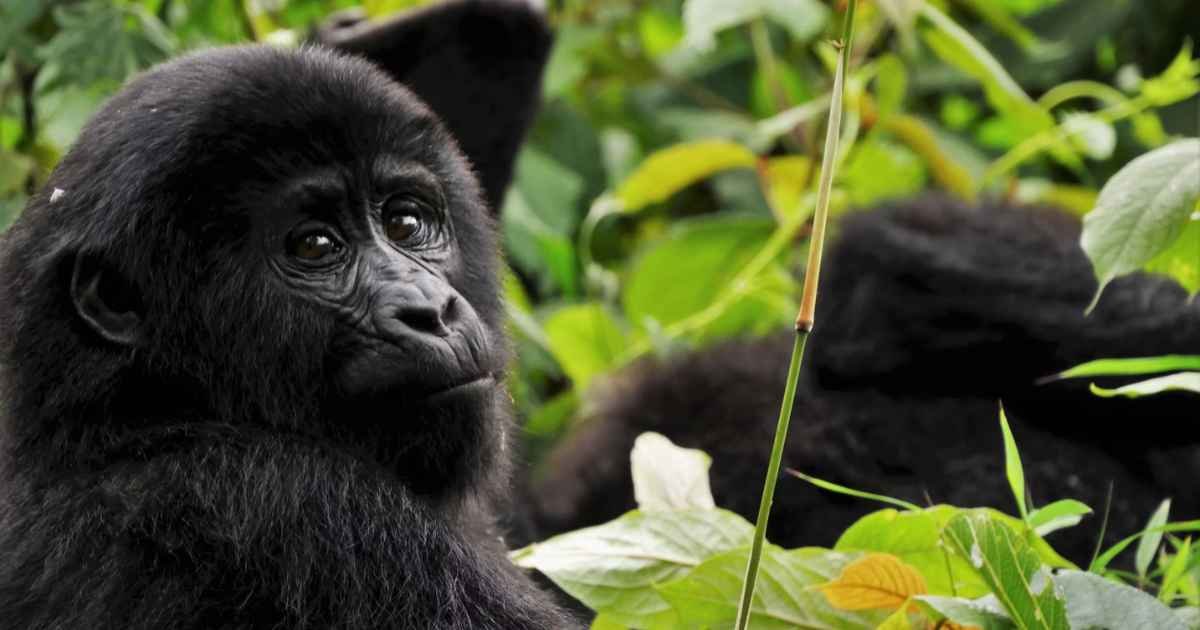
Uganda Gorilla Tours operate in Bwindi Impenetrable National Park and Mgahinga Gorilla National Park. Permits are limited and issued for a particular date and trekking location.
A standard trekking day starts with registration and a ranger briefing. Visitors are assigned to a habituated gorilla family before following trackers into the forest.
The gorillas move freely while feeding and resting. Trackers look for nests, footprints, broken vegetation, feeding remains and other recent signs.
Walking time cannot be guaranteed. A family may be found near the forest boundary or several hours away across steep and muddy terrain.
What Happens When the Gorillas Are Found?
The ranger controls the group’s final approach. Visitors must keep their voices low, avoid sudden movements and follow instructions about positioning and photography.
Mountain gorillas are often feeding, grooming or resting. Visitors should not expect constant movement or dramatic displays.
The standard observation period is regulated. A separate gorilla habituation experience may be available under different permits and conditions in designated areas.
Wildlife authorities can change permit prices, procedures and health rules. Current details should always be confirmed before payment.
Which Bwindi Trekking Sector Is Best?
Bwindi has four principal trekking sectors: Buhoma, Ruhija, Rushaga and Nkuringo. These are geographically separate tourism areas linked by slow mountain roads.
A permit issued for one sector cannot simply be used at another briefing point. The lodge must therefore be chosen after the permit location is known.
Buhoma: Established Infrastructure and Ishasha Access
Buhoma lies in northern Bwindi and has one of the park’s broadest accommodation selections. It fits naturally into itineraries arriving from the Ishasha sector of Queen Elizabeth National Park.
Its established tourism infrastructure makes it popular, but location matters more than reputation. Buhoma is not a convenient base for every permit in southern Bwindi.
Ruhija: High-Altitude Forest Conditions
Ruhija occupies a higher part of eastern Bwindi. Mornings can be cool, and fog or rainfall may affect surrounding roads.
The sector works well with certain routes from Kabale or Queen Elizabeth National Park. Accommodation choices may be more limited, so availability should be checked early.
Rushaga: Flexible Southern Bwindi Planning
Rushaga is a principal trekking centre in southern Bwindi. It offers varied accommodation and can suit journeys approaching through Kisoro, Kabale or the Lake Mutanda area.
Some specialised habituation activities have operated in southern Bwindi. They require separate permits and should not be confused with ordinary trekking.
Nkuringo: Steep Trails and Highland Views
Nkuringo is known for steep terrain. It can be rewarding for active travellers but may be challenging for people with knee, hip or balance concerns.
Accommodation near the briefing point is essential. A long transfer before a demanding trek creates avoidable fatigue.
Planning warning: “Near Bwindi” is not precise enough when choosing a lodge. Ask for the driving time to the exact sector briefing point under normal and wet-weather conditions.
Is Mgahinga a Good Alternative to Bwindi?
Mgahinga Gorilla National Park forms part of the Virunga volcanic ecosystem. Bamboo forest, mountain slopes and open views give it a different character from Bwindi’s dense rainforest.
The park has fewer trekking options but should not be regarded merely as a substitute when Bwindi is unavailable. It can be a destination in its own right, especially for travellers interested in golden-monkey tracking or Virunga scenery.
The most suitable park depends on permit availability, accommodation, physical expectations and the rest of the route.
What Makes a Rwanda Safari Different?
Rwanda’s principal advantage is logistical efficiency. Kigali is connected by good roads to major tourism regions, making it possible to build a shorter itinerary with fewer full-day transfers.
Volcanoes National Park is the country’s mountain-gorilla destination. Akagera National Park provides savannah game viewing, while Nyungwe National Park offers chimpanzee tracking and other forest activities.
Rwanda should not be presented as less wild merely because its journeys are easier to organise. The animals move naturally, weather affects trekking conditions, and sightings are never guaranteed.
Akagera National Park: Rwanda’s Savannah Safari
Akagera protects a mixture of lakes, wetlands, woodland and open savannah. Game drives may reveal large mammals and varied birdlife, while boat trips provide access to aquatic habitats.
The park’s wildlife recovery is associated with long-term conservation and management work. Visitors should still allow enough time for meaningful game viewing rather than treating Akagera as a hurried excursion from Kigali.
An overnight stay generally provides more flexibility than a tightly scheduled day trip.
Nyungwe National Park: Primates and Montane Forest
Nyungwe offers a forest experience distinct from Volcanoes National Park. Chimpanzee tracking, guided walks and other activities may be included, subject to permits and current park arrangements.
The park lies at a considerable distance from Volcanoes National Park. Combining both requires a properly paced national circuit rather than a short weekend schedule.
How Does Gorilla Trekking in Rwanda Work?
Rwanda’s gorilla treks take place in Volcanoes National Park. Visitors normally stay near Musanze or the park region before attending an early briefing.
After group allocation, participants travel to the assigned trailhead. Some routes begin near cultivated land before entering bamboo forest and volcanic terrain.
Rwanda offers easier road access to the park than a road journey from Entebbe to Bwindi. That does not guarantee a shorter or easier trek.
A gorilla family may be close to the forest edge one day and much farther uphill the next. Altitude, mud and steep slopes can make the activity demanding.
Uganda or Rwanda: Which Destination Should You Choose?
| Planning consideration | Uganda | Rwanda |
|---|---|---|
| Best overall use | Longer primate and wildlife circuit | Compact, efficiently organised journey |
| Gorilla destinations | Bwindi and Mgahinga | Volcanoes National Park |
| Savannah extension | Several national parks | Akagera National Park |
| Chimpanzee option | Kibale National Park | Nyungwe National Park |
| Transfer pattern | Longer road journeys | Shorter main transfers |
| Accommodation | Broad range across several sectors | Strong concentration near Volcanoes |
| Suitable traveller | Wants variety and has more time | Values convenience or has fewer days |
Choose Uganda if gorillas are part of a wider journey involving chimpanzees, game drives and boat trips.
Choose Rwanda if the priority is reaching gorilla country efficiently and fitting the experience into a shorter holiday.
Travellers with sufficient time can visit both countries, but visas, border procedures, permits and vehicle arrangements must be coordinated in advance.
How Difficult Is Gorilla Trekking?
Gorilla trekking requires reasonable fitness, balance and mobility. Common trail conditions include mud, exposed roots, steep gradients, tangled vegetation and shallow streams.
A short search can still be strenuous. Conversely, a longer trek may progress at a steady, manageable pace.
Travellers should prepare through hill walking, stair climbing and exercise on uneven ground. Anyone with heart, breathing, joint or mobility concerns should obtain appropriate medical advice before booking.
Should You Hire a Porter?
A porter can carry water, lunch, rain gear and camera equipment. Porters also provide a steady hand on difficult slopes.
Hiring one helps conserve energy and provides direct income to communities around the park. Their assistance is valuable even for experienced walkers.
What Should You Pack for the Trek?
Essential clothing includes:
- Broken-in waterproof hiking boots
- Long, quick-drying trousers
- A long-sleeved shirt
- Long socks
- Gardening or trekking gloves
- A lightweight rain jacket
- A warm layer for the early morning
- A hat
Carry water, a packed lunch, personal medication, sunscreen, insect repellent and waterproof protection for electronics.
Avoid jeans because they become heavy when wet. Do not test new boots on trekking day.
Flash photography is prohibited around the gorillas. Practise adjusting the camera before the trek and bring spare batteries.
When Is the Best Time to Travel?
Gorilla trekking operates throughout the year. Comparatively drier periods often bring firmer trails and more predictable road conditions, but rain remains possible in every month.
Wetter periods produce rich forest colour and may bring lower demand at some lodges. They also create deeper mud, slower walking and more difficult transfers on unpaved roads.
For savannah parks, drier conditions may concentrate animals near dependable water. Green periods can offer attractive landscapes and rewarding birdwatching.
Choose the season according to the entire route, not the gorilla trek alone.
Should You Extend the Journey to Tanzania?
Tanzania provides a strong contrast to Uganda’s and Rwanda’s mountain forests. Instead of tracking primates on foot, travellers cross open landscapes in search of predators, elephants and large herbivore herds.
The Serengeti is suited to extended game viewing and seasonally planned migration journeys. The Ngorongoro Crater offers concentrated wildlife viewing, while Tarangire is known for baobabs, elephants and seasonal gatherings around water.
A combined gorilla-and-Tanzania itinerary normally requires at least ten to fourteen days. Regional flights, baggage restrictions and possible overnight connections must be included in the schedule.
Tanzania complements the gorilla experience; it does not replace it. One provides a close forest encounter, while the other reveals wildlife across a much larger visual scale.
How Can Travellers Visit Responsibly?
Mountain gorillas are vulnerable to infections carried by humans. Visitors with fever, influenza-like symptoms or another potentially contagious illness must disclose it to the responsible authorities.
During the encounter:
- Follow the ranger’s instructions
- Maintain the required distance
- Never touch or feed the gorillas
- Keep voices low
- Avoid sudden movements
- Turn away when coughing or sneezing
- Never use flash photography
- Carry all rubbish out of the forest
Responsible travel also includes hiring local porters, using established local services and seeking permission before photographing community members.
Cultural visits should explain how revenue is shared and allow communities to control how their lives are presented.
Final Verdict: Uganda or Rwanda?
Uganda is the stronger choice for travellers seeking a broad journey through gorilla forests, chimpanzee habitat, savannah parks and waterways. Its longer transfers require patience, but they allow for greater wildlife and landscape variety.
Rwanda is better suited to travellers who value efficient road access and a compact itinerary. Volcanoes National Park can be combined with Kigali or Akagera without the same amount of cross-country travel.
Neither destination guarantees effortless trekking or specific animal behaviour. Preparation, permit coordination and realistic scheduling matter more than descriptions such as “raw” or “luxurious”.
Choose according to the complete journey: available time, physical ability, wildlife interests and desired travel pace. A carefully designed itinerary will remain valuable long after the inconvenience of a muddy trail or delayed road transfer has been forgotten.
Travel Information Disclaimer
This article provides general travel information and does not replace current advice from wildlife authorities, immigration departments, medical professionals or licensed tour operators.
Permit prices, entry rules, health requirements and park procedures can change. Travellers should verify all arrangements before making non-refundable payments, obtain suitable travel insurance and follow the instructions of authorised guides and rangers.
Wildlife sightings and trek duration cannot be guaranteed.
Disclaimer: The information provided in this article is for general informational and travel inspiration purposes only and does not constitute professional travel, safety, or health advice. Safari and gorilla trekking conditions, permit requirements, and local regulations can change. Readers should consult licensed tour operators and check official government sources before planning a trip. The author and publisher disclaim all liability for any travel disruptions, injuries, or financial losses arising from reliance on this content. Always obtain comprehensive travel insurance and follow all wildlife viewing guidelines. This article does not guarantee specific wildlife encounters or experiences.
Looking for answers? Find them in our trusted advice packed with honest solutions.