Most people think size is everything. They look at a tag that says large or medium, assume they know what will fit, and move forward from there. Then the piece arrives and it either swallows them whole or clings in weird places. The real issue isn’t the size, it’s the silhouette. A streetwear silhouette is the overall shape a piece creates on your body, and understanding it changes everything about how you shop and how you look. The same size can create completely different silhouettes depending on shoulder width, chest proportions, sleeve length, and hem placement. This guide walks you through the actual mechanics of streetwear silhouettes so you can find pieces that work for your actual body instead of guessing based on a number.
What A Silhouette Actually Is
A silhouette is the outline created when someone looks at you from a distance. If you were a shadow on the wall, that shadow is your silhouette. In streetwear, silhouette is controlled by how fabric sits on specific parts of your body. The placement of your shoulder seam determines whether the piece looks fitted or oversized. The taper at your ankle determines whether pants look sharp or slouchy. The length of a hoodie determines whether it reads as intentional or accidental. Most people ignore these details and focus only on whether something is technically their size, which is why they own clothing that fits like it was made for someone else.
Think of silhouette as the foundation of style. Two people can wear the same hoodie in the same size and look completely different based on what silhouette actually works for their frame. The first person’s proportions align with the garment’s proportions, so it looks clean and intentional. The second person’s proportions clash with the garment’s proportions, so it looks sloppy even though it’s technically the same size. Silhouette is the hidden variable nobody talks about, which is why learning to see it is the breakthrough moment in how you shop.
The Four Core Streetwear Silhouettes
Streetwear breaks down into roughly four core silhouettes, and understanding which one works for you is the entire game. These silhouettes overlap and bleed into each other, but thinking about them as distinct helps you make decisions.
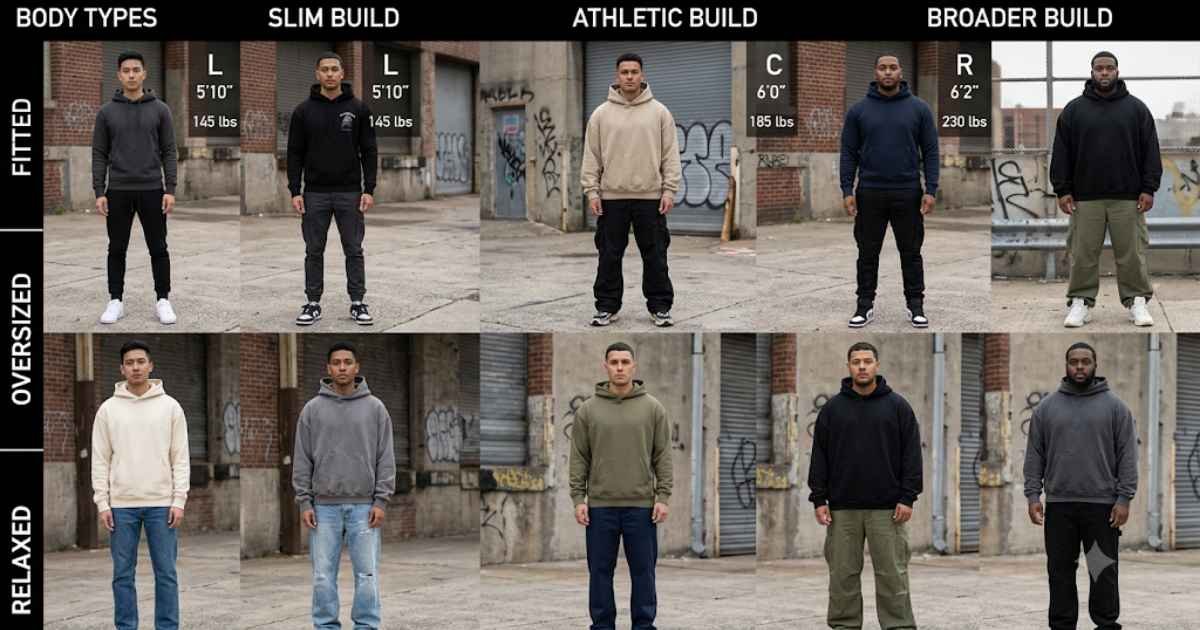
Fitted is when the fabric follows your body closely through the shoulders, chest, torso, and down the arms. The shoulder seam sits on your actual shoulder. The sleeves taper toward the wrist. The body skims your frame without cling. Fitted streetwear reads clean, intentional, and professional. It suits people with narrower frames, athletic builds where musculature naturally fills the garment, or anyone who prefers their silhouette defined. The limitation with fitted is that it leaves no room for error. A fitted piece that’s half a size too small reads terrible, and a fitted piece in the wrong proportions for your frame becomes uncomfortable fast.
Relaxed is when fabric has room but isn’t drowning you. The shoulder seam sits slightly past your natural shoulder. The chest has breathing room without billowing. The sleeves and pant legs taper enough that the piece isn’t shapeless. Most quality streetwear hoodies are cut relaxed because it’s the most forgiving silhouette across body types. Someone with narrow shoulders can wear a relaxed hoodie without looking tiny. Someone with broader shoulders can wear the same hoodie without feeling squeezed. Relaxed is the silhouette that makes one size work across multiple people.
Oversized is when volume increases dramatically. The shoulder seam drops two to three inches past your natural shoulder. The chest expands to give real room. The sleeves land at your knuckles. The hem reaches mid-thigh or lower. Oversized is the silhouette most associated with modern streetwear culture. The risk is that oversized pieces can read as sloppy if proportions don’t align. An oversized piece on someone with a narrow frame can swallow them. The same piece on someone with broader shoulders can look intentionally voluminous and sharp.
Cropped is when pieces intentionally hit shorter than standard. A cropped hoodie hits at your true waist instead of your hips. A cropped tee ends at your hip bone. A cropped jacket ends at your ribcage. Cropped changes the entire proportion of an outfit by exposing more skin and balancing volume elsewhere. Cropped pairs beautifully with high-waisted bottoms or longer outerwear. It works well on taller frames where standard lengths can look baggy. The limitation is that cropped requires intentionality in the rest of your outfit. A cropped top with cropped bottoms can read awkward on shorter frames.
How Proportion Affects Everything
Here’s the hands-on detail that took me embarrassingly long to notice. When you’re shopping, the proportions of a piece matter infinitely more than the brand or the specific size number. A “large” from one brand can be cut completely differently than a “large” from another brand, and both can work beautifully on the same person depending on the silhouette.
Understanding this means checking specific measurements instead of relying on size alone. Most quality streetwear brands list actual measurements: shoulder width, chest width, sleeve length, and body length. These numbers tell you whether the silhouette will work for you before you ever try it on.
Here’s the specific breakdown of how proportions work:
- Shoulder seam placement determines fitted vs oversized instantly and affects how everything else sits
- Chest width controls whether the piece will feel boxy or balanced on your frame
- Sleeve length directly impacts whether you look like you’re wearing your dad’s clothes
- Body length determines whether you create visual balance or look proportionally confused
- Taper or lack thereof at cuffs and hems signals whether the piece feels intentional
When these five elements align with your actual body proportions, magic happens. When they don’t, even expensive pieces look wrong.
The Dropped Shoulder Revolution
Dropped shoulders are the single most important silhouette development in modern streetwear, and honestly, they’re why oversized pieces work on more people than they should. A dropped shoulder is when the shoulder seam sits intentionally past your natural shoulder, usually by two to four inches depending on how extreme the drop is.
The genius of dropped shoulders is that they create volume at the shoulder without making the sleeve massive. You get that relaxed, fashion-forward vibe without the piece looking like a costume. Dropped shoulders also work across different shoulder widths better than a standard shoulder seam. Someone with narrow shoulders wears a dropped shoulder hoodie and the volume creates proportion. Someone with broad shoulders wears the same piece and the drop creates intentional style instead of awkward excess.
Most quality streetwear brands now build dropped shoulders into their relaxed and oversized fits because it solves proportions for more people. When you’re shopping, noticing the shoulder placement is the first thing to check. If the shoulder seams sit reasonably close to your actual shoulders, keep shopping. If they sit dramatically dropped and the rest of the proportions are tight, you’ve found a piece that probably works.
Body Type and Silhouette Matching
Different body types genuinely do work better with different silhouettes, and this isn’t about restriction, it’s about understanding your assets. Someone with a narrow, straight frame usually looks best in relaxed or oversized silhouettes because volume balances their proportions. Someone with an athletic frame can wear fitted pieces because muscle naturally fills fabric. Someone with a rounder midsection might prefer oversized through the body but tapered at cuffs and hems so the silhouette doesn’t become shapeless.
The honest limitation here is that silhouette preference is personal. I prefer oversized through the shoulders and chest, which means I default to hoodies and jackets cut with dropped shoulders. That preference isn’t universal, and plenty of people look better in fitted or relaxed pieces. The point is not to have one perfect silhouette, but to understand which ones work for your specific frame.
Testing in person, when possible, changes everything. Online shopping requires trusting measurements. In-person shopping lets you actually see how a silhouette reads on your body. If you’re building a wardrobe online, get comfortable with one brand’s proportions first, then branch out knowing how their sizing translates. Brands like hellstar lean into relaxed proportions consistently, so once you know their fit, other pieces follow the same logic.
Layering and Silhouette Stacking
Understanding silhouettes becomes even more critical when you’re layering pieces, because two silhouettes stacked together create a new overall silhouette. An oversized hoodie over a fitted tee looks intentional. An oversized hoodie over an oversized tee looks sloppy. A fitted jacket over an oversized hoodie creates visual interest through contrast. Two relaxed pieces can work if the lengths stagger and the colors separate.
The principle is simple: varying your silhouettes across layers prevents visual confusion. Start with a fitted or relaxed base, then add an oversized outer piece. Or do the opposite: oversized base with a fitted jacket over top. The mix is what creates style.
This is where travis scott shoes becomes part of the silhouette equation. Structured, chunky footwear grounds an oversized top and tapered bottom. Minimal, sleek footwear enhances a fitted silhouette. Sneakers with presence anchor relaxed pieces. Footwear completes the silhouette story.
Seasonal Silhouette Shifts
Silhouettes also shift with seasons, and understanding why prevents you from buying pieces that don’t actually work year-round. Summer streetwear tends toward relaxed and fitted because volume traps heat. Oversized pieces still work in summer, but they need to be cut from lighter fabric and be cropped enough to expose skin. Winter streetwear embraces oversized pieces because heavy fabric and volume create genuine warmth.
Spring and fall are the transition seasons where all silhouettes work because layering is expected. This is when dropped shoulder hoodies and relaxed pieces truly shine because they accommodate layers underneath without looking constrained.
Pay attention to fabric weight when considering silhouette. A heavyweight oversized hoodie in summer won’t work regardless of how good the proportions are. A lightweight oversized tee in winter won’t keep you warm. Silhouette and fabric weight work together.
Shopping With Silhouette in Mind
Once you start seeing silhouettes, you can’t unsee them. Every piece starts signaling whether it will work for your frame instantly. The goal is not to lock yourself into one silhouette, but to understand which ones flatter your proportions most frequently. From there, you can buy confidently.
Brands like geedup focus on relaxed silhouettes across their lineup, which means once you understand their proportions, shopping becomes fast. You know an oversized hoodie will drop at a specific measurement, so you can decide whether that works for you without extensive research.
Build a personal silhouette preference guide. For a month, notice which pieces in your current rotation actually get worn and which sit unworn. The worn pieces are aligned with your preferred silhouettes. The unworn pieces probably clash with your natural proportions. Use that information to guide future purchases.
Final Words
Silhouette is the invisible force that determines whether clothing works or fails. Understanding that a piece being your size doesn’t mean it will fit your proportions is the breakthrough moment. From there, learning the four core silhouettes and how they interact with your frame turns you into someone who actually understands how to dress. You stop blaming yourself for pieces not fitting and start understanding that silhouette mismatch was the issue. Once you’re shopping with silhouettes in mind, you’ll own fewer pieces that actually work better, fit better, and make you look better. That’s the real value of understanding how streetwear silhouettes actually function.
FAQs
Q: How do I know which silhouette works best for my body type?
A: Try on pieces in different silhouettes and notice which ones look intentional versus which ones feel off. If oversized pieces overwhelm your frame, you might prefer relaxed or fitted. If fitted pieces feel restrictive, relaxed or oversized probably works better. Trust what you see in the mirror over what brands recommend.
Q: Can I wear oversized pieces if I have a narrow frame?
A: Absolutely. Oversized pieces create volume that balances narrow frames beautifully. The key is ensuring the shoulder drop isn’t extreme and the piece is tapered at cuffs and hem so it doesn’t become a costume.
Q: Does shoulder seam placement really matter that much?
A: Yes. Shoulder placement determines fitted versus oversized instantly and affects how everything else on the piece reads. It’s the first thing to check when evaluating whether a silhouette will work.
Q: Should I always buy the same size across brands?
A: No. Different brands cut their silhouettes differently, so sizing varies significantly. Always check measurements instead of relying on size numbers. One brand’s large might fit completely differently than another’s.
Q: How do I mix silhouettes when layering?
A: Vary your silhouettes to create visual interest. Oversized over fitted works. Fitted over oversized works. Avoid stacking two oversized pieces unless they’re dramatically different lengths or colors. The mix is what creates intentional style.
Disclaimer: The information provided in this article is for general informational and style education purposes only. It does not constitute professional fashion advice or guarantee specific aesthetic outcomes. Garment sizing and silhouettes vary widely by brand and body type; individual results will differ. The mention of specific brands is illustrative and does not imply endorsement. The author and publisher disclaim any liability for purchasing decisions or dissatisfaction arising from reliance on this content. Always refer to specific garment measurements for the best fit.
Explore the topics that matter to you—our curated collection keeps you fully engaged and growing.