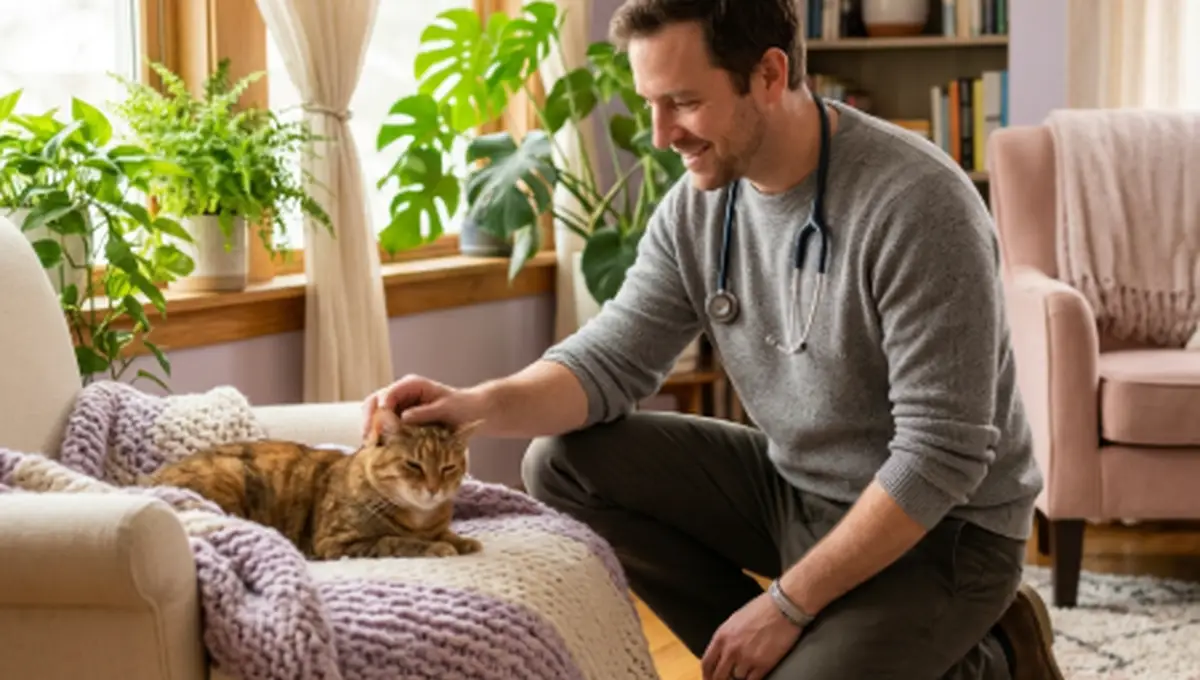
There’s a particular kind of ache that comes with watching a beloved cat grow old or grow sick. The purrs slow down. The naps grow longer. The bright eyes that once watched every movement in the room begin to dim. For many cat parents, this stage brings an impossible question: how do you say goodbye in a way that honors everything your cat has given you?
This post is for anyone facing that question right now, or anyone who wants to be prepared before the time comes. We’ll talk about what end-of-life care for cats can look like, how to recognize when it’s time, and why more families are choosing to spend their cat’s final moments somewhere familiar and calm.
Recognizing When Your Cat’s Quality of Life Is Changing
Cats are experts at hiding discomfort. It’s an instinct passed down from their wild ancestors, who couldn’t afford to show weakness. Because of this, the signs that a cat is struggling can be subtle at first.
Watch for changes like:
- Decreased interest in food or water
- Withdrawal from family members or favorite spots
- Difficulty jumping, walking, or using the litter box
- Increased sleeping or lethargy
- Labored breathing or persistent discomfort
None of these signs alone means it’s time to say goodbye. But when several appear together and don’t improve, it’s worth having an honest conversation with a veterinarian about your cat’s comfort and prognosis. Quality of life, not just length of life, should guide this decision.
Why More Families Are Choosing In-Home End-of-Life Care
Traditionally, euthanasia happened at a veterinary clinic. For many pets, that still works well. But clinics can be loud, bright, and full of unfamiliar smells, which can cause additional stress for a cat who is already unwell. Cats, in particular, are creatures of routine and territory. A car ride and a waiting room full of strangers can turn an already painful day into something even harder.
This is part of why in-home options have grown so popular. When a cat is allowed to stay in the space they know best, surrounded by their favorite blanket, their sunny window spot, or the family members who love them, the entire experience often feels calmer. Everyone involved, including the cat, tends to feel less afraid.
What to Expect During an At-Home Appointment
Every provider does things slightly differently, but most in-home appointments follow a similar rhythm. A veterinarian or trained professional arrives at your home and takes time to talk with you first. This is a moment to ask questions, share stories about your cat, and simply breathe before the next step.
Your cat is typically given a sedative first. This allows them to relax fully, often falling asleep in your arms or curled up on their favorite spot, before the final medication is administered. Because your cat is already calm and comfortable, the process tends to feel peaceful rather than clinical.
Afterward, many providers offer time for you to say goodbye at your own pace, along with guidance on aftercare options such as cremation or burial.
Preparing Your Home and Heart for the Day
There’s no perfect way to prepare for this kind of loss, but small choices can make the day feel gentler.
Consider:
- Choosing a quiet, comfortable room your cat loves
- Inviting family members or children who want to be present
- Playing soft music or simply sitting in silence
- Having a favorite blanket or toy nearby
- Taking a few photos or a paw print, if that feels right for you
There’s no wrong way to grieve, and there’s no wrong way to say goodbye. What matters most is that your cat feels safe, and that you feel supported.
Choosing Support That Understands This Moment
Grief is heavy enough without having to navigate unfamiliar logistics on top of it. That’s why having compassionate, experienced support matters so much during this time.
Cat euthanasia at home gives your cat the chance to spend their final moments wrapped in the comfort of familiar smells, favorite napping spots, and the people who love them most, rather than the stress of a clinical setting. At EverPaw, this is exactly the kind of care we’ve built our service around. Our team takes the time to walk you through every step, answer your questions with patience, and make sure both you and your cat feel supported from the first phone call through the final goodbye.
We understand that no two cats, and no two families, are the same. Some want a quiet, private farewell. Others want to gather everyone who loved their cat for one last visit. Whatever feels right for your family, our goal is to make that possible with warmth and professionalism.
Carrying Their Memory Forward
Losing a cat is losing a companion who greeted you at the door, curled up on your lap during long nights, and offered quiet comfort without ever needing to say a word. Choosing how they leave this world is one final act of love you can offer them.
If you’re beginning to think about end-of-life care for your cat, know that you don’t have to figure it out alone. Reach out to EverPaw to learn more about how our at-home services work, and let us help you give your cat a peaceful, dignified farewell surrounded by everything they love most.
Disclaimer: The information provided in this article is for general informational and emotional support purposes only. It does not constitute professional veterinary or medical advice. End-of-life decisions for pets should always be made in consultation with a licensed veterinarian who can assess your cat’s specific condition and quality of life. The mention of EverPaw or any specific service is for context and does not imply endorsement. The author and publisher disclaim all liability for any decisions or outcomes arising from reliance on this content. Every pet and family situation is unique. This article does not guarantee specific veterinary outcomes or service availability.
Explore methods that foster clarity—our clarity-fostering techniques help you think with precision.