Field of view is one of the most important numbers on an AR glasses specification sheet, yet the largest number is not automatically the answer to every viewing need. FOV describes an angular viewing area, not physical screen width. Its practical effect changes with the content, apparent screen size, resolution, and spatial behavior of the display. A movie asks for visual scale. A game adds motion and peripheral action. Text needs enough detail to remain readable. Understanding these relationships makes FOV much more useful than treating it as an isolated specification.
Field of View Is Really About How Much Visual Space Content Occupies
Degrees Tell You More Than a Virtual Screen Number Alone
A virtual screen may be described as 200 inches or more, but that number needs context. Apparent screen size depends on the assumed viewing distance, so two large virtual-screen figures do not necessarily describe the same visual geometry. Field of view provides another piece of that picture because it measures the angular extent occupied by the displayed image. In simple terms, a larger angular area makes content take up more of the wearer’s view. This is why buyers comparing ar glasses should read virtual screen size and FOV together. One describes perceived scale under a particular viewing setup, while the other indicates how broadly the image extends across the visual field.
Movies and Games Use Visual Width Differently
Different content makes use of FOV in different ways. A film can benefit from a broad viewing area because landscapes, wide compositions, and cinematic framing gain presence when the image occupies more visual space. Gaming adds another dimension. Interfaces, characters, environmental details, and movement can appear across different parts of the frame, so a broad display area can strengthen the sense of scale. RayNeo GT Max AR Glasses pair a 59-degree FOV with a 267-inch virtual cinema display. The combination is designed for movies, gaming, and extended viewing sessions. Instead of treating 59 degrees as a target that every AR product must reach, it makes more sense to connect that number with its intended experience: an expansive personal screen where visual content occupies a substantial portion of the wearer’s view.
More Visual Area Also Makes Pixel Density Important
FOV cannot be separated from the amount of image detail available within it. As a display occupies a wider angular area, viewers still need sufficient visual information to define text, edges, textures, and other details. This is where pixels per degree, or PPD, becomes useful. PPD describes how many display pixels cover one degree of the viewer’s field of view, providing a way to think about angular image density. GT Max specifies 38 PPD alongside its 59-degree FOV and Full HD 1920 × 1080 Micro-OLED display. Its optical system also supports a 200,000:1 contrast ratio and ΔE below 2 color accuracy. These specifications describe different aspects of the image, showing why FOV should be evaluated as part of a complete optical and display system rather than as a standalone measure of quality.
The Right FOV Depends on What Happens Inside the Viewing Area
Head Movement Changes How a Wide Screen Feels
A large virtual image can behave in several ways when the wearer turns their head. This spatial behavior influences how the available FOV feels during actual use. GT Max uses native 3DoF through the Zone 360 3DoF Chip and offers Pinned, Steady, and Follow modes. Pinned Mode keeps the virtual display fixed in one position, so the wearer can move their head relative to that screen. Follow Mode keeps the screen centered as head orientation changes. Steady Mode sits between these behaviors by maintaining stable viewing with subtle natural movement.
Cinema Viewing Benefits From Presence, Not Just Width
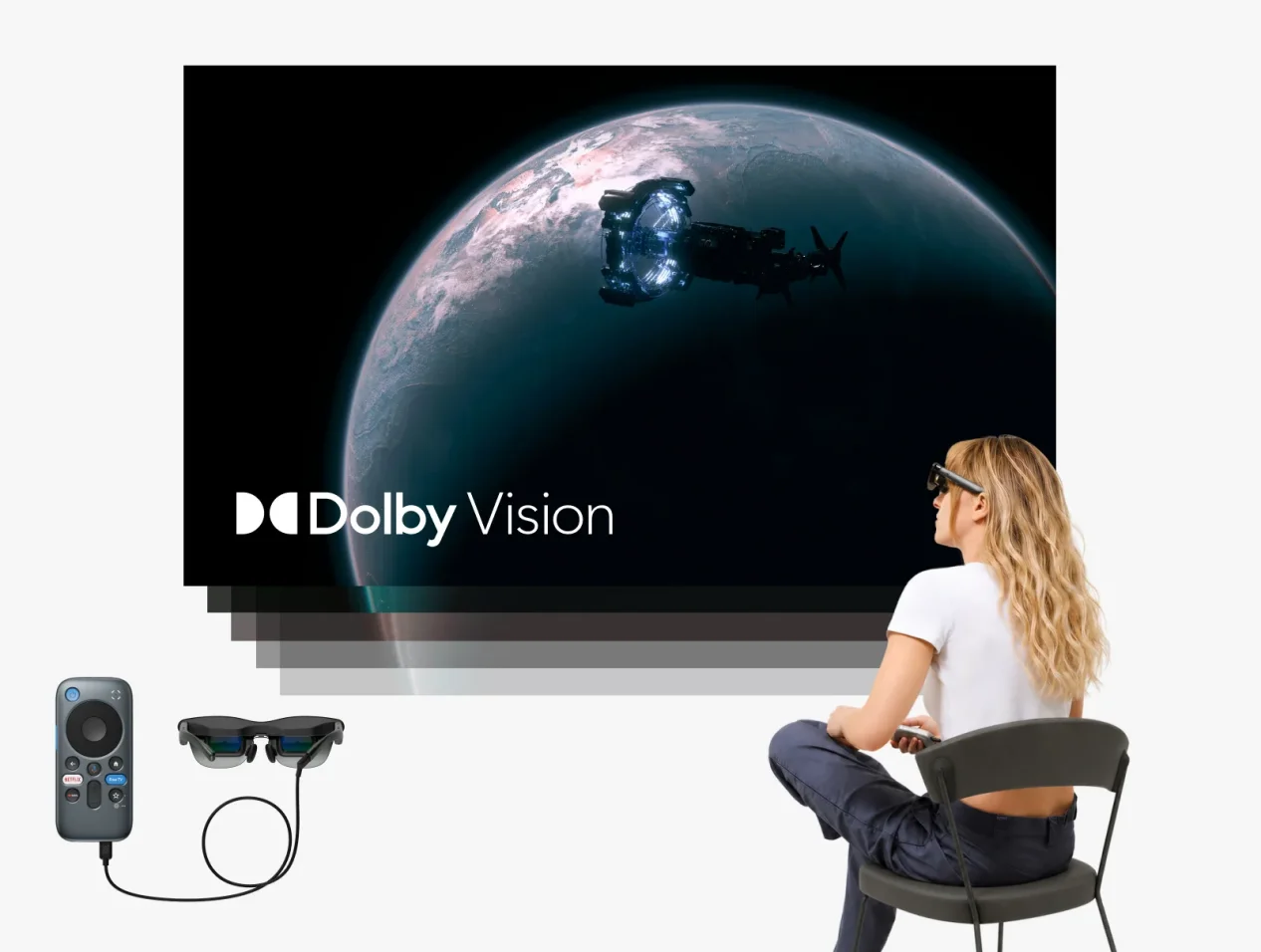
A cinema-like experience depends on more than making an image wide. The picture also needs contrast, color, motion performance, and sufficient brightness to make the visual area useful. GT Max combines its 59-degree FOV with 98% DCI-P3 color coverage, 145% sRGB, up to a 120Hz refresh rate for 2D content, and up to 1,200 nits perceived brightness in non-pinned mode. It also supports AI HDR, while pairing with Pocket TV Pro enables a Dolby Vision AR experience. These features illustrate a broader principle when judging FOV: immersion comes from the way multiple display characteristics work together. A wide visual field establishes scale, while image performance determines what fills that space.
Your Intended Viewing Distance Exists Virtually
Physical televisions are easy to understand because both their size and distance from the viewer can be measured directly. AR glasses create those relationships optically. A virtual display can appear large because the optical system presents it as though it occupies a particular size at a particular distance. That is why apparent screen size and angular FOV should not be confused. The 267-inch virtual display of GT Max describes perceived cinema-scale viewing, while its 59-degree FOV describes angular coverage. This distinction also explains why there is no universal FOV that every pair of AR glasses “needs.” The appropriate range depends on whether the product is designed around expansive movies, gaming, compact information, or another visual purpose. FOV only becomes meaningful once the intended virtual viewing geometry is understood.
Conclusion
AR glasses do not need one universal field of view because different visual experiences demand different amounts of angular space. FOV becomes meaningful when it is considered alongside apparent screen size, PPD, resolution, spatial behavior, and the content being displayed. Movies may prioritize cinematic presence, while games add motion and information across the frame. A wider number alone cannot describe the complete experience. The most useful FOV is the one that gives the intended content enough visual space while working coherently with the rest of the display system.
Disclaimer: The information provided in this article is for general informational and educational purposes only. It does not constitute professional technology, product, or purchasing advice. AR glasses specifications, FOV ratings, and display performance vary by model and manufacturer; readers should verify all details directly with the brand before making a purchase. The mention of RayNeo GT Max or any specific product is for context and does not imply endorsement. The author and publisher disclaim all liability for any purchasing decisions, technical issues, or performance outcomes arising from reliance on this content. Always compare specifications based on your intended use case. This article does not guarantee specific viewing experiences or product quality.
Explore methods that unlock hidden potential—our potential-unlocking techniques reveal your true strengths.