You’ve got a formula you believe in, a brand name picked out, and a launch date circled on the calendar. Then you request a packaging quote and the number comes back: 5,000 units minimum. For a lot of first-time beauty founders, that’s the exact moment a real launch starts to feel like a hypothetical one.
Here’s what’s actually going on behind that number — and why it isn’t as fixed as it first looks.
Why MOQs Exist in the First Place
A minimum order quantity isn’t a supplier being difficult, and it isn’t really about gatekeeping small brands. It’s math. Every production run carries fixed setup costs — creating a custom die for a box shape, calibrating a print run and getting the color right, prepping tooling for a bottle or jar mold — and those costs stay essentially the same whether you order 100 units or 10,000. Spread across a small order, they make the per-unit price unworkable for the supplier to even offer. Spread across a few thousand units, the economics finally make sense for everyone. That’s the entire mechanism: MOQ exists to make fixed setup costs sustainable across a production run, not to lock small brands out on principle.
Understanding this changes how you approach the conversation. You’re not asking a supplier for a favor when you push on MOQ — you’re asking which of their fixed costs can be avoided or shared, and that’s usually a solvable engineering and scheduling question, not a rule carved in stone.
Where MOQs Actually Bite Hardest
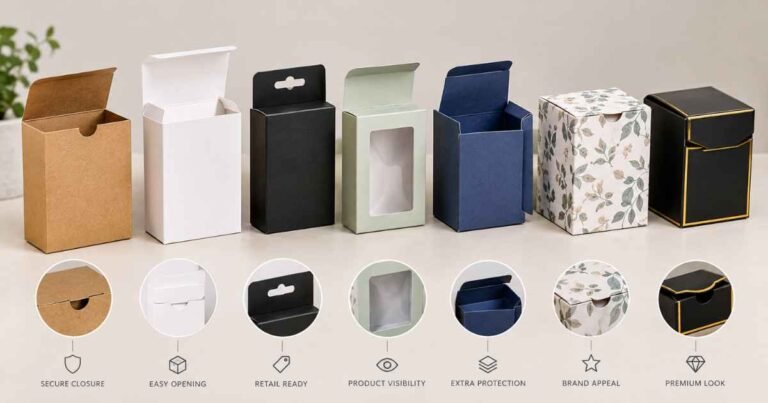
Not all packaging carries the same minimums, and knowing the difference changes where you should spend your negotiating energy. Primary packaging with custom molds — a bespoke bottle or jar shape unique to your brand — tends to carry the highest minimums, often running into the thousands of units, because mold creation is a genuinely expensive, one-time tooling investment that has to be recovered. Secondary packaging like printed boxes is usually far more flexible, especially if you’re willing to use a standard, existing box structure rather than commissioning a fully custom die-cut shape.
If your MOQ problem is specifically about boxes rather than bottles or jars, that’s very often the easier half of the equation to solve — a growing number of cosmetic packaging suppliers with low minimum orders will flex on box quantities even when they can’t move on a custom bottle mold. That’s because the box doesn’t require the same upfront tooling investment a unique container shape does.
Questions Worth Asking Before You Sign Anything
- What’s the minimum for the specific SKU, size, and finish I need — not just the supplier’s general advertised minimum?
- Is there a lower MOQ available if I use a stock or standard structure instead of commissioning a fully custom die?
- Can the order be staged — a smaller first production run, with pricing that improves as I place repeat orders?
- Are there setup, plate, or die charges on top of the per-unit price, even at their stated minimum quantity?
That last question matters more than most first-time founders expect. A supplier’s minimum might genuinely be 500 units, but if there’s also a separate setup or die charge layered on top, your real landed cost per unit at that small volume can still be brutal — sometimes worse than just ordering a larger run from a different supplier would have been. Always ask for the full landed cost at your actual planned order size, worked out in real numbers, not just the headline per-unit price at their minimum.
A Simple Example of the Math
Say a supplier quotes $0.60 per box at a 5,000-unit minimum, with no separate setup fee — that’s a $3,000 order. Another supplier offers the same box style at $1.10 per unit with a 500-unit minimum, but adds a $200 die charge for a first-time custom shape. That’s $750 total for a run one-tenth the size. The per-unit price looks worse on paper, but the total cash outlay and inventory risk are dramatically lower — which matters enormously more than per-unit cost when you haven’t yet proven the product sells. This is the calculation worth running before assuming the “cheaper per unit” quote is actually the better deal for where your brand is right now.
The Honest Trade-Off
Lower MOQs almost always come with a real trade-off, and it’s worth naming plainly rather than pretending it doesn’t exist: less customization. A standard box shape instead of a unique die-cut silhouette, fewer color or finish options, sometimes a longer production wait if you’re sharing manufacturing capacity with other small orders running through the same line. For most first launches, that’s a completely fair trade. You can move to a fully custom structure once sales volume actually justifies the tooling investment, rather than paying for bespoke packaging upfront on a brand that hasn’t yet proven there’s demand for it.
If you’re trying to figure out where your own numbers land, request a custom cosmetic packaging quote before you commit to anything — most suppliers will give you real, order-size-specific numbers rather than a generic rate card.
Negotiating From a Position of Understanding, Not Pleading
The founders who navigate MOQs best don’t treat the number as a fixed wall to beg against — they treat it as one variable among several that can be adjusted once you understand what’s actually driving it. Standard structures instead of custom dies, staged orders instead of one large commitment, and a clear-eyed comparison of total landed cost rather than just per-unit price usually open up more room than the first quote suggests. Ask specifically which part of the minimum is about material cost, which part is tooling, and which part is just standard company policy — the honest answer is often “some of each,” and each of those has a different amount of flexibility built into it.
Packaging MOQs feel like a wall because nobody explains the mechanism behind them. Once you understand that it’s fixed-cost math rather than an arbitrary gate, it becomes a conversation you can actually have — and, in most cases, one you can move.
Disclaimer: The information provided in this article is for general informational and educational purposes only. It does not constitute professional packaging, manufacturing, or business advice. Minimum order quantities, pricing structures, and supplier terms vary by provider and project. Readers should verify all details directly with suppliers and negotiate based on their own specific requirements. The author and publisher disclaim all liability for any financial outcomes or purchasing decisions arising from reliance on this content. Always request detailed quotes and understand total landed costs before committing to any order. This article does not guarantee specific MOQ reductions or supplier flexibility.
Get ready to embrace your journey—our journey-enhancing tools support you every step.