A field trip begins before the class reaches the coach. Students need to understand where they are going, what they should notice and how the day connects to what they have been learning.
A short classroom quiz can help introduce that purpose. The practical preparations matter just as much: clear instructions, accessible information and adults who have what they need for a day away from their usual classroom setup. This checklist connects the learning activity with those everyday details.
Give the trip one clear learning question
Choose a question students can carry with them throughout the visit.
At a museum, it might be how objects reveal the way people lived. At a nature site, it might be how a habitat provides shelter. The question should be specific enough to guide attention but broad enough to allow different observations.
Use a brief quiz or discussion before departure to establish the ideas students will need. Treat wrong answers as information about what to explain, not simply as scores to record.
Keep the digital activity small
If your class already uses Blooket or another quiz tool, prepare a short activity around the visit’s central ideas. There is no need to introduce an unfamiliar platform at the same time as an unfamiliar setting.
For example, students might match an object to a possible use, distinguish an observation from a guess, or choose which question would help them investigate something further. Keep the vocabulary consistent with the language they will encounter during the visit.
Prepare a paper or verbal alternative. The learning question should still work if a device, connection or classroom display is unavailable. The game is one way to introduce the task, not the task itself.
Separate learning materials from trip administration
Keep the student activity simple enough to use while moving around. A single sheet with three prompts may be more practical than a large workbook.
Administrative information should be handled separately under the school’s procedures. Staff need access to the information relevant to their roles, while student-facing materials should avoid unnecessary personal details.
Confirm the schedule, meeting points and responsibilities through the school’s established process. An online checklist can support preparation, but it does not replace the arrangements made for your particular group and destination.
Prepare the adults’ everyday kit
Teachers often spend the final evening checking student materials and leave their own bag until the morning.
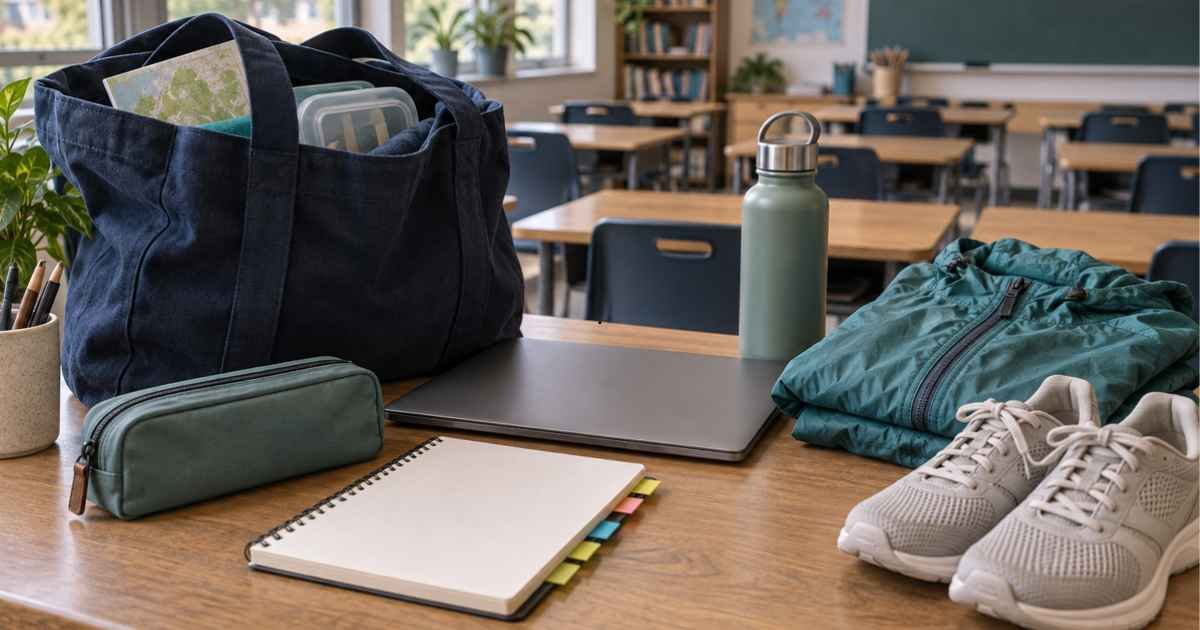
Set aside the practical items you already know you will use: a suitable layer, water, a charged phone where required, and the approved trip information. Check the forecast and the amount of walking in the itinerary before choosing footwear.
Try your shoes with the socks you intend to wear. For adults comparing wool options, MP Magic’s merino sock selection guide is a retailer-published reference covering several models. Choose according to your own shoe fit, preferred thickness and care needs rather than assuming that a hiking label makes every pair suitable.
These are adult packing choices, not additional purchases to request from students. A familiar, comfortable combination is usually a better starting point than testing new footwear on the day.
Plan for the quiet moments
A trip contains more than the main activity. There may be time spent waiting for transport, regrouping or preparing to enter a building.
Have a short observation prompt ready for those moments. Ask students to notice a material, compare two objects or formulate a question for the guide. An activity that can be explained aloud is especially useful when it is inconvenient to take out devices or worksheets.
Leave room for pauses rather than trying to fill every minute. The schedule should give the group time to arrive, listen and move to the next part of the visit.
Bring the experience back into the classroom
After the trip, return to the original learning question.
Ask students which observations supported their first ideas and which made them reconsider. You can reuse a few questions from the preparation activity, adding examples drawn from the visit. The comparison gives the discussion a clear direction without requiring a long new assignment.
Finish with one question students would investigate next. That response can help shape a follow-up lesson and gives the visit a place in the wider learning sequence.
The preparation is working when the adults can manage the practical day and the students know what they are trying to notice. A short quiz, a clear question and a thoughtfully packed bag each play a different part in making that possible.
Disclaimer: The information provided in this article is for general informational and educational purposes only. It does not constitute professional teaching, trip planning, or child safety advice. Field trip procedures, administrative requirements, and student supervision policies vary by school and district; teachers must follow their institution’s official guidelines and approval processes. The mention of specific tools, platforms, or products is illustrative and does not imply endorsement. The author and publisher disclaim all liability for any incidents, planning issues, or outcomes arising from reliance on this content. Always prioritize student safety, accessibility, and school policy compliance. This article does not guarantee specific learning outcomes or trip success.
Looking for answers that truly satisfy? Find them in our satisfying solutions—crafted to resolve your deepest questions.