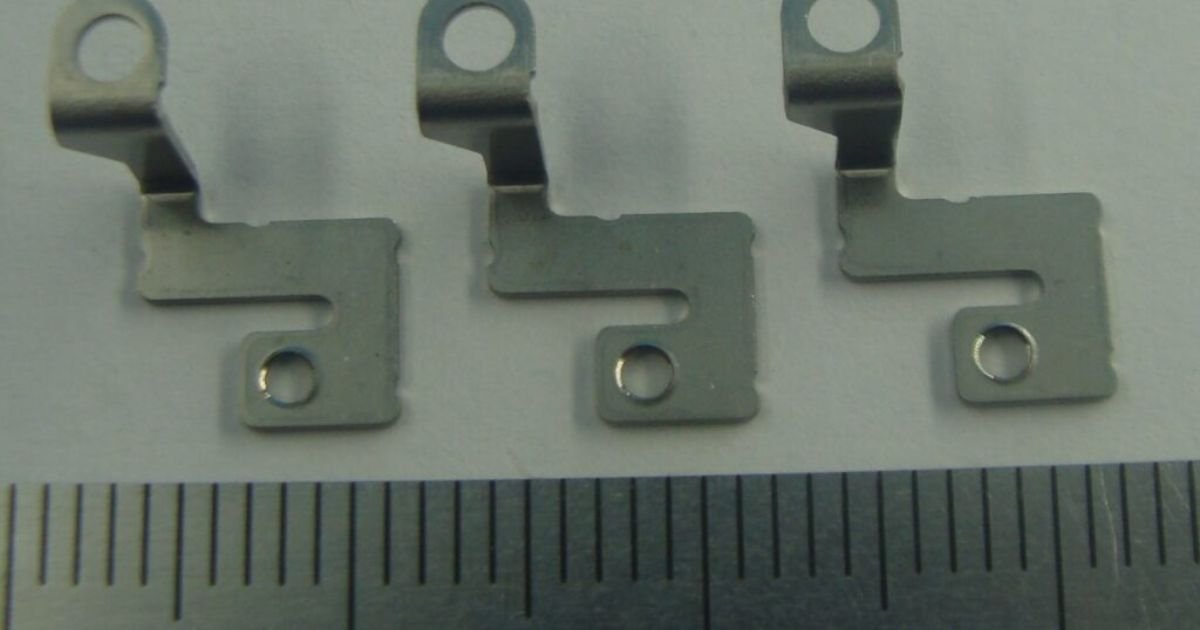
Custom stainless steel stamped parts help manufacturers create metal components that match specific product designs and operating requirements. From small clips to complex brackets and precision enclosures, these components can be produced in different shapes, sizes, and thicknesses.
The stamping process is particularly useful when a product requires repeatable dimensions, reliable material performance, and an efficient manufacturing method. By working from an approved drawing or three-dimensional model, manufacturers can develop tooling that produces components suited to the intended assembly.
Why Choose Custom Stamping?
Standard components do not always meet the needs of specialized equipment. A custom stamped part can be designed around a particular mounting position, available space, load requirement, or connection method.
For example, a machinery manufacturer may need a stainless steel bracket with specific holes and bends. An electronics company may require a shielding component with precise cutouts. Custom stamping allows these features to be incorporated into the part design.
It can also reduce assembly complexity. When several features can be formed in one production process, manufacturers may avoid additional machining or joining operations.
Designing the Component
Successful custom stamping starts with a clear understanding of the component’s function. Engineers should identify the loads the part will experience, the surrounding environment, and the way it connects to other components.
The drawing should specify material grade, thickness, critical dimensions, tolerances, hole positions, bend angles, and surface requirements. Three-dimensional models can help communicate complex geometry and identify potential interference during assembly.
Designers should also consider bend radii and distances between holes and bends. Features placed too close together may distort during forming. Appropriate spacing can improve manufacturability and reduce the risk of cracking or deformation.
Stainless steel can exhibit work hardening and springback during forming. These characteristics must be considered when designing the part and developing the stamping tool.
Selecting the Material
Material selection affects corrosion resistance, formability, strength, appearance, and overall cost.
Grade 304 is a common option for general-purpose stamped components. Grade 316 may be preferred where improved resistance to particular corrosive environments is required. Grade 430 can be suitable for selected applications where its properties meet the design requirements.
The required thickness also influences performance. Thicker material may provide greater rigidity but can require higher press force and more demanding tooling. Thinner material may reduce weight but needs careful handling to avoid distortion.
Manufacturers should verify that the selected material is appropriate for the actual operating conditions rather than choosing solely on price.
Tooling and Production Methods
Custom stainless steel stamping may involve blanking, piercing, bending, forming, embossing, or deep drawing. The best process depends on the component’s shape, complexity, and production volume.
For larger orders, progressive dies can combine multiple operations into a continuous production sequence. This reduces repeated handling and supports efficient output.
For simpler designs or smaller production runs, other press-tool arrangements may be more appropriate. Tooling selection should balance initial investment, production speed, expected order quantities, and future design changes.
Before full production begins, manufacturers may produce samples to confirm the geometry and evaluate fit. Any required adjustments should be agreed upon before approving the final production run.
Surface Finishing Options
The appropriate surface finish depends on the part’s appearance and functional requirements.
Deburring removes sharp edges left by cutting operations. Brushing and polishing can improve the appearance of visible surfaces. Passivation may help restore the protective passive surface after suitable manufacturing and cleaning procedures.
Some components may require additional treatments for appearance, wear, or specific environmental conditions. However, finishing should be selected according to the stainless steel grade and the part’s actual purpose.
Quality Assurance
Custom stamped components should be inspected against the approved drawing. Important checks may include overall dimensions, hole diameter, hole location, bend angle, flatness, and surface condition.
First-article inspection is useful for confirming that the initial production parts meet the design requirements. During ongoing manufacturing, sampling plans and process monitoring can help identify variation before it affects a large batch.
For projects requiring material traceability, suppliers should provide relevant material certificates and batch records. Inspection methods should be agreed upon according to the complexity and importance of the component.
Cost and Lead-Time Considerations
The cost of custom stainless steel stamped parts depends on the material grade, thickness, part geometry, tooling requirements, finishing operations, and order quantity.
Complex parts may require more advanced dies and additional testing. High-volume production can reduce the tooling cost allocated to each component, although the actual savings depend on the design and manufacturing process.
Buyers can help control costs by providing complete drawings, realistic tolerances, accurate forecasts, and clear quality requirements. Early communication also reduces the likelihood of expensive design changes after tooling has been completed.
Conclusion
Custom stainless steel stamping parts provide a flexible manufacturing solution for companies that need application-specific metal components. Careful design, suitable material selection, appropriate tooling, and reliable inspection help ensure that the finished parts meet functional and production requirements.
Disclaimer: This article is for general informational purposes only and does not constitute professional, engineering, or manufacturing advice. Stamped part design, material grade selection, tooling requirements, tolerances, surface finishing, and inspection standards vary by application, manufacturer, and industry, and may change without notice. Material grades such as 304, 316, and 430 have specific properties and are not interchangeable for every use. Readers should verify all design details, material suitability, tolerances, and quality documentation directly with a qualified engineer and their chosen manufacturer before approving tooling or production. Any mention of specific grades or processes does not imply endorsement. The author and publisher disclaim any liability for decisions made based on this content.
Create a life you genuinely love—our lifestyle inspirations show you how small changes lead to big transformations.