The gap between upper kitchen cabinets and the ceiling often becomes an afterthought. Leave it empty and a traditional kitchen can feel unfinished. Fill it with every basket, sign, and souvenir you own and the room can quickly look crowded.
The solution is not to decorate more. It is to make a few deliberate decisions about scale, spacing, materials, and how the arrangement looks from across the room. Whether your cabinets are painted white, stained wood, or a bold color, the following approach can help the space feel like part of the kitchen rather than an improvised storage shelf.
Start With the Gap, Not the Accessories
Before shopping, measure the vertical clearance from the cabinet tops to the ceiling. Then look at how much depth is available and whether any vents, lights, or architectural trim need to remain clear.
A generous gap can accommodate a substantial vase or framed art. A narrow strip might be better treated with paint, wallpaper, or no decoration at all. Objects should have enough breathing room above them that they do not look wedged against the ceiling.
View the cabinet run from the doorway, dining area, and main work zone. These are the angles from which you will actually see the display. A decorative piece that looks impressive when you stand beneath it can disappear visually from ten feet away.
Choose Fewer Pieces With More Presence
The easiest way to avoid clutter is to resist collecting lots of small objects for the cabinet tops. Miniature pots, tiny figurines, and rows of unrelated accessories create visual noise, particularly when viewed from below.
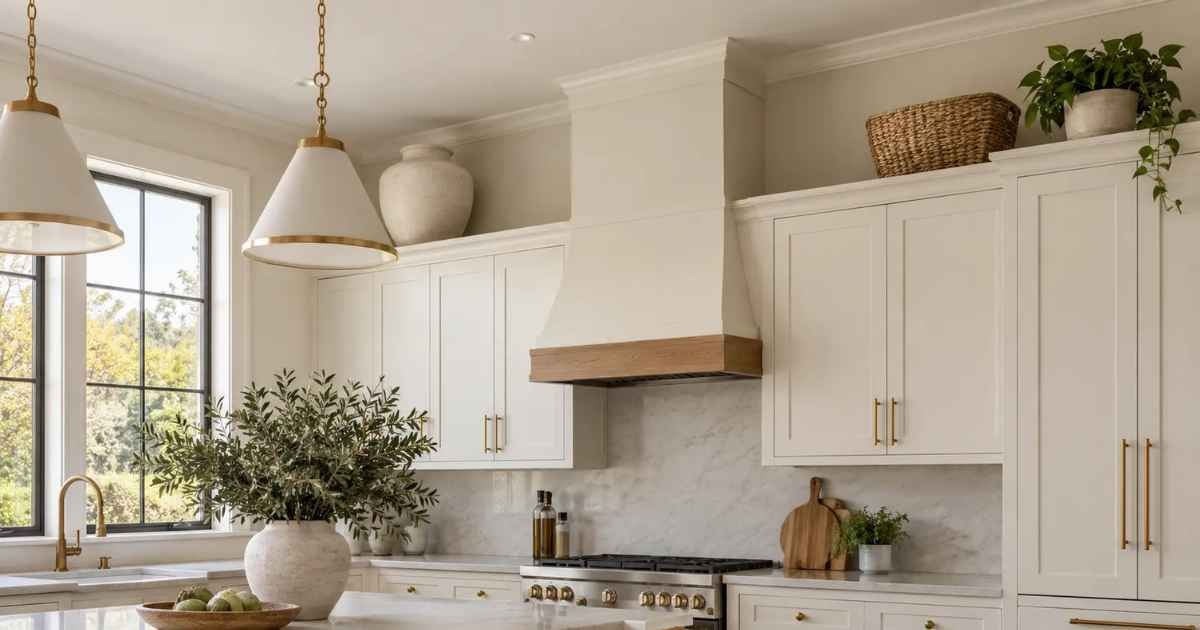
Instead, select a small number of larger pieces. An oversized ceramic vessel might anchor one end of a cabinet run; two woven baskets could balance the other. Leave an intentional stretch of empty space between them.
Good above kitchen cabinet decor is less about filling a gap than creating a composition that works with the cabinetry. Before adding a new object, ask whether it improves the arrangement or merely occupies another inch of space.
Try placing your selected items temporarily and taking a photo from the opposite side of the kitchen. A photograph often makes an unbalanced grouping easier to spot.
Build Groupings That Look Balanced, Not Identical
A straight line of equally sized objects can feel rigid. Vary heights and shapes to create a more comfortable rhythm: one tall pitcher beside a low bowl, for example, or two baskets with different profiles.
On a long cabinet run, use two or three separate arrangements rather than lining up objects from end to end. Let the wall show through between groups. If the cabinets flank a range hood, consider how the display looks on both sides without insisting on perfect symmetry.
Keep real-world stability in mind. Heavy objects need a solid, level resting place; plates or artwork displayed upright need appropriate stands or secure mounting. Never balance decorations precariously near a frequently used cooking area.
Repeat Colors and Materials Already in the Kitchen
Cabinet-top styling looks most convincing when the accessories share something with the room below. Start with the existing cabinet finish, hardware, countertops, and flooring.
For example, warm oak cabinetry pairs naturally with stoneware and woven textures. Ivory cabinets with brass pulls can look polished beside cream ceramics and a restrained metallic accent. Dark cabinets may benefit from lighter pieces that stand out against the wall.
Limit the palette to a few related colors and materials. Everything does not have to match, but a visual connection helps the display look collected rather than random.
This principle extends beyond the kitchen. Thoughtful home decor uses repeated tones and textures to connect separate surfaces without making every object identical.
Use Greenery Only Where It Makes Practical Sense
A small plant can soften the hard horizontal line of upper cabinets, but placement matters more than popularity. Real plants require appropriate light, access for watering, and protection against water damage. Cabinet tops near cooking heat and grease are rarely ideal places for delicate foliage.
If conditions are suitable, try one compact potted plant on a waterproof saucer, positioned where it can be reached safely. Otherwise, realistic faux greenery can deliver the same softening effect with less upkeep.
Avoid draping artificial vines across the entire cabinet run. A single quality arrangement usually looks more considered and is easier to clean. Keep leaves away from vents, lights, and cooking appliances, and choose a planter that complements the rest of the kitchen.
Think Beyond Baskets and Vases
Sometimes the most effective treatment is not an object at all. Painting the exposed wall above the cabinets a contrasting color can create a crisp architectural feature without adding another surface to dust. A subtle wallpaper pattern can bring character to a cottage or traditional kitchen.
Where the budget and architecture allow, molding or custom upper cubbies can make the gap feel intentionally designed. These options require more planning than placing a vase, but they may be better for homeowners who prefer a permanent solution.
Comparing different above cabinet decor approaches can help clarify whether the room needs texture, a focal point, extra storage, or simply a cleaner visual line. Choose the treatment that solves the room’s actual problem rather than copying a trend.
Make Cleaning Part of the Design Decision
Anything placed above kitchen cabinets will eventually collect dust. In kitchens where cooking produces grease and moisture, that buildup can become stubborn, especially near the stove.
Smooth ceramic, glass, and properly sealed wood are generally easier to wipe down than intricate wicker or fabric-covered objects. Choose pieces you can lift and clean without difficulty, and avoid displays that require moving a large collection every time you dust.
Access matters as much as material. If reaching the cabinet tops involves awkward stretching or an unstable chair, simplify the display. Use a suitable step ladder only when you can do so safely, and keep heavy or breakable items out of difficult-to-reach positions.
Match the Styling to the Architecture
Modern kitchens often look best with one sculptural object or an intentionally bare cabinet top. A farmhouse kitchen may comfortably accommodate woven baskets and vintage pottery, while a traditional room may suit decorative platters or classic ceramic vessels.
Do not treat these styles as strict rules. The finish and proportions of the actual room are more important than a label. A single modern vase can work in an older kitchen when its color echoes the countertop, just as a vintage bowl can warm up contemporary cabinets.
Also consider what is already happening at eye level. If the backsplash is highly patterned, the counters are busy, or the hardware is ornate, the space above the cabinets may need fewer decorations to keep the overall room balanced.
Know When to Leave the Space Empty
Not every gap needs filling. Shallow clearances, minimalist cabinetry, or a kitchen with strong architectural details can look better without anything above the cabinets. An empty area can be a deliberate design choice rather than an unfinished task.
If you are uncertain, remove everything for a few days and see how the room feels. Then add back only the pieces that make a noticeable improvement. This simple test prevents the cabinet tops from becoming a holding place for objects that have nowhere else to go.
Final Thoughts
The best cabinet-top arrangements are usually the simplest: a few pieces with enough scale to be seen, generous space around them, and colors that relate to the rest of the kitchen. Greenery, ceramics, baskets, and architectural finishes can all work when chosen for the room rather than for a trend.
Start with measurements and the kitchen’s existing style, then prioritize easy cleaning and secure placement. The goal is not to use every inch above the cabinets. It is to make the whole kitchen feel more intentional.
Disclaimer: This article is for general informational purposes only and does not constitute professional interior design, safety, or home maintenance advice. Ceiling clearance, cabinet depth, ventilation, lighting, and load-bearing considerations vary by kitchen and property, and should be assessed before placing decorative objects above cabinets. Heavy or breakable items must be securely placed and never balanced precariously, and a suitable step ladder should be used for access rather than chairs or unstable surfaces. Live plants require appropriate light, watering access, and protection against water damage, and should be kept away from vents, lights, and cooking appliances. Readers should verify all measurements, mounting requirements, and material care instructions, and consult qualified professionals where structural or electrical work is involved. Any mention of specific products or styles does not imply endorsement. The author and publisher disclaim any liability for decisions made based on this content.
Turn obstacles into opportunities—our problem-solving strategies help you find creative solutions when things get tough.