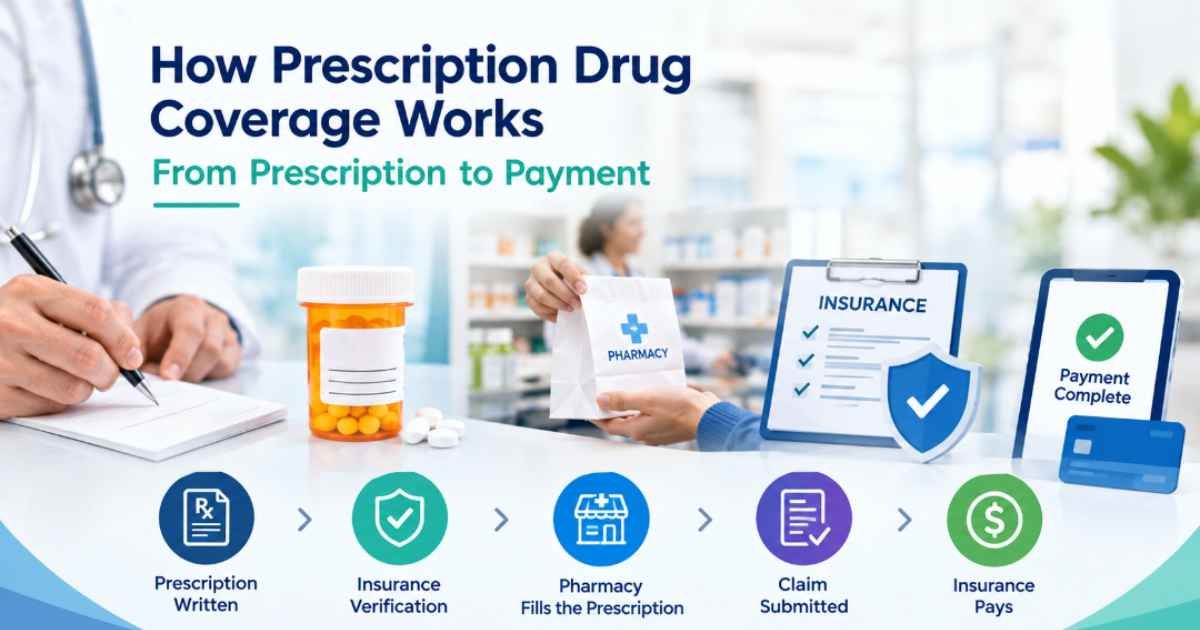
You hand a prescription to the pharmacy team, and soon after a bag appears with your name on it. It feels simple. Behind that quick exchange, though, a long chain of checks, messages, and calculations has already taken place. Understanding prescription drug coverage helps you see why a medication sometimes costs less than expected, and why it occasionally gets delayed or denied. Let us walk through what really happens between the prescription and the payment, one step at a time, so the next trip to the counter feels far less mysterious.
What Happens the Moment a Prescription Is Written
Everything begins when a prescriber chooses a medication, a strength, and a quantity. That order travels to the pharmacy, either electronically or on paper, where a technician or pharmacist enters it into the dispensing system. At this point the pharmacy also collects your insurance details, including your member number and the group information printed on your card.
Before anyone counts a single pill, the pharmacy builds a claim. Think of it as a digital package of information. It lists the patient, the medication, the amount, the days supply, and the prescriber. Pharmacists also confirm that the medication is safe alongside other prescriptions you take. Every detail has to match what the insurer expects, or the claim bounces back with a rejection message.
Why small details matter
Accuracy at the counter matters more than most people realize. A typo in a birth date, a missing group number, or an outdated card can stall the whole process, even when your prescription drug coverage is perfectly active. If a claim is rejected, the pharmacy team usually checks the basics first, then contacts you or your prescriber for corrections. Bringing your current card each visit is one of the easiest ways to avoid a frustrating delay.
The Role of the Pharmacy Benefit Manager
Once the claim leaves the pharmacy, it rarely goes straight to your insurer. In most cases it lands with a pharmacy benefit manager, a company hired by the health plan to handle the daily mechanics of medication benefits. It reads the claim, confirms your eligibility, and applies the rules your plan has set.
Its work goes well beyond simple routing. It negotiates prices with drug makers and pharmacies, builds pharmacy networks, and decides how claims are adjudicated. Adjudication simply means the claim is reviewed and then approved, adjusted, or rejected, usually almost instantly.
Most people never hear about this middle layer, yet it influences nearly every part of what you pay and what you can pick up. If you have ever wondered why two similar medications are treated so differently at the counter, this is often where the answer begins. It also explains why your plan paperwork may mention network pharmacies, preferred pharmacies, or mail delivery options.
Why the Drug Formulary Shapes Your Options
Every health plan keeps a list of medications it agrees to cover. That list is called a drug formulary, and it is usually organized into tiers. Lower tiers tend to include generic medications and carry smaller costs. Higher tiers often hold brand products or specialty treatments and cost more.
When the claim arrives, the pharmacy benefit manager checks whether your medication appears on the list and which tier it sits in. If it is missing, the claim may be denied or flagged for review. In some cases a similar covered alternative is suggested instead.
Formularies also change as new options appear and prices shift. A medication that was easy to fill before might need extra steps later. It never hurts to look over the list whenever you renew your benefits or start a new treatment, and to ask your prescriber whether a covered alternative would work just as well.
Approvals, Limits, and Other Rules Inside Prescription Drug Coverage
Beyond the list itself, plans use several controls to manage safety and cost. These rules can surprise people because they happen quietly in the background.
Prior authorization
Some medications require approval before the plan will pay. The prescriber submits clinical details explaining why the medication is needed, and the plan reviews them. Approval can take a little while, which is why a pharmacy might tell you the claim is pending.
Step therapy and quantity limits
Step therapy asks you to try a lower cost option first. If it does not work, the plan may approve the next option. Quantity limits cap how much can be dispensed at one time, usually for safety or supply reasons.
None of these rules exist to be obstacles for their own sake. They balance safety, effectiveness, and cost. Still, knowing they exist helps you ask the right questions early, rather than discovering them while you wait at the counter. A short call to the plan or a conversation with your prescriber often clears things up faster than waiting.
How Your Prescription Copay and Pharmacy Payment Come Together
After approval comes the part everyone notices, the price. Your prescription copay is the fixed amount you pay at the pharmacy for a covered medication. Plans may also use coinsurance, which is a percentage of the cost, or a deductible that must be met before coverage fully begins.
The system calculates your share automatically. It looks at the tier of the medication, whether the pharmacy is in network, and where you stand in your benefit cycle. The pharmacy then receives a response saying how much the plan will pay and how much you owe.
Here is a helpful way to see it. The claim response is like a receipt written before the purchase. The plan says what it will cover, and your prescription copay fills the gap. If the number looks surprising, ask the pharmacist to explain which part of the response produced it.
What the pharmacy does after you leave
Payment does not arrive instantly for the pharmacy. Rejected or underpaid claims must be corrected and resubmitted, and strong claim denial management keeps payments from slipping through the cracks. Many independent pharmacies rely on outside pharmacy billing services to reconcile payments and chase unpaid claims.
A team like annexmed can take that load off the pharmacist so more time goes toward patient care. Either way, steady claim follow up keeps medications on the shelf and the doors open.
Choosing a Prescription Drug Plan That Fits Your Needs
If you are comparing options, start with the medications you actually take. Check whether each one appears on the formulary, which tier it sits in, and whether any approval rules apply. Then look at the practical details, since small differences add up across many refills.
- Confirm your regular pharmacy is in network.
- Compare the typical cost sharing for each tier.
- Check whether mail delivery is available.
- Ask how exceptions and appeals are handled.
A good prescription drug plan is not simply the one with the lowest monthly cost. It is the one that makes your real medications affordable and predictable. Reading the summary of benefits carefully takes a little patience, but it can save a great deal of stress later.
Many people also overlook the appeals process. If a medication is denied, you usually have the right to request a review, and your prescriber can often help by providing supporting information. Asking about this before you enroll is far easier than learning about it in the middle of a refill.
Final Thoughts
A pharmacy claim looks effortless from the outside, yet it moves through a careful series of checks. Prescription drug coverage works best when you understand it. Knowing how claims are built, reviewed, and priced helps you spot problems early, ask better questions, and avoid unwelcome surprises at the counter.
Remember the key points. Accurate details prevent delays. The drug formulary decides what is covered and at which tier. Approval rules protect safety and cost. And your share of the price reflects all of those decisions combined.
Before your next refill, take a moment to read your benefit summary, compare your medications against the covered list, and review your prescription drug plan with your pharmacist or prescriber. A little preparation now can make every future pickup smoother. Reach out with your questions, because informed patients get better experiences.
Disclaimer: This article is for informational purposes only and does not constitute medical, legal, insurance, or financial advice. Prescription drug coverage, formularies, copays, prior authorization rules, and pharmacy networks vary by plan, insurer, and location, and may change without notice. Readers should verify all coverage details, costs, and appeal rights directly with their health plan, pharmacy, or benefits administrator before making any decisions. Any mention of specific companies, services, or billing providers does not imply endorsement. The author and publisher disclaim any liability for decisions made based on this content.
Looking for content that keeps you curious and coming back? Explore our consistently fresh articles—always useful, always worth your time.