A student knows that a young duck is a duckling. Ask what a young swan is called, and the answer may take a little longer. That small gap is a useful place to begin a wildlife quiz. It gives the class something specific to learn and gives the teacher a clear question to return to after the game.
The first step is choosing a manageable topic. Viltnemnda brings together wildlife articles alongside an introduction to Norway’s local wildlife committees. A wildlife topic can become a useful classroom activity when you select a few facts, check their wording and decide what students should be able to explain afterwards.
This guide sets out a practical way to build that activity for a platform such as Blooket. The lesson examples are suggestions for teachers to adapt, not results from a classroom study. The aim is a short, accurate quiz with enough discussion to make the answers worth remembering.
Choose a Small Topic with a Clear Finish
“Animals” is too broad for a short quiz. It can lead from penguins to garden insects to ocean habitats without giving the class a clear thread to follow. Choose one topic that fits the lesson time and the students’ existing knowledge.
Animal names, simple habitat descriptions or the difference between an observation and a guess can each support a focused activity. Pick one for the first session. You can make another set later rather than fitting every interesting fact into the same game.
Write the goal before the questions. For example: “Students will match five animals with the names of their young and use two of those names in a sentence.” That goal tells you what belongs in the activity and what can wait.
It also gives you a useful finishing point. Once students can complete the task, adding ten more questions does not automatically make the lesson better. Leave time to discuss the words they still confuse.
Build a Fact Sheet Before Opening the Quiz Tool
Start with a small working table. For each fact, write the intended answer, any accepted alternatives and where you checked it. Keep these research notes for yourself, even if students will only see a short question.
This is especially helpful with animal vocabulary. Some young animals have more than one commonly used name, and some names apply to several animals. A question can become unfair if its answer key ignores that detail.
For a vocabulary round, the baby animal names guide provides pairs and explanations to check before preparing your set. For example, young foxes may be called kits or cubs, while a young swan is a cygnet. Use the specific animal name so students know which relationship you are testing.
Here is a small example of how to organise the preparation. It is a planning table, not a complete quiz or a substitute for reviewing the lesson materials.
| Animal | Young-animal name | Point to keep clear |
| Duck | Duckling | Match the name to the animal, not just a water setting |
| Swan | Cygnet | Explain the unfamiliar word before asking students to spell it |
| Fox | Kit or cub | Allow for both common terms when writing choices |
| Moose | Calf | Avoid treating every member of the deer family as having a fawn |
If a fact seems unclear, resolve it before including it. The class should not have to guess which of two reasonable answers the teacher intended.
Write Questions That Test One Thing at a Time
A clear question has one main job. “What is a young swan called?” checks vocabulary. “Explain how this animal’s behaviour changes with its habitat and age” asks for a much broader response. Both may have a place in teaching, but they need different formats.
For a short multiple-choice activity, keep the wording direct. Avoid a long story unless the details are needed to answer the question. Read each prompt aloud and remove anything that makes it harder to understand without adding useful meaning.
Make the Answer Choices Fair
Use choices that belong to the same kind of answer. If the prompt asks for an animal’s young, give animal-young terms as the options. A mixture of names, places and unrelated objects makes it easier to guess for the wrong reason.
Check that the choices contain only one correct answer under the wording you have used. Putting both “kit” and “cub” into a single-answer question about a young fox creates a problem. You could instead ask students to select the pair of accepted terms, or choose a different animal for that question.
Keep the options similar in length where practical. Do not make the correct answer stand out by giving it a detailed explanation while the other options are single words.
Prepare an Explanation for the Answer
Write one short explanation alongside each question in your teacher notes. For a swan question, it could simply be: “A young swan is a cygnet; duckling refers to a young duck.”
An explanation gives you something useful to say after a mistake. You are not just repeating the correct option. You are showing the distinction the question was meant to teach.
If you cannot explain why an answer is correct without adding several exceptions, the question may need narrower wording. Revise it before putting it into the game.
Use Animal Pictures for a Clear Purpose
A picture can set the scene or supply information needed to answer a question. Decide which role it has. A decorative wildlife image does not need to become an identification test simply because it is on the screen.
For an actual identification question, use a verified image with a reliable species label and suitable permission to use it. Check the crop and size. The feature needed for the answer must remain visible on the devices students will use.
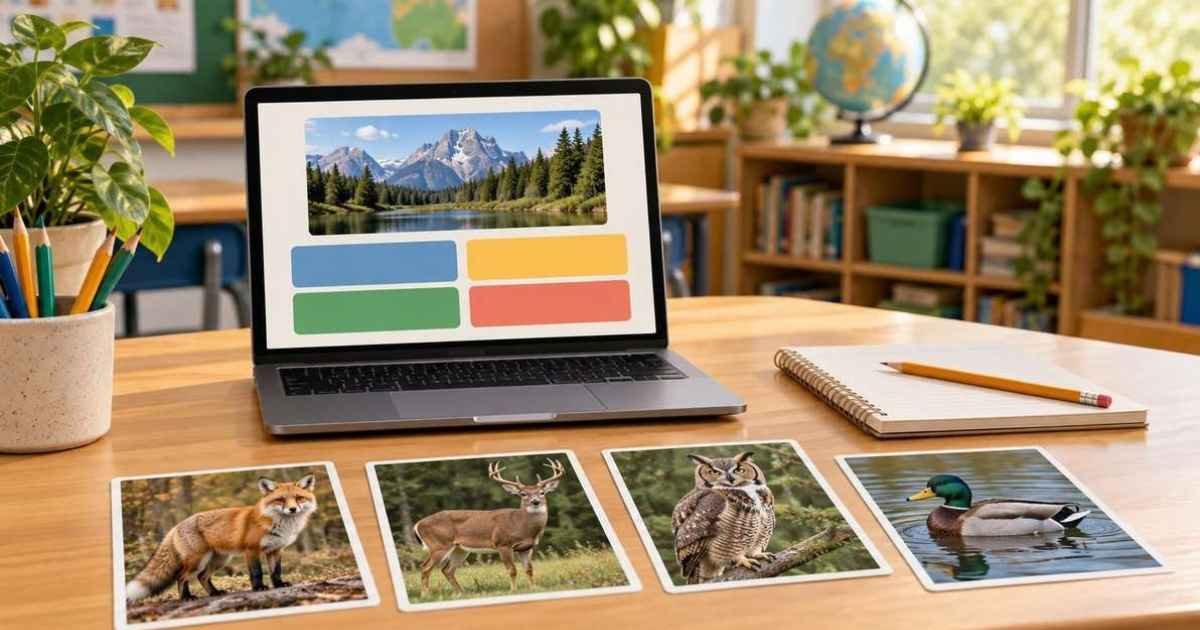
AI-generated images can illustrate a classroom activity, as the images in this article do. Do not treat them as photographic evidence or rely on them to test small differences between species. Use checked reference photographs for that purpose.
Also keep the picture task separate from the vocabulary task. If students have not learned to distinguish two birds by appearance, naming one from a photograph introduces an extra difficulty beyond remembering its young-animal term.
Turn the Checked Material into a Blooket Activity
Blooket’s official guidance explains that teachers can find question sets, preview them and use supported options to host a game or assign an activity. You can also prepare your own set. Whether you start with an existing set or your own draft, review every question before the session.
For a first trial, use a small set that matches the goal you wrote earlier. Test the student view on another device. Read the full question, check the answer choices and make sure any images are understandable at that size.
Choose a supported mode that fits how you want the class to take part. Do not assume all modes have the same pace or available settings. Check the current options for the one you intend to use.
Keep a copy of the questions outside the game as well. A printed sheet or a simple projected list lets you continue the same lesson if the online activity is unavailable.
Plan a Short Session with Time to Talk
The game is one part of the lesson. Leave space before it to introduce unfamiliar words and after it to check what students can explain without the answer choices.
The following is an example 20-minute plan. Adjust it to the class rather than treating it as a fixed teaching rule.
| Time | Activity | Purpose |
| First 4 minutes | Introduce five animal-and-young pairs | Make the vocabulary familiar |
| Next 8 minutes | Run the short quiz | Practise choosing the matching terms |
| Next 5 minutes | Discuss two questions that caused difficulty | Explain the important distinctions |
| Final 3 minutes | Ask for a sentence or a fresh matching task | Check recall without the game options |
If joining takes longer than expected, shorten the game rather than dropping the discussion automatically. The explanation after a question may be the part students need most.
For students who need another way to participate, use spoken answers, printed choices or a paired discussion as appropriate. Keep the learning goal consistent while adjusting the response method.
Use Mistakes to Improve the Next Question Set
After the session, note which questions caused confusion and look at their wording before drawing conclusions about the students. A difficult item may reflect an unfamiliar word, an unclear image or two answers that seem reasonable.
Ask a student to explain the choice if appropriate. “What made you choose that answer?” gives you more information than announcing the result again. Their explanation may show that the question tested something different from what you intended.
Keep a short revision note beside each item: “simplify wording,” “replace picture” or “teach this term first.” These notes make the next version more useful than simply adding extra questions.
Avoid treating a game score as a complete assessment of wildlife knowledge. Check the idea in another form, such as a sentence, a matching task or a brief explanation. This gives you a clearer basis for deciding what to revisit.
Let Students Write One Question of Their Own
Once the class understands the format, invite students to draft one question using the checked fact sheet. Ask for the correct answer and a short explanation, not just three wrong options.
Have a partner review it. Is the animal named clearly? Could another answer also be correct? Does the explanation match the question? The teacher should make the final check before adding student-written items to a shared activity.
This keeps the task focused on communicating an accurate fact. A good question does not need a trick. It needs a clear prompt, fair choices and an answer the class can explain.
Frequently Asked Questions
What is a suitable first wildlife quiz topic?
Choose a narrow topic already connected to the lesson. Matching animals with the names of their young is one option. Keep the number of new terms small enough to introduce and discuss properly.
How many questions should I prepare?
Around six to ten focused questions is a practical starting suggestion for a short trial. Adjust for reading time and discussion. More questions are not necessary if they repeat the same point without adding value.
Can I use an existing Blooket wildlife question set?
Yes, where the platform provides the relevant option, but preview the complete set first. Check facts, accepted alternatives, image quality and whether the wording fits your students.
Should every question include a picture?
No. Add one when it helps with the task. A vocabulary question may be clearer as text, while a visual identification question needs a carefully chosen and verified image.
Can two names for a young animal both be correct?
Yes. A young fox, for example, may be called a kit or a cub. Make sure the question format and answer key recognise valid alternatives rather than marking a reasonable answer wrong.
What should students do after the game?
Ask them to use or explain one of the ideas without the multiple-choice options. They might write a sentence, match a new set of cards or correct an inaccurate statement. Use their responses to plan the next lesson.
Disclaimer: The information in this article is for general informational and educational purposes only and does not constitute professional, legal, or technical advice. Animal facts, terminology, and platform features may vary and should be verified against reliable sources before use in the classroom. Teachers should follow their school’s approved technology, data privacy, and image-usage guidelines. Any mention of specific platforms, tools, or websites does not imply endorsement. The author and publisher disclaim any liability for decisions made based on this content.
Unlock a gentler way to unwind—browse our slow-evening guides and let the day dissolve softly.