Most Trade Show Booths Lose Attendees Before a Conversation Ever Starts
Trade show attendees make split-second decisions about which booths to visit. Within seconds of passing a display, they decide whether to stop, engage, or keep walking. This moment of truth happens before any salesperson can introduce themselves or explain what the company does. The reality is that most trade show booths fail to capture attention during those critical first moments, resulting in lost opportunities and wasted booth investments. Understanding why this happens and how to prevent it can transform how a team approaches trade show marketing.
1. The Power of First Impressions at Trade Shows
A trade show floor is an overwhelming environment filled with bright lights, competing displays, and hundreds of companies vying for the same limited attention. When an attendee walks past a booth, they are processing visual information almost instantaneously. Research in attention and perception shows that people form initial judgments about a display within the first few seconds. A booth’s setup, color scheme, signage, and overall appearance must work together to communicate value instantly. If a booth fails to stand out or clearly convey its purpose, attendees will simply continue past without slowing down.
The physical layout of a booth plays a crucial role in that first impression. A cluttered or uninviting space discourages foot traffic, while an open, organized booth with clear sightlines invites exploration. Many exhibitors make the mistake of cramming too much information or too many products into their booth space, creating visual overload rather than clarity. Attendees facing confusion typically choose the path of least resistance and move on to the next booth. Clean design, intentional spacing, and a focal point that communicates a clear value proposition signal that stopping is worth the visitor’s time.
2. Why Confusing Messaging Stops Engagement Before It Starts
A booth’s primary message must be instantly understandable to someone unfamiliar with the company. Many exhibitors assume that trade show attendees already know what their business does or will spend time reading lengthy descriptions, but this is rarely true. Vague taglines, industry jargon, or messages built around internal company terminology create friction rather than clarity. The goal is to communicate a single, compelling reason to stop in five seconds or less.
Consider the difference between a booth that reads “Enterprise Solutions Provider” versus one that reads “Reduces Supply Chain Delays by 40%.” The first is generic and could apply to dozens of companies, while the second is specific, benefit-driven, and immediately relevant to decision-makers on the floor. Messaging should speak directly to a visitor’s pain point or goal rather than describe a product in abstract terms. When a message is clear and relevant, people are far more likely to pause and engage. When messaging is confusing or overly technical, they keep walking.
3. How Booth Design Either Attracts or Repels Foot Traffic
The visual design of a booth sends a signal about a company before anyone speaks a word. A professional, intentional design communicates credibility, while a poorly constructed booth with outdated graphics or sloppy execution raises doubts about the company’s overall quality. Lighting is particularly important in a trade show environment, since dim or harsh lighting can make a space feel uninviting. Many exhibitors underestimate the role that aesthetics play in driving initial engagement.
Booth openness also matters significantly. A tall booth with barriers at the entrance can feel intimidating and closed off, while an open layout with clear walkways encourages people to step inside. Highly saturated, contrasting colors tend to attract more initial notice than muted or monochromatic schemes, though overly chaotic designs can feel unprofessional. Exhibitors setting up perimeter signage often rely on pop up banners to establish bold, readable visual anchors at booth edges that guide attendee attention toward the main display area. The most effective booths balance visual appeal with clarity and professionalism.
4. The Role of Interactive Elements in Capturing Attention
Static displays and passive information alone are rarely enough to stop attendees in their tracks. Interactive elements give people a reason to pause, whether through touchscreen displays, product demonstrations, games, or hands-on experiences. The key is that any interactive element should directly relate to the product or service rather than serve as a generic distraction. A software company, for example, might feature a quick demo station where visitors can see the product in action, providing both a reason to stop and a natural conversation starter.
Interactive elements also encourage attendees to stay longer, and the longer someone remains in a booth, the higher the likelihood of a meaningful conversation with a team member. Simple activities such as polls, contests, or hands-on displays can increase dwell time significantly. The interactive component should never overshadow the core message, however. When interactive elements support the booth’s main value proposition, they become effective tools for converting passing attendees into active conversations.
5. Common Mistakes That Guarantee Low Booth Traffic
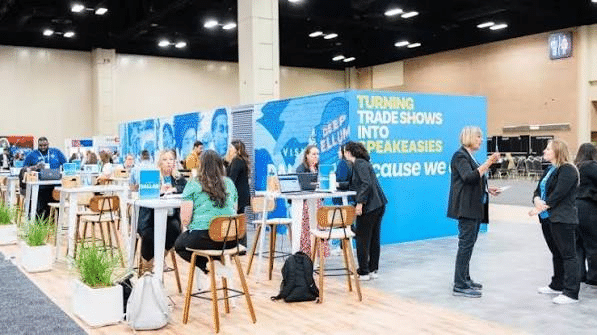
Many exhibitors unknowingly undermine their own booths through preventable mistakes. One common error is having too many team members sitting down or clustered together behind tables, which creates an intimidating barrier and signals that the booth is closed off. Staff should instead be positioned throughout the space, standing, visible, and approachable. Another mistake is having team members who are distracted or focused only on each other rather than watching for incoming visitors, since a disengaged team reliably repels potential conversations.
A third major mistake is the absence of a clear next step for visitors. Attendees should know immediately whether they are meant to schedule a demo, sign up for updates, or collect information. Without a clear desired outcome communicated through signage or staff, many visitors will leave without taking any action. Additionally, booths that offer no clear benefit or engaging element give attendees no motivation to stop in the first place. Trade show success requires intentional design, clear messaging, and an active team working together to capture and convert attention.
Conclusion
The most significant factor in trade show booth success plays out in the first few seconds of visibility. Attendees make quick decisions about whether to engage, and most booths lose that opportunity before any conversation begins. A booth that combines professional design, clear and compelling messaging, an open and inviting layout, and interactive elements will naturally draw more foot traffic. Teams must also remain engaged, approachable, and positioned to greet visitors actively. By focusing on these foundational elements, exhibitors can dramatically improve their ability to convert passing attendees into meaningful conversations and qualified leads.