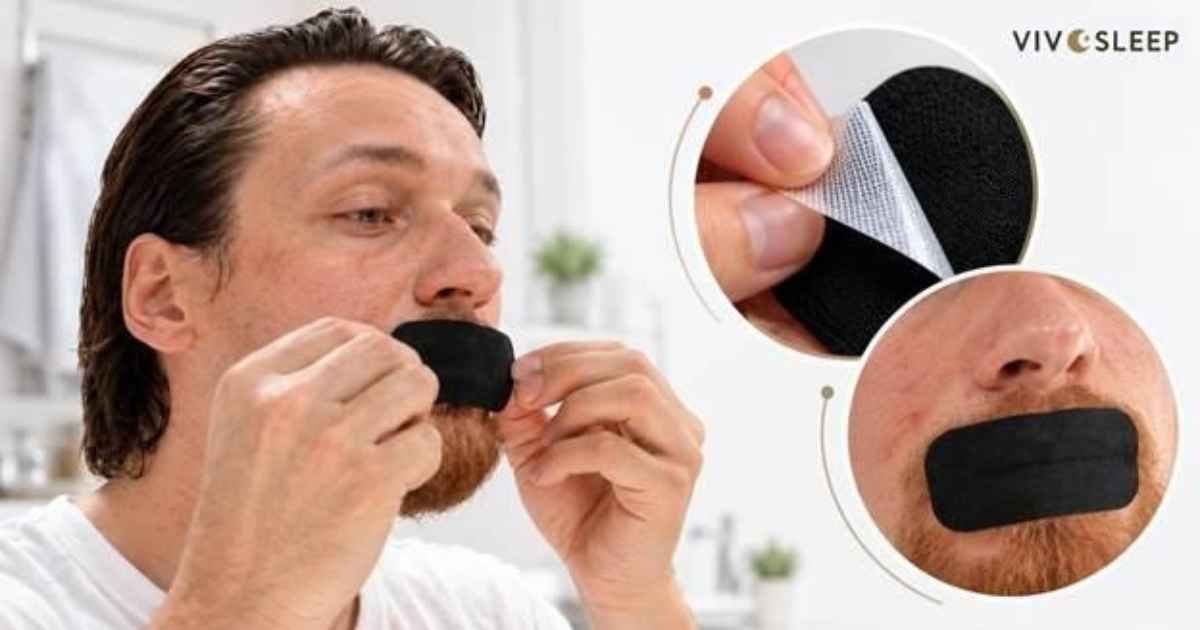
The skin around your lips is thin, mobile, and exposed to moisture throughout the day. Placing adhesive over this area for several hours can be uncomfortable if the tape is too strong or contains an ingredient your skin does not tolerate.
Mouth tapes may look similar, but their adhesives, backing materials, and removal characteristics can differ. These details matter if you have sensitive skin, eczema, an adhesive allergy, or a history of redness after using plasters.
Choosing mouth tape for sensitive skin involves more than finding a product labeled “gentle.” You need to review the adhesive composition, backing material, skin-contact area, removal directions, and available safety information. Breathing safety is a separate decision from skin comfort, and it needs to be considered on its own.
Quick answer: Silicone, acrylic, and specialty pressure-sensitive adhesives may appear in skin-contact products. In one clinical study, silicone medical tapes caused less skin-barrier disruption than the acrylate tapes tested. However, individual products vary, and no adhesive type is irritation-free for everyone. Check the ingredients, latex and fragrance information, backing material, intended use, and removal directions before making a choice.
What Types of Adhesives Are Used in Mouth Tape?
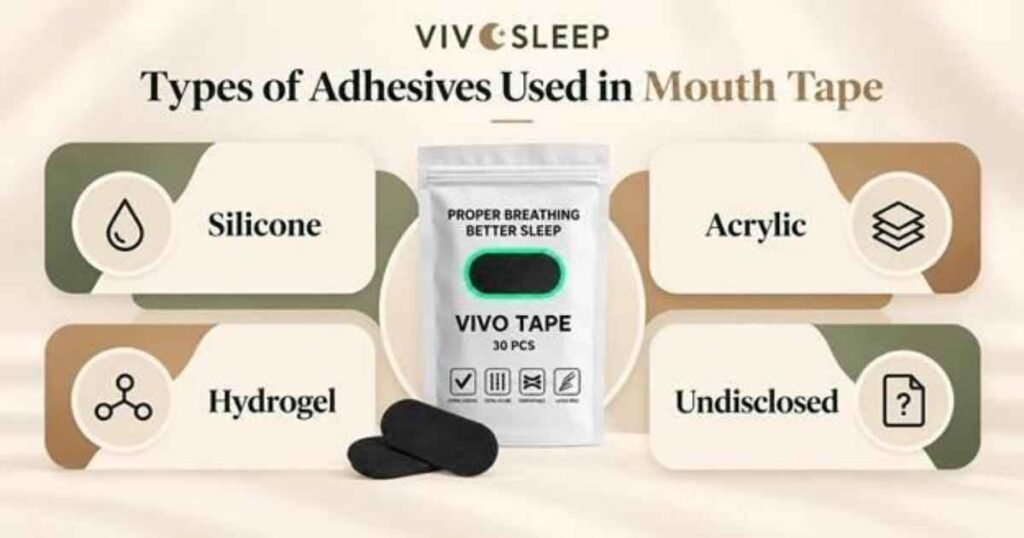
Most mouth tapes use silicone, acrylic, hydrogel, or another pressure-sensitive adhesive, and many product listings do not say which one.
Mouth tape needs enough adhesive strength to remain attached while the lips and surrounding skin move. At the same time, removal should not strip or damage the skin.
When a listing does not name the adhesive family, people with a diagnosed allergy have no reliable way to assess suitability without contacting the manufacturer.
Silicone-Based Adhesives
Silicone adhesives are often used in medical tapes and dressings made for repeated or prolonged skin contact. They can provide steady adhesion while requiring less removal force than some stronger pressure-sensitive formulas.
That does not mean every silicone product will suit sensitive skin. Formulation, adhesive thickness, backing material, wear time, and skin condition can all change how a tape feels.
Acrylic-Based Adhesives
Acrylic adhesives are widely used in medical and consumer tapes. They often offer reliable adhesion across different skin conditions and wear periods.
Some acrylates can also cause irritant or allergic reactions in susceptible people. A 2025 review of potential allergens in medical adhesives reported several contact allergens in these products, including acrylates and colophonium (rosin) derivatives. Someone with a diagnosed acrylate allergy should not rely on a “sensitive skin” statement alone. The manufacturer may need to confirm the exact adhesive composition.
Hydrogel and Other Specialty Adhesives
Hydrogel adhesives contain water held in a polymer matrix, so they may feel soft or cooling against the skin. They appear in some electrodes, wound products, and specialty skin-contact items.
Their presence in medical products does not mean every mouth tape uses hydrogel. Look for a clear product specification rather than assuming a soft or flexible strip contains this adhesive.
Backing Material Is Not the Adhesive
The visible layer of a mouth tape is its backing. It may be made from cotton, nonwoven fabric, synthetic material, or another flexible substrate.
A breathable cotton backing can still carry an acrylic adhesive. Likewise, two products with similar fabric backings may use different adhesive formulas. Check both parts when reviewing a product.
| Adhesive Type | Common Characteristics | Sensitive-Skin Consideration |
| Silicone | Often designed for gentle skin contact and removal | Suitability still depends on the specific formula |
| Acrylic | Common pressure-sensitive adhesive with reliable hold | Certain formulations may irritate sensitized skin |
| Hydrogel | Soft, moisture-containing adhesive technology | Confirm that the mouth tape actually uses hydrogel |
| Undisclosed | Adhesive family is not named | Difficult to assess against known allergies |
Silicone vs Acrylic Adhesive for Sensitive Skin
Silicone medical tapes have performed more gently than acrylate tapes in clinical testing, but the result applies to the specific products tested, not to every mouth tape.
Silicone adhesives are often described as gentler, but adhesive performance cannot be judged by chemistry alone. Two tapes from the same adhesive family may have different levels of tack, removal force, and skin contact.
A 2024 study published in Cureus compared two silicone medical tapes with two acrylate tapes on 88 healthy volunteers. The silicone tapes removed fewer skin cells and proteins and caused less disruption to the skin’s water barrier. Adhesion strength varied within both groups. The study was run partly at a tape manufacturer’s in-house clinical facility, which is worth keeping in mind when weighing the result.
These results provide useful context, but the study tested tape on the back and forearm, not on the skin surrounding the lips. It also examined four specific medical tapes, not every silicone or acrylic formulation.
Silicone may be worth considering when removal trauma is a concern. Still, a person can react to the adhesive, backing, processing materials, or another product component. Wear time, facial movement, perspiration, and skincare products may affect tolerance as well.
The better question is not simply, “Is silicone better?” Ask whether the complete product has clear specifications, suitable adhesion, manageable removal, and evidence supporting its skin-contact claims.
What Should You Check on a Mouth Tape Label?
A useful label identifies what touches your skin, how the strip should be applied and removed, and when the product should be avoided.
Product labels often rely on short claims such as “gentle,” “hypoallergenic,” or “medical-grade.” These terms may sound reassuring, but they do not tell the whole story.
Adhesive Composition
Look for the adhesive family or ingredient information. This is particularly important if a dermatologist has identified an allergy to acrylates, colophonium (rosin), latex, or another adhesive component.
If the composition is missing, contact the manufacturer. Ask for enough information to compare the product against your recorded sensitivities.
Latex and Fragrance Information
A latex-free claim is relevant for people with known latex sensitivity. It does not indicate whether other potential allergens are absent.
Fragrance may also cause problems for some users. A mouth tape does not need a scent, so a fragrance-free statement is useful when reviewing options.
Hypoallergenic Claims
“Hypoallergenic” does not mean that a reaction is impossible. The term generally suggests that a manufacturer expects fewer allergic reactions, but the supporting tests may differ between products.
The FDA states that there is no federal standard defining “hypoallergenic” for cosmetics. Mouth tapes may fall under a different regulatory category depending on their claims and intended use, but the same practical lesson applies: do not treat the word as an allergy guarantee.
Medical-Grade Claims
“Medical-grade” should relate to a specific material, manufacturing process, test, or product classification. The phrase alone does not identify the adhesive or prove that it will suit your skin.
Look for supporting product details rather than accepting the claim without context.
Backing and Skin-Contact Area
A breathable backing may help manage heat and moisture, but breathability does not describe the adhesive itself.
Also check how much skin the strip covers. A larger strip creates a wider contact area, which may matter if your skin reacts easily.
Removal Instructions
Removal technique affects the skin as much as the adhesive formula does. The label should explain how to remove the strip without pulling quickly across delicate skin.
If removal is consistently painful or leaves peeling skin, stop using the product rather than treating the reaction as normal.
| Label Detail | Why It Matters |
| Adhesive composition | Helps people avoid ingredients linked to past reactions |
| Colophonium (rosin) information | A known contact allergen in some medical adhesives |
| Latex-free statement | Relevant for users with latex sensitivity |
| Fragrance-free statement | Useful for people affected by fragrance ingredients |
| Hypoallergenic claim | Suggests an intended lower reaction risk, not a guarantee |
| Medical-grade claim | Needs supporting details about the product or material |
| Backing material | Affects flexibility, moisture, and skin coverage |
| Removal directions | May reduce avoidable pulling and skin stripping |
| Manufacturer contact | Provides a route for requesting missing specifications |
Why Can Hypoallergenic Mouth Tape Still Cause Irritation?
A hypoallergenic claim does not mean a product contains no potential allergens, and it says nothing about removal force, wear time, moisture, or the current condition of your skin.
Even an adhesive that causes no allergy can irritate skin through repeated application and removal. Applying tape over chapped lips, dermatitis, sunburn, acne-treatment irritation, or a healing cut may raise the chance of discomfort.
Products used beneath the strip matter as well. Oils and moisturizers may weaken adhesion. Other creams can make skin more sensitive or create contact between the tape and additional ingredients.
Treat the claim as one detail, not the final decision. Your previous reactions and the manufacturer’s material information carry more weight.
How Can You Reduce Adhesive-Related Skin Problems?
The safest response to repeated irritation is to stop using the product and investigate the cause. Do not keep applying new strips to see whether the skin “gets used to it.”
Avoid placing adhesive over cracked, inflamed, blistered, or recently injured skin. Follow the manufacturer’s preparation and removal directions, since different products may need different handling.
Remove the strip slowly instead of pulling it away in one quick movement. If the product calls for a specific removal method, follow that guidance rather than adding oils or solvents without checking compatibility.
How to Do a Skin Spot-Check
A spot-check can reveal immediate irritation before you wear the tape overnight. It cannot rule out a delayed allergic reaction, so recurrent rashes still require a dermatologist’s review and formal patch testing.
● Cut a small piece of the tape and apply it to clean, dry skin on the inner forearm or just below the jawline.
● Leave it in place for the same length of time you expect to wear the tape at night.
● Remove it slowly, following the product’s directions, and check the area for redness, stinging, or peeling.
● Check the same area again after 24 to 48 hours, since some reactions appear later.
● Do not use the tape if any irritation appears at either check.
Seek medical advice if a reaction spreads, returns after each exposure, or includes significant swelling. Breathing difficulty or marked facial swelling requires urgent care.
How Should You Choose Mouth Tape for Sensitive Skin?
Start with your history, then choose a product that clearly identifies its adhesive, backing, intended use, warnings, and removal method.
If a specific adhesive caused a previous reaction, avoid products with the same ingredient until a dermatologist advises otherwise. Claims such as “gentle” or “hypoallergenic” can support your review, but they should not replace material details.
| Your Situation | Practical Next Step |
| Diagnosed acrylic adhesive allergy | Avoid known acrylates and ask a dermatologist about alternatives |
| Sensitive skin without a diagnosed allergy | Compare composition, contact area, removal, and product directions |
| Redness after removing tape | Stop use and allow the skin to recover |
| Repeated itching or rash | Seek assessment for possible contact allergy |
| Adhesive type is not disclosed | Request details from the manufacturer |
| Nasal blockage or possible sleep apnea | Avoid mouth taping and seek medical guidance |
Do not select the strongest tape simply because it remains attached longer. A product also needs to release from the skin without excessive pulling or visible damage.
What VivoSleep Shares About Its Mouth Tape Adhesive
VivoSleep describes its mouth tape for sleeping as using a soft, hypoallergenic, medical-grade adhesive. The product page also states that the strips are latex-free, breathable, flexible, and made for easy removal. Each pack contains 30 single-use strips.
The published page does not identify the adhesive as silicone or acrylic. People with a diagnosed adhesive allergy should request the full composition before purchase. This is more reliable than assuming the adhesive family from terms such as “medical-grade.”
The flexible design supports lip movement, but it does not address nasal obstruction or sleep apnea. Use should follow the product instructions, and the strip should be removed if discomfort occurs.
Final Verdict: Adhesive Transparency Matters for Sensitive Skin
The right mouth tape starts with clear material information, not a single claim printed on the package. Check the adhesive composition, backing, skin-contact area, removal directions, and manufacturer details. Stop using any product that causes recurring redness, itching, swelling, peeling, or pain.
Silicone medical tape may be less disruptive than some acrylic tape, but the evidence does not cover every mouth tape formula. Most importantly, skin comfort cannot confirm breathing safety. A gentle adhesive cannot correct nasal obstruction, treat sleep apnea, or make mouth closure suitable for every sleeper.
Frequently Asked Questions
What adhesive is commonly used in mouth tape?
Mouth tapes may use silicone, acrylic, hydrogel, or another pressure-sensitive adhesive. Check the product specification, because some manufacturers do not name the formula.
Is silicone adhesive better for sensitive skin?
Some medical-tape research found less skin-barrier disruption with the silicone tapes tested. However, product formulas and individual reactions vary, so silicone is not irritation-free.
Can hypoallergenic mouth tape still cause irritation?
Yes. Hypoallergenic tape can still cause irritation through adhesive ingredients, moisture, friction, repeated removal, or application over damaged or sensitive skin.
What does medical-grade mouth tape adhesive mean?
The phrase should relate to a particular material, test, manufacturing standard, or product classification. It does not automatically confirm allergy safety.
How long after using mouth tape can an allergic reaction appear?
Allergic contact dermatitis can be delayed by 24 to 72 hours after exposure, and it may only appear after several uses. A rash that returns each time you use the tape is a reason to stop and seek assessment.
What should I do if mouth tape causes redness or itching?
Remove the tape and stop using it. Seek medical advice if symptoms persist, spread, return after exposure, or involve significant swelling.
Disclaimer: This article is for general informational purposes only and does not constitute medical or dermatological advice. Adhesive tolerance, allergic reactions, and skin conditions vary by individual, and claims such as “hypoallergenic” or “medical-grade” are not guarantees of safety. Mouth taping can be dangerous for people with nasal obstruction, sleep apnea, or breathing difficulties—seek medical guidance before use. Patch testing cannot rule out delayed allergic reactions; persistent rashes require dermatologist assessment. Study results cited (the 2024 Cureus silicone vs acrylate comparison) apply to the specific tapes tested, not to every product. Details about VivoSleep are based on its own product page and do not imply endorsement; readers should request full adhesive composition from the manufacturer before purchase. Stop use if redness, itching, swelling, peeling, or pain occurs, and seek urgent care for breathing difficulty or marked facial swelling.
Uncover knowledge that grows more useful over time—dive into our evergreen articles and benefit every time you return.