
A single capsule, a targeted treatment – radioactive iodine goes where thyroid cells are.
If you’ve just been told you need radioactive iodine therapy, the name alone can sound daunting. It helps to know it’s actually a well-established treatment — also called RAI therapy, or I-131 therapy — used mainly for thyroid conditions, including certain types of thyroid cancer and overactive thyroid disorders. It works because of something the thyroid does naturally: it absorbs iodine from the bloodstream. Give that iodine a radioactive form, and doctors, sometimes working alongside a Plastic Surgeon for related reconstructive needs, can selectively target and destroy thyroid tissue while sparing most of the rest of the body from significant radiation exposure. Understanding how this therapy works, who it is appropriate for, often determined in consultation with a Surgical Oncologist, and what to expect can help you feel far more prepared — and informed — going in.
Why the Thyroid Absorbs Iodine
Your thyroid sits at the front of your neck, quietly using iodine from your diet to make the hormones that regulate metabolism, energy levels and many other bodily functions. Here’s the key part: thyroid cells are uniquely equipped to absorb and concentrate iodine. So when regular iodine is replaced with a radioactive version, doctors, often in coordination with a Surgical Oncologist, can deliver targeted radiation directly to thyroid tissue — including cancerous cells that may have spread beyond the original gland. That selective uptake is what makes radioactive iodine therapy such an effective, and relatively precise, treatment option.
Conditions Treated With Radioactive Iodine Therapy
Radioactive iodine therapy is used to treat several thyroid cancer-related conditions:
Differentiated thyroid cancer: These include papillary and follicular thyroid cancers — the most common types of thyroid cancer. RAI therapy is often used after surgical removal of the thyroid, to destroy any remaining thyroid tissue or microscopic cancer cells and reduce the risk of recurrence.
Hyperthyroidism: In conditions such as Graves’ disease or toxic nodular goiter, the thyroid produces excessive hormone. Radioactive iodine can be used to reduce or eliminate that overactive thyroid tissue.
Recurrent or metastatic thyroid cancer: Where thyroid cancer has spread to other parts of the body — the lungs or bones, for instance — radioactive iodine can sometimes target these distant sites too, if they retain the ability to absorb iodine.
Not all thyroid cancers respond to this therapy. It is most effective for cancers that maintain their iodine-absorbing properties — typically the differentiated thyroid cancers, and not certain more aggressive or poorly differentiated types.
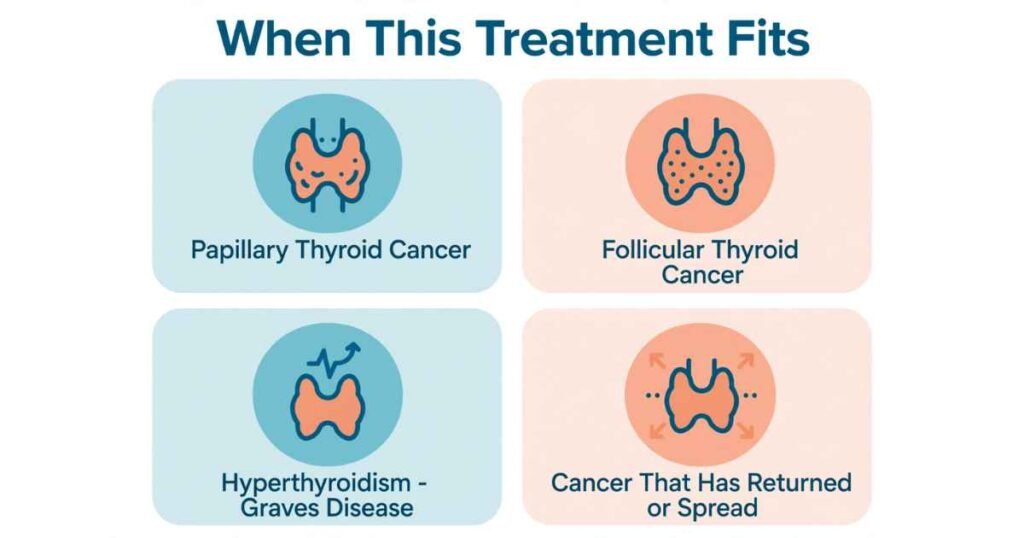
Infographic 1: When This Treatment Fits – the thyroid conditions radioactive iodine is used for.
Preparing for Treatment
Proper preparation really does matter here: the goal is to prime the thyroid tissue so it absorbs the radioactive iodine as effectively as possible. Common preparation steps include:
Low iodine diet: You’ll typically be asked to follow a low iodine diet for one to two weeks before treatment — avoiding foods such as iodized salt, dairy products and seafood — to increase the thyroid’s uptake of the radioactive iodine when it is administered.
Thyroid hormone withdrawal or stimulation: For patients who have had thyroid surgery, doctors may either stop thyroid hormone replacement medication for several weeks, or use an injectable medication called recombinant human TSH to stimulate iodine uptake without requiring hormone withdrawal.
Pregnancy testing: Because radioactive iodine can harm a developing fetus, women of childbearing age undergo pregnancy testing before treatment — and pregnancy is an absolute contraindication to this therapy.
Avoiding recent iodine-containing contrast dye: Had a recent imaging study that used iodine-based contrast? Tell your doctor — it can temporarily interfere with iodine uptake.
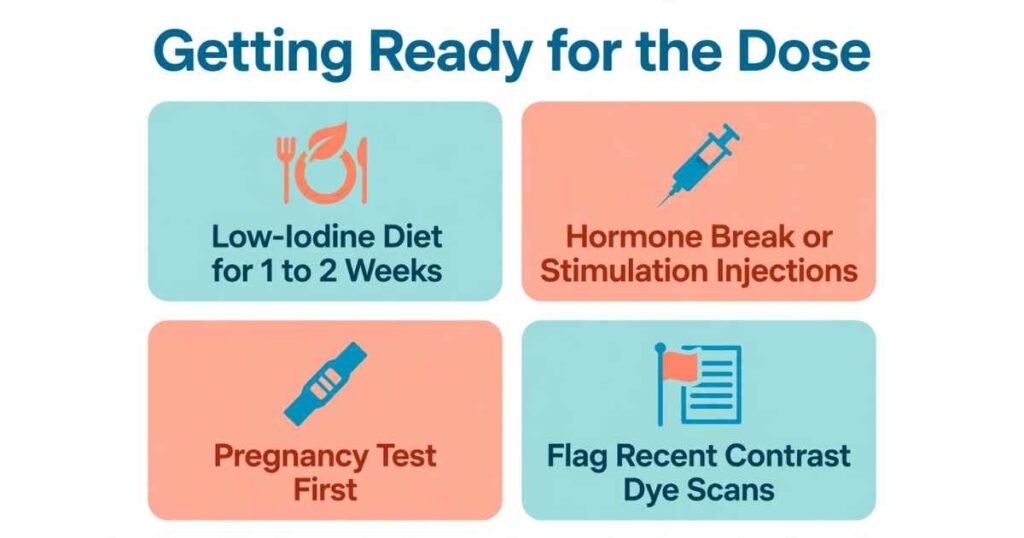
Infographic 2: Getting Ready for the Dose – diet, hormone preparation and safety checks before treatment day.
The Treatment Process
On treatment day, the therapy is typically given as a single oral dose — a capsule or a liquid — taken on an empty stomach to maximize absorption. The dose itself depends on the condition being treated: smaller doses are generally used for hyperthyroidism, while larger doses are often required for thyroid cancer, particularly when there is concern about remaining cancerous tissue or spread to other areas.
Once swallowed, the radioactive iodine travels through the bloodstream and is absorbed by thyroid cells, where it emits radiation that damages, and ultimately destroys, the targeted tissue over the following weeks. Because higher doses mean a period in which the patient’s body emits low levels of radiation, some patients — especially those receiving higher doses for cancer treatment — may need to stay in a hospital room with radiation precautions for a day or two. Lower doses can often be administered on an outpatient basis, with precautions taken at home instead.
Precautions After Treatment
After treatment, you’ll usually be given specific instructions to minimize radiation exposure to others — particularly during the first few days, when radioactivity levels are highest. Common precautions include:
Maintaining distance from other people, especially children and pregnant women, for a specified period
Sleeping alone, and avoiding close, prolonged contact with others
Using separate bathroom facilities when possible, and flushing the toilet multiple times after use
Avoiding public places and workplaces for a recommended period, depending on the dose received
Drinking plenty of fluids, to help flush excess radioactive iodine from the body
How long these precautions last varies — it depends on the dose administered and on local radiation safety guidelines — so you’ll receive personalized instructions from your treating physician. Follow those.
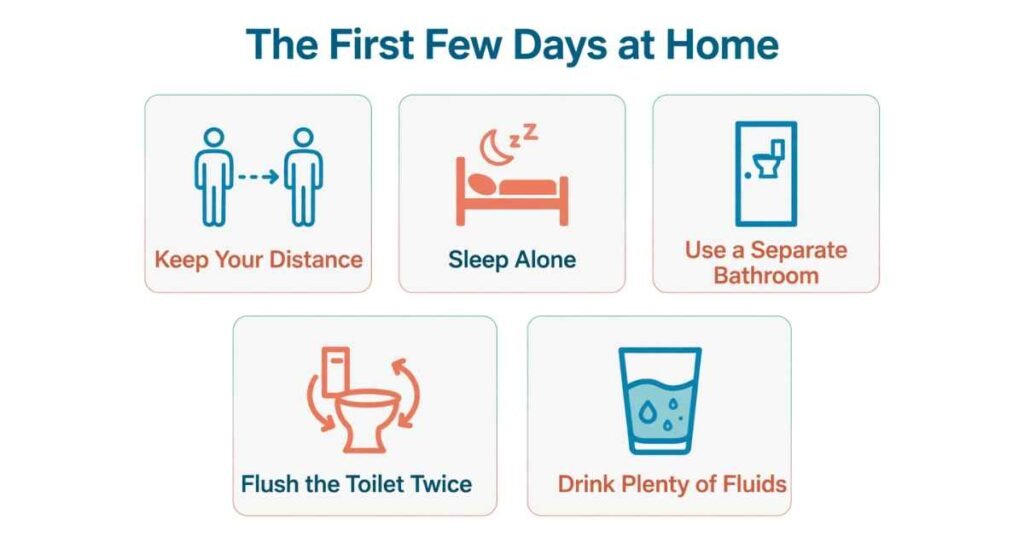
Infographic 3: The First Few Days at Home – simple precautions that protect the people around you.
Side Effects and Risks
Most patients tolerate radioactive iodine therapy well. Some do experience temporary side effects, including neck tenderness or swelling, changes in taste or smell, dry mouth, nausea, or fatigue. Because the salivary glands can also absorb some iodine, dry mouth and altered taste are relatively common; they usually improve over time. Sucking on sour candies or lemon drops during the initial treatment period is sometimes recommended, to help stimulate saliva flow and reduce salivary gland exposure.
Long-term, most patients who undergo RAI therapy for thyroid cancer or hyperthyroidism will require lifelong thyroid hormone replacement medication, since the treatment often destroys most or all remaining thyroid tissue. Regular monitoring of thyroid hormone levels ensures the dosing stays right over time.
Follow-Up Care
Follow-up doesn’t end when the treatment does. Patients typically undergo periodic monitoring — blood tests to check thyroid hormone and thyroglobulin levels, plus imaging studies such as whole body iodine scans or ultrasounds — to assess treatment success and watch for any signs of cancer recurrence. For thyroid cancer patients in particular, this ongoing follow-up is a critical part of long-term management.
Conclusion
Radioactive iodine therapy remains a cornerstone treatment for many thyroid conditions, offering a targeted approach that takes advantage of the thyroid’s unique biology. Whether it’s used to manage hyperthyroidism or to reduce the risk of thyroid cancer recurrence, this therapy has helped countless patients achieve better long-term outcomes. With proper preparation, adherence to post-treatment precautions, and consistent follow-up care, it continues to be a safe and effective option, guided by experienced medical teams.
Disclaimer: The information in this article is for general informational purposes only and does not constitute medical or professional healthcare advice. Radioactive iodine therapy is a prescription medical treatment, and its suitability, dosing, precautions, and side effects vary by individual patient, condition, and clinical guidelines. Readers should consult a qualified physician or thyroid specialist regarding their specific situation before pursuing or undergoing any treatment. Any mention of medical procedures or providers does not imply endorsement. The author and publisher disclaim any liability for decisions made based on this content.
Get inspired by ideas that stay with you—our memorable resources leave you thinking long after you finish reading.