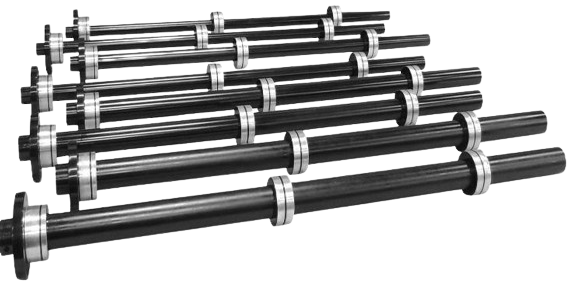
Spindle liners are components used inside certain CNC lathes to help support bar stock while it rotates during machining. Their basic job is simple: reduce the open space inside the machine spindle so the material has less room to move.
For manufacturers running long bars of metal through a lathe, that additional support can be important. A properly selected spindle liner can help control bar movement, support smoother operation, and create a more stable machining environment.
For someone unfamiliar with CNC equipment, it helps to think of a spindle liner as a correctly sized sleeve placed inside a larger tube. The sleeve creates a closer fit around the material passing through it.
What Is a Spindle Liner?
A spindle liner is installed inside the spindle or draw tube of a CNC lathe. It reduces the available inside diameter so smaller-diameter bar stock receives additional support.
Without that reduction, a narrow bar may have considerable space around it inside the spindle. As the spindle rotates, that unsupported material can move, vibrate, or whip.
Spindle liners helps reduce that unnecessary movement by creating a more appropriately sized path for the bar.
Why Do CNC Lathes Need Spindle Liners?
CNC lathes rotate material while cutting tools remove material to produce a finished component. Depending on the machine and production process, manufacturers may feed long sections of bar stock through the spindle.
The spindle itself must be large enough to accommodate different material sizes. That creates a problem when a manufacturer runs bar stock substantially smaller than the spindle opening.
The additional space can allow the bar to move more than desired.
A spindle liner helps compensate for that difference by supporting the bar more closely.
How Does a Spindle Liner Work?
The concept is relatively straightforward.
The spindle liner sits between the rotating bar stock and the larger inside diameter of the machine spindle. The opening through the liner is selected according to the bar being machined.
As the bar rotates, the liner helps limit lateral movement.
Several factors influence how effectively that system works, including:
- Bar diameter
- Actual bar outside diameter
- Bar length
- Liner clearance
- Liner straightness
- Liner rigidity
- Spindle speed
- Machine configuration
This is why spindle liners are typically selected for a specific machine and application rather than treated as universal accessories.
Why Is Clearance Important?
Clearance refers to the amount of space between the outside of the bar and the inside of the spindle liner.
Some clearance is necessary because the bar needs to move through the liner. However, excessive clearance gives the material more room to move.
Too much movement can contribute to noise, vibration, or bar whip.
A properly sized spindle liner therefore needs to balance adequate operating clearance with sufficient bar support.
What Is Bar Whip?
Bar whip occurs when rotating bar stock begins moving away from its intended centerline.
Imagine spinning a long, thin object very quickly. If the unsupported section begins to bend outward, its movement can become increasingly pronounced.
A similar condition can occur with bar stock inside or behind a CNC lathe.
Spindle liners are one part of the overall bar-support system used to help control this movement.
Bar whip is not caused by a single factor. Bar length, diameter, straightness, spindle speed, support equipment, and machine setup can all influence the system.
What Are Spindle Liners Made From?
Spindle liners can be manufactured from different materials.
Common designs include metal liners and plastic or urethane-based liners. Different materials can provide different characteristics in terms of rigidity, wear, heat resistance, and customization.
Metal spindle liners provide rigid support and can be manufactured in machine-specific configurations. Plastic or urethane liners provide a softer interface but may behave differently under heat, coolant exposure, or repeated use.
The appropriate material depends on the machine and application.
Why Do Straightness and Rigidity Matter?
A spindle liner is designed to help keep rotating material controlled around the machine centerline.
For that reason, straightness matters.
If the liner itself is not straight or properly centered, the bar may not receive consistent support throughout its length.
Rigidity also matters because a liner that flexes can allow the bar to move with it. A rigid support system is generally better able to resist unnecessary lateral movement.
These characteristics become increasingly important as spindle speeds, bar lengths, and production demands increase.
Are Spindle Liners Used With Other Equipment?
Yes. Spindle liners are often only one component within a larger bar-processing system.
Depending on the machine, manufacturers may also use:
- Bar feeders
- Bar loaders
- Bar pullers
- Bar-support equipment
- Draw tubes
- Loading and unloading systems
Together, these components help move, support, and position raw material throughout the machining process.
The exact configuration varies substantially between machines and manufacturing operations.
Are All Spindle Liners the Same?
No.
Spindle liners can differ in diameter, length, material, wall thickness, mounting method, and overall configuration.
Some applications may require relatively straightforward liners. Others may require thin-wall designs, multi-piece assemblies, extended configurations, or other machine-specific features.
This is one reason manufacturers usually need to provide detailed application information when ordering a spindle liner.
What Information Is Needed to Select a Spindle Liner?
Before selecting a spindle liner, manufacturers typically need to understand both the machine and the material being processed.
Useful information can include:
- CNC lathe make and model
- Bar diameter
- Actual bar outside diameter
- Bar length
- Bar material
- Bar feeder or loader information
- Machine configuration
- Existing bar-support equipment
- Concerns involving vibration or bar movement
- Surface-finish requirements
- Available space within the spindle system
Providing accurate information helps ensure the liner is designed around the actual operating conditions.
How Can Spindle Liners Help a Manufacturing Operation?
The primary benefit is better support for rotating bar stock.
When the bar is properly supported, manufacturers may be able to create a more stable machining environment. The liner can help reduce unnecessary bar movement and support the overall bar-handling system.
Potential operational considerations include:
- More controlled bar rotation
- Reduced opportunity for excessive bar movement
- Better support for smaller bars inside larger spindles
- Compatibility with automated bar-feeding systems
- More predictable machine setup
The actual effect depends on the machine, material, spindle speed, liner design, and overall application.
Are Spindle Liners Safety Equipment?
A spindle liner should not be viewed as a substitute for proper machine guarding, operating procedures, or bar-support practices.
High-speed rotating bar stock can create significant hazards if incorrectly supported or operated outside appropriate machine limitations.
Manufacturers should follow the machine manufacturer’s requirements and evaluate spindle speed, bar dimensions, guarding, bar-support equipment, and complete system configuration before running an application.
When Should a Manufacturer Consider Using a Spindle Liner?
A spindle liner may be worth evaluating when a CNC lathe is running bar stock substantially smaller than the available spindle opening.
It may also be relevant when an operation is experiencing excessive bar movement, changing to a different bar diameter, introducing a new bar-loading system, or reviewing an existing machining setup.
The right solution depends on the entire system rather than the liner alone.
Frequently Asked Questions About Spindle Liners
What does a spindle liner do?
A spindle liner reduces the open inside diameter of a CNC lathe spindle or draw tube. This gives smaller bar stock additional support while it rotates.
Are spindle liners only used on CNC machines?
They are commonly associated with CNC lathes and bar-fed machining applications. Whether a liner is appropriate depends on the individual machine configuration.
Can one spindle liner handle every bar diameter?
Usually not. The liner opening needs to provide appropriate clearance around the bar being machined, so different bar sizes may require different liners or configurations.
Can spindle liners help reduce vibration?
They can help control unnecessary bar movement when properly sized and installed. However, vibration can also result from tooling, material condition, spindle speed, workholding, machine condition, and other factors.
What is the difference between a spindle liner and a bar feeder?
A spindle liner supports bar stock inside the spindle. A bar feeder is equipment used to feed bar stock into the machine. They can be used together as parts of the same production system.
How do you choose the right spindle liner?
Selection should be based on the lathe, bar diameter and length, material, actual outside diameter, spindle configuration, operating conditions, and other bar-handling equipment.
Understanding Spindle Liners at a High Level
Spindle liners perform a relatively simple but important function in bar-fed CNC machining: they help support bar stock inside a spindle that would otherwise be significantly larger than the material.
The basic principle is reducing unused space around the rotating bar.
The details become more technical when manufacturers begin evaluating clearance, straightness, rigidity, spindle speed, bar length, mounting, and machine compatibility. For that reason, spindle liners should be selected around the actual machining application rather than simply by nominal bar diameter.
For manufacturers evaluating a new spindle liner, the most useful starting point is gathering the machine make and model, bar dimensions, material, production configuration, and any existing concerns involving bar movement or vibration.
Disclaimer: The information provided in this article is for general informational and educational purposes only. It does not constitute professional machining, engineering, or safety advice. Spindle liner selection, installation, and use depend on machine specifications, operating conditions, and material characteristics. Always consult the machine manufacturer and qualified technical personnel before implementing any bar‑support solution. The author and publisher disclaim all liability for any equipment damage, production issues, or personal injury arising from reliance on this content. This article does not guarantee specific performance or safety outcomes.
Browse through content that renews—our renewing wisdom refreshes your mind and spirit.