Every corporate planner has a story about a vendor who looked perfect on paper and fell apart on event day. The AV (audio-visual) crew that showed up late. The caterer who quoted one menu and served another.
Vetting event vendors properly before you sign anything is the only way to avoid repeating that story, and it takes far less time than fixing a bad vendor choice after the contract is signed. This is where working with an established Event Management Company in Malaysia makes the vetting process easier.
A full-service partner has already screened its vendor network for you, so much of this legwork is already done.
If you are managing vendors on your own, this checklist walks you through exactly what to check before any contract gets your signature.
Why Vendor Vetting Decides The Success Of Your Event
A single weak vendor can undo months of planning in one afternoon. Vetting protects your budget, your timeline, and your reputation with senior stakeholders who expect a flawless event.
Corporate events run on tight schedules with little room for error. When a vendor misses a deadline or delivers below standard, the planner is the one who has to explain it to leadership. A short vetting process at the start prevents that awkward conversation later, and it builds a shortlist of vendors you can trust for future events too.
Check Business Registration And Licensing First
A vendor without proper registration is a legal and financial risk you don’t need to carry.
Ask for the company’s SSM registration number and confirm it matches the name on the quotation. For vendors handling food, electrical work, or large structures, request their relevant permits too. A legitimate vendor will hand these over without hesitation.
Ask For Proof, Not Just Promises
Portfolios and pitch decks are marketing material. Proof is what actually protects your event.
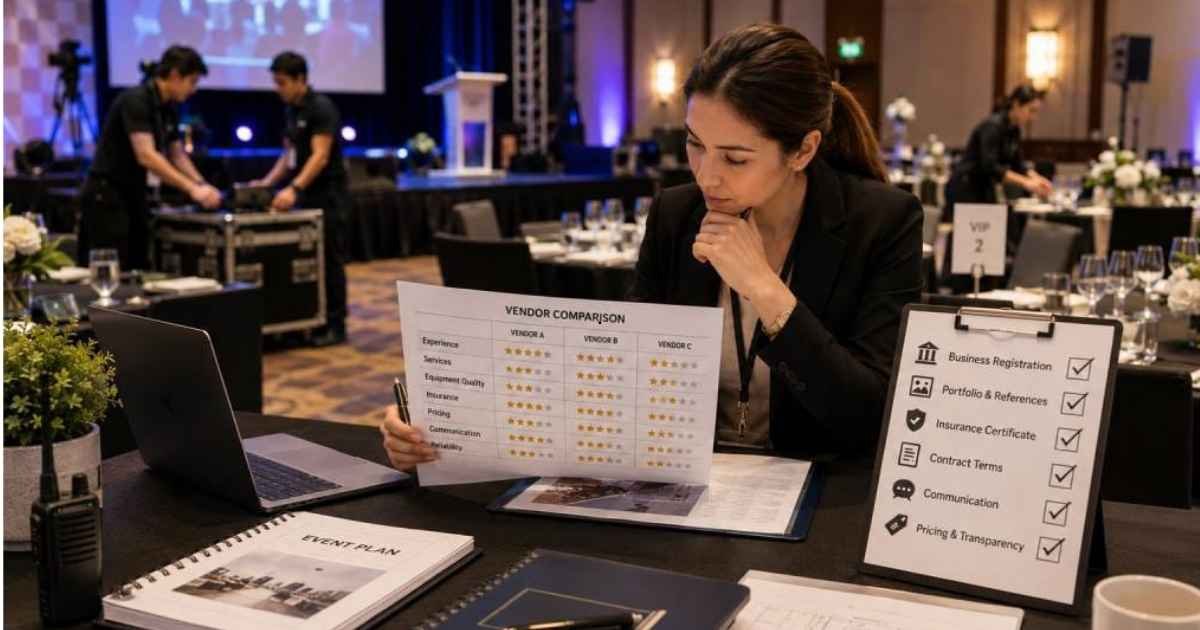
Request a short list of past corporate clients, real photos or video from recent events, and at least two references you can call directly. A vendor with genuine experience will have this ready in one email.
| What To Request | Why It Matters |
| Recent event portfolio | Confirms real, relevant experience |
| Two to three client references | Verifies reliability under pressure |
| Certificate of insurance | Protects you if something goes wrong |
| Business registration (SSM) | Confirms the vendor is a legal entity |
Review The Contract Terms Before You Sign
The contract is where good intentions turn into enforceable commitments. Read every clause before you agree to anything, and never rely on a verbal understanding to fill in the gaps.
If a term feels vague, ask the vendor to rewrite it in specific numbers and dates. A good vendor will not mind the extra clarity, and a weak one will start to show hesitation here.
Payment Schedule And Cancellation Policy
Look closely at deposit amounts, payment milestones, and what happens if the event date changes. A fair contract spells out refund terms in plain language, not vague promises.
Liability And Insurance Clauses
Confirm who is responsible if equipment fails or someone is injured on site. Vendors handling stages, rigging, or large crowds should carry public liability insurance as standard practice.
Check Communication And Reliability Early
How a vendor communicates before signing is a preview of how they will behave during crunch time. Slow replies and vague answers at this stage rarely improve later.
Send a detailed brief and time how long the response takes. A vendor who answers clearly within a day or two is showing you exactly how they will handle last-minute changes closer to the event.
Compare Quotes The Right Way
The cheapest quote is not always the safest choice. Compare quotes on scope, not just price. Two vendors rarely quote for the exact same level of service, so the numbers alone can be misleading.
Line up every quote against the same checklist, deliverables, crew size, setup time, and insurance included. A lower price that skips insurance or backup equipment can cost far more if something breaks down mid event. Ask each vendor to break down their pricing item by item, so you are comparing real value instead of a single bottom-line number.
Red Flags That Should Make You Pause
Some warning signs show up early if you know where to look. Trust these signals over a polished sales pitch.
- No written contract offered. A vendor who wants to work on a verbal agreement is avoiding accountability.
- Reluctance to share references. Genuine vendors are proud to connect you with past clients.
- Pressure to sign immediately. Rushed decisions rarely leave room for proper vetting.
- Unclear pricing breakdown. Vague quotes often hide extra charges that appear closer to the event.
Key Questions To Ask Before You Sign
A short list of direct questions can reveal more than a full page of marketing copy. Ask these before any contract goes to signature.
- What happens if my event date changes?
A clear answer here tells you how flexible and honest the vendor really is.
- Who is my main point of contact on event day?
You need one accountable person, not a rotating team that never picks up the phone.
- What is your backup plan if key equipment fails?
Vendors with a real answer already have a contingency plan in place.
- Can I see your insurance certificate?
A vendor who hesitates on this question is not ready to work on a corporate event.
- How do you handle scope changes after the contract is signed?
This tells you how extra costs and last-minute requests will be billed.
Before You Put Pen To Paper
A vendor contract is only as strong as the vetting that happens before it. Confirm registration, request proof over promises, read every clause twice, and ask the direct questions that most planners skip.
The vendors who answer clearly and quickly are usually the ones who show up the same way on event day.
Treat this checklist as a habit for every event, not a one-time task, and your vendor relationships will only get stronger from here.
Disclaimer: The information provided in this article is for general informational and educational purposes only. It does not constitute professional legal, contractual, or event management advice. Vendor vetting requirements and contract terms may vary by jurisdiction and event scope; readers should consult qualified professionals before signing agreements. The mention of specific service providers or locations is illustrative and does not imply endorsement. The author and publisher disclaim all liability for any vendor disputes, financial losses, or event disruptions arising from reliance on this content. Always conduct thorough due diligence and review contracts carefully before committing. This article does not guarantee specific vendor performance or event outcomes.
Uncover the secrets to building strong relationships—our relationship-building guides foster meaningful connections.