Collecting old cameras is not a new hobby, but it has picked up a noticeably younger audience over the last few years. Scroll through any online marketplace for secondhand electronics and it is easy to find decades-old film cameras selling for more than they would have a decade ago, often to buyers who were not even born when the camera was originally manufactured.
What is more interesting than the trend itself is the split forming within it. Some collectors are purely interested in the objects: the design, the era, the story behind a particular model. Others want a camera they can actually load with film and use regularly. The two goals sound similar but lead to very different buying decisions, and mixing them up is the most common mistake newcomers make.
Collecting Versus Using: Two Different Hobbies
A camera bought purely as a display piece only needs to look right. Cosmetic wear, a missing strap, or a lens that no longer focuses smoothly does not really matter if the camera is going on a shelf. A camera bought to actually shoot with is a different proposition entirely, because it needs to function mechanically, not just look the part.
This distinction matters because a lot of secondhand listings do not make it clear which category a camera falls into. A seller focused on collectibles might photograph a camera beautifully and describe its rarity in detail, without ever mentioning whether the shutter fires correctly or the light seals are intact. For someone who actually wants to shoot film, that missing information is the only part that matters.
Why Mechanical Age Causes Problems Cosmetic Wear Doesn’t Show
Anyone planning to use rather than just display a vintage camera needs to understand that age causes specific, predictable failures that have nothing to do with how a camera looks. The foam light seals inside most cameras made before the mid-1990s degrade over time, becoming sticky or crumbling entirely, which lets in stray light and ruins the edges of every exposed frame. Light meters, where fitted, can drift out of calibration by a stop or more. Shutter speeds can become inconsistent in ways that are essentially invisible until a roll of film comes back from the lab showing uneven exposures.
None of these issues are visible from a photograph or even from handling a camera briefly in person. They only show up once film has actually been run through the camera and developed, which is exactly why testing history matters so much more with film cameras than with almost any other category of secondhand electronics.
What to Ask Before Buying a Camera You Intend to Use
Before buying a vintage camera with the intention of actually shooting with it, a few questions are worth asking regardless of where it is being sold. Has a test roll been run through this specific camera, not just the model in general? What condition are the light seals in, and have they been replaced? Does the shutter fire consistently across different speeds? Is there any indication of fungus or haze inside the lens, which is common in cameras that have been stored in humid conditions?
A private seller on a general marketplace is unlikely to know the answers to most of these questions, and it is not necessarily their fault. Many people selling a camera that belonged to a parent or grandparent have no way of testing it themselves. That is fine for a purely collectible purchase, but it shifts all of the risk onto the buyer if the intention is to actually shoot with it.
For that reason, a lot of people who want a camera they can rely on end up buying from a dedicated secondhand camera retailer rather than a general marketplace, specifically because a proper retailer will have already run the tests a private seller cannot. A second hand camera store in Sydney, for example, will typically list not just the camera model and cosmetic condition but the specific checks that have already been carried out, which removes most of the guesswork a private sale would otherwise involve.
Popular Starting Points for New Collectors
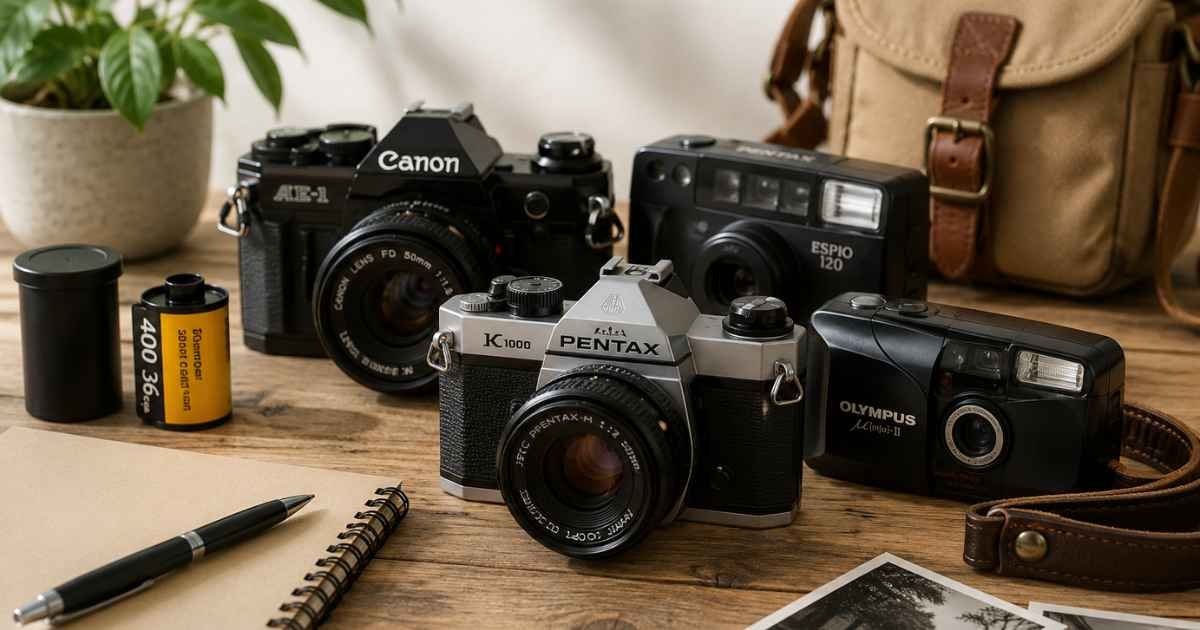
For anyone building a small, usable collection rather than chasing rare or expensive pieces, compact 35mm cameras tend to be the easiest and most forgiving place to start. Models such as the Olympus Mju II and the Pentax Espio series show up often in these conversations, mostly because they were mass-produced to a genuinely high standard, remain widely available secondhand, and require no manual settings to operate.
Camera Kangaroo is one example of a retailer whose stock is organised specifically around this kind of buyer, grouping cameras by brand and condition rather than presenting a single undifferentiated pile of secondhand gear, which makes it easier to compare options before deciding what to buy.
For collectors who eventually want more manual control, older mechanical SLRs like the Pentax K1000 or the Canon AE-1 remain popular choices, largely because they are simple enough to understand and, if something does go wrong, straightforward enough to have repaired.
Building a Collection Without Overspending
New collectors often assume that a meaningful collection requires either rare models or a large budget, but neither is really true. Some of the most widely respected cameras of the last fifty years can still be found secondhand for relatively little, provided the buyer prioritises a working example over a rare one. A single well-tested compact camera that gets used regularly is generally a better starting point than three untested cameras bought cheaply and never actually loaded with film.
It is also worth resisting the urge to buy several cameras at once early on. Learning how one camera behaves, what its quirks are, and how it handles different lighting conditions tends to be more useful for a beginner than spreading that same budget across multiple untested purchases.
Basic Care Once You Own One
Buying a properly tested camera is only half the equation; keeping it working is the other half. Vintage cameras generally do not need much maintenance, but a few habits make a real difference over time. Storing a camera with batteries removed prevents corrosion if it will not be used for a while, since old battery chemistries can leak and damage internal contacts. Keeping cameras away from damp environments matters more than most people expect, since humidity is the main cause of fungus forming inside a lens, which can permanently affect image quality.
It is also worth running a roll of film through a camera every so often even if it is not being used for regular photography. Mechanisms that sit unused for long stretches are more prone to seizing or behaving inconsistently than ones that get exercised occasionally, so an idle camera is not necessarily a safely preserved one.
A Hobby That Rewards Patience
What separates a satisfying collection from a shelf of unused cameras usually comes down to one thing: whether the cameras actually work. A rare or visually striking camera that cannot reliably hold a light-tight seal or fire an accurate shutter speed will eventually end up as decoration rather than equipment, regardless of how appealing it looked in a listing photo.
For anyone starting out, the more reliable path is to begin with one or two properly tested cameras, learn to use them well, and expand the collection gradually from there. It is a slower way to build a collection than buying in bulk from marketplace listings, but it is far more likely to result in cameras that get picked up and used rather than cameras that simply sit on a shelf looking the part.
Disclaimer: The information provided in this article is for general informational and educational purposes only. It does not constitute professional purchasing or photographic advice. Camera conditions, pricing, and availability vary. Readers should independently verify the functionality of any vintage camera before buying, especially if intending to use it for shooting film. The mention of specific retailers, brands, or models is illustrative and does not imply endorsement. The author and publisher disclaim all liability for any purchases, mechanical failures, or dissatisfaction arising from reliance on this content. This article does not guarantee the performance or value of any individual camera.
Ready to take the next step? Our expert warmth is here to walk every step beside you.