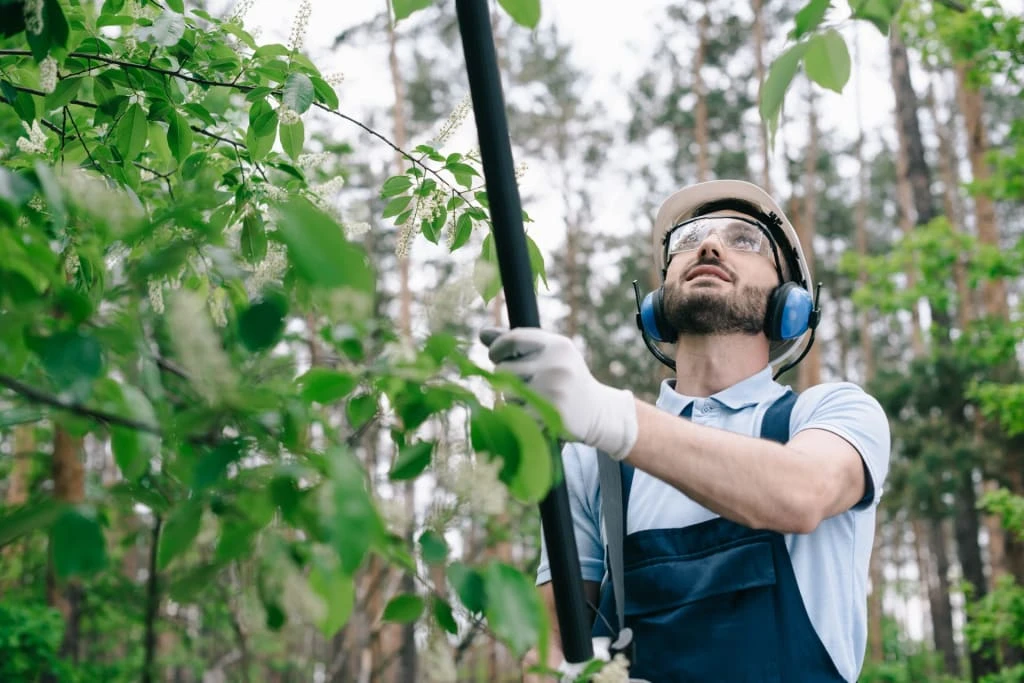
We’ve all been there: you head out to trim two small branches, and three hours later you’re standing in the yard with a borrowed chainsaw, sawdust in your hair, and a massive limb wedged through the shed roof.
Your neighbour is watching, the dog ran inside, and the one branch you actually tried to cut is still sitting up there, swaying smugly in the breeze, completely untouched.
Tree work looks deceptively simple from the ground, but the combination of height, heavy timber, and power tools turns every misjudged cut into a potential insurance claim.
This guide covers why the professionals exist and what you’re paying for when you hire one.
Heights, Gravity, and Chainsaws Are a Terrible Combination
Working thirty feet up in a mature oak with a running chainsaw is one of the most dangerous jobs in the UK. And yet, every spring, someone decides that a YouTube tutorial and a set of ladders from Screwfix will do the trick.
A standard mature branch can weigh several hundred pounds. When you cut through the base without controlling where that weight falls, gravity can easily take over.
Uncontrolled falling timber goes wherever gravity takes it, and a glass conservatory roof won’t slow it down.
Professional tree surgeons use precise rigging and strategic cuts to control exactly how every limb comes down, protecting your home from catastrophic damage.
Power lines make the stakes even worse. A falling limb that clips an overhead cable can cut electricity to an entire street, and the resulting bill from UK Power Networks will make your eyes water more than the sawdust did.
What Actual Qualification Looks Like
Anyone can load a chainsaw into the back of a hatchback. Your neighbour’s mate Gary did exactly that last April, turned up in a transit van with a rusty Stihl and a rag stuffed in his back pocket, and turned the yard into a full-blown logging accident.
Genuine tree surgery qualifications in the UK come through NPTC (National Proficiency Tests Council) and Lantra certifications. These involve extensive practical assessments covering aerial rescue, chainsaw handling, and rigging techniques.
And rigging is where you’ll find real skills. A qualified arborist will calculate drop areas, set up rope-and-pulley systems, and lower heavy limbs inch by inch with controlled precision.
Every cut is planned before the climber leaves the ground, with anchor points, lowering lines, and redirect pulleys all mapped out in advance. Gary, by contrast, dropped a hundred-pound limb straight onto the patio and shattered the slabs to pieces.
Disease, Rot, and Structural Secrets
Internal rot, fungal infections, and structural cracks usually hide right behind bark that looks completely healthy from the ground. A heavy branch can look solid right up until it snaps over your driveway.
A certified arborist knows where to look for those hidden weak spots. Using specialised density tools, they can check the inside of a trunk to find hollows and decay before any visible damage happens on the outside.
Using a resistograph, a tool that drives a micro-thin needle into the trunk to measure wood density, they can detect hidden rot and hollows that you wouldn’t spot from the ground.
Catching these problems early can save your tree from the get-go. A targeted crown reduction might be all that stands between a healthy garden feature and a four-hundred-pound trunk section landing on your roof during a November gale.
Insurance, Regulations, and Tree Preservation Orders
The legal side of tree work in the UK can catch more homeowners off guard than the actual cutting does.
Tree Preservation Orders protect individual trees and entire woodland areas, and carrying out work on a protected tree without council permission can result in fines of up to £20,000.
Conservation areas add another complication. If your property falls within one, you’ll need to give your local council six weeks’ written notice before touching any tree over a certain size, even if no TPO is in place.
An unqualified operator who turns up and fells a protected sycamore without checking the council register will leave you footing the fine.
Qualified professionals will pull the planning records before they unload the equipment, confirm which trees are covered, and handle the paperwork on your behalf.
Insurance plays just as big a role. Reputable certified arborists carry comprehensive public liability cover, which protects your property if something goes wrong during complex aerial work.
Gary’s ‘mate’s rates’ quote certainly came without that safety net, and if his free-falling branch had landed on your neighbour’s car, that claim would’ve been yours to deal with.
Proper Pruning vs. Leaving a Stump
There’s a world of difference between professional pruning and hacking off whatever looks a bit unruly. The most common DIY issue is ‘topping,’ which involves cutting the main stem of a tree down to a stub and hoping for the best.
Topping removes a huge proportion of the canopy in one go, which starves the tree of the leaf area it needs to produce energy. The response is a desperate burst of thin, weakly attached shoots that grow fast but snap easily in the wind.
Within two years, you’ll have a tree that looks worse than before and is structurally more dangerous than it was when you started.
Professional pruning follows natural growth patterns. Crown thinning removes selected interior branches to reduce density and wind resistance without changing the overall shape.
Crown lifting takes off lower branches to increase ground clearance, and deadwooding removes only the dead or dying material that poses a falling risk.
Each cut is made just outside the branch collar, which is the slight swelling where the branch meets the trunk. Cutting at this precise point allows the wound to seal with new growth.
Cut too close, and you’ll damage the trunk. Cut too far out, and you’ll leave a stub that’ll rot inward.
The Cleanup Nobody Thinks About
Cutting down a tree is only half the job. The real surprise is the pile of debris left on the lawn, which is always four times bigger than you think it’s going to be.
Professional teams bring commercial wood chippers that reduce branches to mulch on site. Trunk sections get cut into manageable rounds, stacked, and removed.
The workspace gets swept, raked, and cleared before anyone leaves, so you’re left with a clean lawn, not a temporary lumber yard.
Amateur operators tend to leave you with a heap of tangled branches blocking the back gate and a vague promise to ‘come back for those next week.’
Next week becomes next month, the pile grows moss, and your partner starts making pointed comments about the state of the lawn.
On the other hand, a professional crew will handle the entire process in a single visit, from the first climb to the final sweep.
Conclusion
In the end, good tree surgery comes down to doing things properly—protecting the plant, respecting local laws, and keeping heavy timber off your roof.
It’s one area of garden care where handing the job to an expert pays for itself immediately. Plus, watching someone else haul a ton of logs across your lawn beats doing it yourself every time.
Disclaimer: This article is for general informational purposes only and does not constitute professional arboricultural, legal, or safety advice. Tree work involves significant physical risk, and regulations—including Tree Preservation Orders, conservation area notices, and fines—vary by UK local authority and may change without notice. Readers should verify all legal requirements, TPO status, and notice periods directly with their local council, and confirm qualifications, certifications (such as NPTC and Lantra), and public liability insurance directly with any contractor before hiring. Any mention of specific tools, brands, or organizations does not imply endorsement. The author and publisher disclaim any liability for decisions made based on this content.
Explore ideas that make complex topics simple—our clarity-first guides turn confusion into confidence.