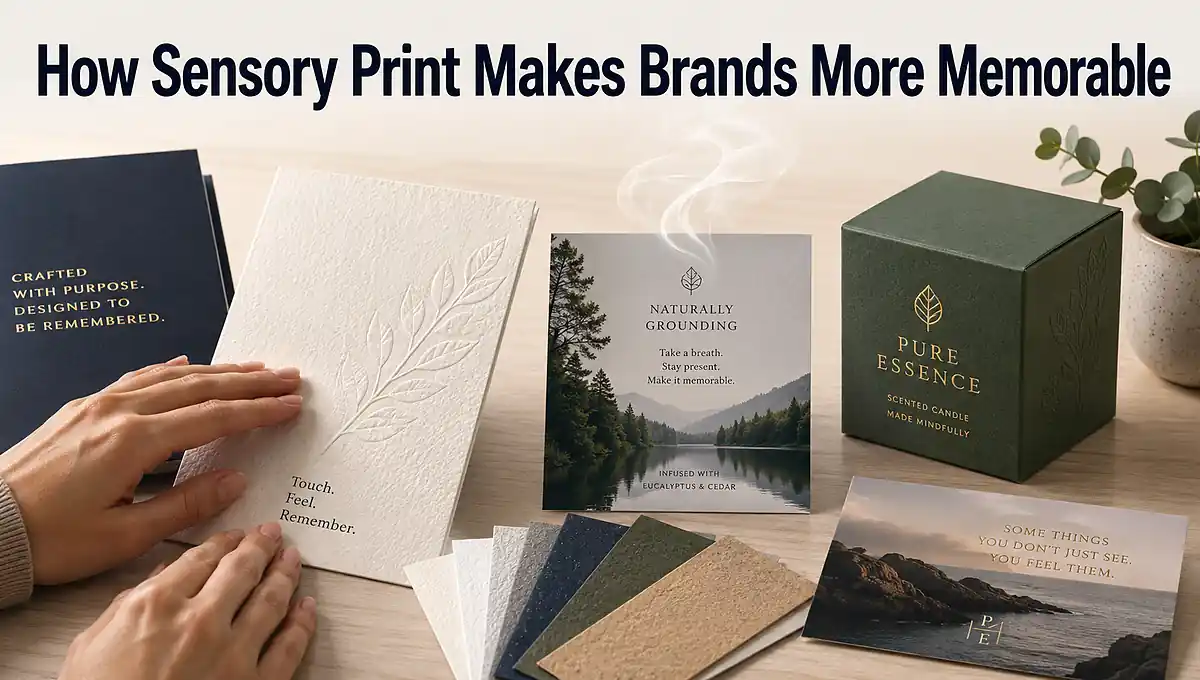
Research in psychology and marketing shows sensory experiences can influence how consumers perceive, remember and interact with products and printed materials. While visual design is important, these studies indicate that engaging additional senses –– especially touch and smell –– can strengthen emotional responses, improve memory retention and increase perceived value.
Research on Specialty Print Effects
A study by the Print Industries Market Information and Research Organization (PRIMIR) surveyed print buyers and brand managers to examine the impact of different print enhancements including gloss and matte coatings, textured finishes, scented inks, glitter, glow-in-the-dark inks and scratch-off printing.
Among the techniques evaluated, scent marketing ranked highest for profitability and consumer impact. Textured coatings and specialty paper stocks also ranked high, with results attributed to the close connection between sensory stimulation and emotional memory.
The Connection Between Smell & Memory
The close link between smell, emotional processing, and long-term memory makes scent a powerful marketing tool.
Familiar smells, such as freshly baked bread or perfume, can trigger emotional recollections and a nostalgic connection known as the “Proust phenomenon,” after writer Marcel Proust, who described how the smell and taste of a madeleine pastry triggered vivid childhood memories in his novel “In Search of Lost Time.”
The Impact of Touch
Research from Ohio State University explores how touching an object can create an attachment that triggers both the willingness to buy it but also to pay more. In one study, participants held a coffee mug for either 10 seconds or 30 seconds before participating in an auction for the item.
The study found that participants who held the mug longer placed higher bids than those who held it briefly. Some participants went as far as knowingly bidding more than the mug’s listed retail price,
Previous research links these results to the “endowment effect,” a phenomenon in which people assign greater value to objects they feel ownership over.
Neuroscience and Printed Materials
Additional research on tactile experiences has demonstrated how paper quality and texture can affect perception and memory. A 2015 study compared how participants responded to identical company brochures presented in three formats: high-quality coated paper, lower-grade uncoated paper, and digital versions viewed online.
The study found that participants who read the brochure printed on higher-quality paper demonstrated stronger comprehension and recall. They also reported more favorable impressions of the companies presented. One week later, participants were more likely to remember and prefer the companies associated with the higher-quality printed materials.
Texture & Product Perception
Texture and feel can shape consumer expectations and brand perception. Matte finishes, for example, are often associated with natural or high-quality products, while glossy finishes may communicate different qualities such as boldness.
The research is clear: engaging multiple senses can strengthen consumer attention through emotional connection and memory formation. Whether through scent, texture, material quality, or other tactile elements, incorporating multisensory effects can influence how consumers interact with products and promotional materials.
As digital communication dominates many channels, marketing materials that incorporate sensory elements may offer opportunities to create more memorable interactions and experiences that stand apart.
Disclaimer: The information provided in this article is for general informational and educational purposes only. It does not constitute professional marketing, psychological, or business advice. Research findings cited are illustrative and may not apply universally to all products, audiences, or campaigns. The mention of specific studies, organizations, or techniques does not imply endorsement. The author and publisher disclaim all liability for any marketing decisions or outcomes based on this content. Always test strategies within your own context and comply with applicable advertising standards. This article does not guarantee specific consumer responses or sales results.
Discover content that adds real value—start reading our value-packed articles and see the difference.