The piston ring is one of the smallest components in the engine, and one of the most demanding to manufacture. A typical engine carries three rings per cylinder, and each ring runs millions of cycles. Two failure modes show up when ring performance drops. Combustion gases leak into the crankcase. Engine oil migrates upward into the combustion chamber. Both effects push the engine toward unscheduled overhaul.
For aftermarket distributors and engine rebuilders, the piston ring manufacturer choice influences sealing, oil consumption and emissions from the first start cycle. Yenmak has produced piston rings alongside cylinder liners and pistons from Istanbul since 1965.
What Does a Piston Ring Set Actually Do
A standard piston carries three rings in three separate grooves machined into the piston wall. From top to bottom, these are the top compression ring, the second compression ring, and the oil control ring.
The two compression rings handle combustion sealing. The top ring sees the highest combustion pressure and temperature, and forms the primary seal against blow-by. The second compression ring catches gases that slip past the top ring. It also adds a secondary heat transfer path from piston to liner.
The oil control ring sits lowest and regulates the oil film between the piston and the liner. It scrapes excess oil into the sump on the downstroke and leaves a controlled film on the upstroke. Most oil control rings use a three-piece design: two thin rails separated by a spring expander.
Yenmak as a Piston Ring Manufacturer
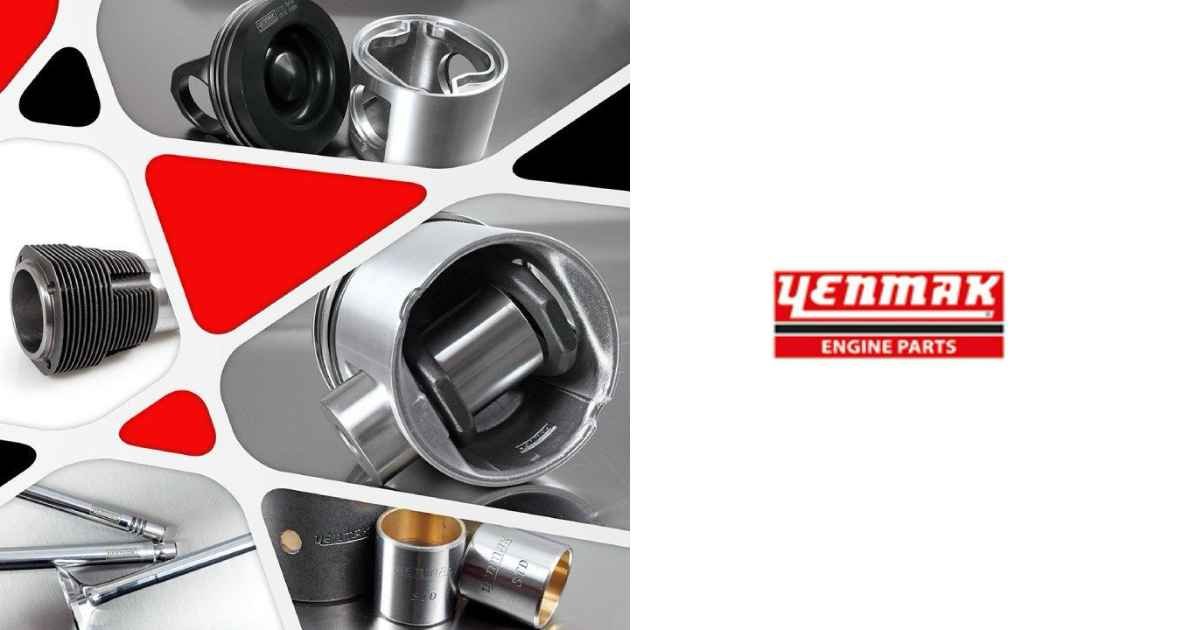
Yenmak produces piston rings as part of an integrated engine parts catalog that also covers cylinder liners and pistons. The ring program ships from the same Istanbul base since 1965. The ISO 9001 quality system covers the Cylinder Liner Factory and the Piston Factory equally.
For distributors evaluating a piston ring manufacturer that can supply rings alongside matched pistons and liners, Yenmak’s integrated catalog presents a practical option. Rings ship across 94 countries, with primary markets in Germany, France and the United States.
The Yenmak ring program covers:
- Compression rings sized for diesel and petrol engine applications
- Oil control rings with profiled scraping edges
- Chrome and nitride surface treatments where the application requires
- Sets matched to Yenmak liners and pistons
How Do Compression Rings and Oil Control Rings Differ
The compression and oil control rings handle different engine functions. The geometry of each ring reflects its job.
Compression rings are usually solid one-piece designs with cross-sections shaped for specific tasks. The barrel face is the most common top ring profile. The ring face curves slightly so contact concentrates at the center of the running surface. Keystone-shaped rings have angled side walls. The angle resists ring sticking in heavy-duty diesel engines that build carbon in the groove.
Oil control rings work as multi-piece assemblies in most modern engines. The three-piece design uses two thin steel rails with a spring expander between them. The expander pushes the rails outward against the liner. Each rail wipes oil off the bore on the downstroke.
The table below summarises the three ring types in a standard set.
| Ring Type | Position | Primary Function | Common Treatment |
|---|---|---|---|
| Top compression | Topmost groove | Primary combustion seal | Chrome plating, nitriding, PVD |
| Second compression | Middle groove | Secondary seal, heat transfer | Cast iron, sometimes coated |
| Oil control | Lowest groove | Distribute and scrape oil film | Chrome rails, steel expander |
What Drives Ring Tension and End Gap Specifications
Three measurements define how a piston ring performs in the bore: free gap, installed gap and tangential tension.
Free gap is the distance between the ring ends when the ring is uncompressed. The free gap dictates how much the ring compresses inside the cylinder. That compression sets the spring force pressing the ring face against the bore.
Installed gap is the distance between the ring ends with the ring seated at room temperature. The gap must be wide enough that thermal expansion at operating temperature does not close it and cause the ring to buckle.
Tangential tension measures the force the ring exerts against the bore. Too little allows blow-by past the ring. Too much increases friction and accelerates wear.
Why Do Surface Treatments Affect Ring Life
Bare cast iron rings work in many applications, but heavy-duty diesel and high-load petrol engines benefit from harder ring faces. Three surface treatments cover most production volume.
Chrome plating produces a hard, smooth surface that resists wear and scuffing in marginal lubrication. Hard chrome is the long-standing default for diesel compression rings.
Nitriding diffuses nitrogen into the ring surface, producing a hard layer that supports both ring face and ring side wear. Nitrided rings are common in high-output applications.
Physical vapor deposition (PVD) coatings apply thin, very hard layers such as chromium nitride. PVD suits engines where extreme wear resistance is required without changing ring dimensions.
How Ring Performance Connects to Emissions and Oil Consumption
Ring failure shows up in two measurable engine outputs: cylinder pressure and oil consumption.
Blow-by past worn compression rings reduces effective combustion pressure, which lowers power output. The same blow-by pressurizes the crankcase, forcing engine oil out through breathers and seals.
Oil control failure has a direct emissions consequence. Engine oil that reaches the combustion chamber burns alongside the fuel. The result is particulate emissions and carbon deposits on intake valves and turbocharger components.
For commercial vehicle operators, both outcomes affect EU Stage and US EPA Tier compliance across the service life.
Quality Standards Behind the Yenmak Ring Range
The Yenmak piston ring program runs under the ISO 9001 quality management system in place since 1996. Turkish Standards Institution (TSE) compliance applies as a national reference across the catalog. Both certificates are accessible to importing distributors through the Yenmak website. These references shorten the technical audit work that workshops perform during onboarding.
Frequently Asked Questions
What products does Yenmak offer as a piston ring manufacturer?
Yenmak supplies compression rings and oil control rings for diesel and petrol engine applications. The catalog includes rings with chrome plating, nitriding and other surface treatments where the application requires. Yenmak ships rings from the Istanbul base alongside matched pistons and cylinder liners, with aftermarket part-number cross-references available for workshop networks.
How do compression rings differ from oil control rings in function?
Compression rings seal combustion gases above the piston, with the top ring carrying the highest pressure and temperature load. Oil control rings sit lower and regulate the oil film between piston and cylinder liner. They scrape excess oil into the sump on the downstroke and leave a controlled film on the way up.
Why does ring surface treatment matter for engine service life?
Surface treatments such as chrome plating, nitriding and PVD coatings make the ring face harder than bare cast iron. The harder surface resists wear in the abrasive combustion environment and resists scuffing during marginal lubrication. In heavy-duty diesel and high-load petrol engines, treatment directly extends the period before ring replacement.
How do worn piston rings affect engine emissions?
Worn compression rings allow combustion gases to leak past, which lowers power output and pressurizes the crankcase. Worn oil control rings let engine oil reach the combustion chamber, where it burns and produces particulate emissions. Both failure modes affect compliance with EU Stage and US EPA Tier emissions regulations on commercial vehicles.
Disclaimer: The information provided in this article is for general informational and educational purposes only and does not constitute professional engineering, automotive repair, or mechanical advice. Piston ring specifications, engine requirements, and emissions regulations vary by application and jurisdiction. Readers should consult qualified engine rebuilders or automotive engineers before specifying parts. The mention of Yenmak, ISO 9001, TSE certifications, and specific surface treatments reflects the products and standards discussed and does not guarantee identical performance in all applications. The author and publisher disclaim all liability for engine damage, performance issues, or compliance failures arising from reliance on this content. Always follow manufacturer specifications and installation procedures. This article does not constitute endorsement by any named regulatory body.
Small steps, big results — start with one smart idea.