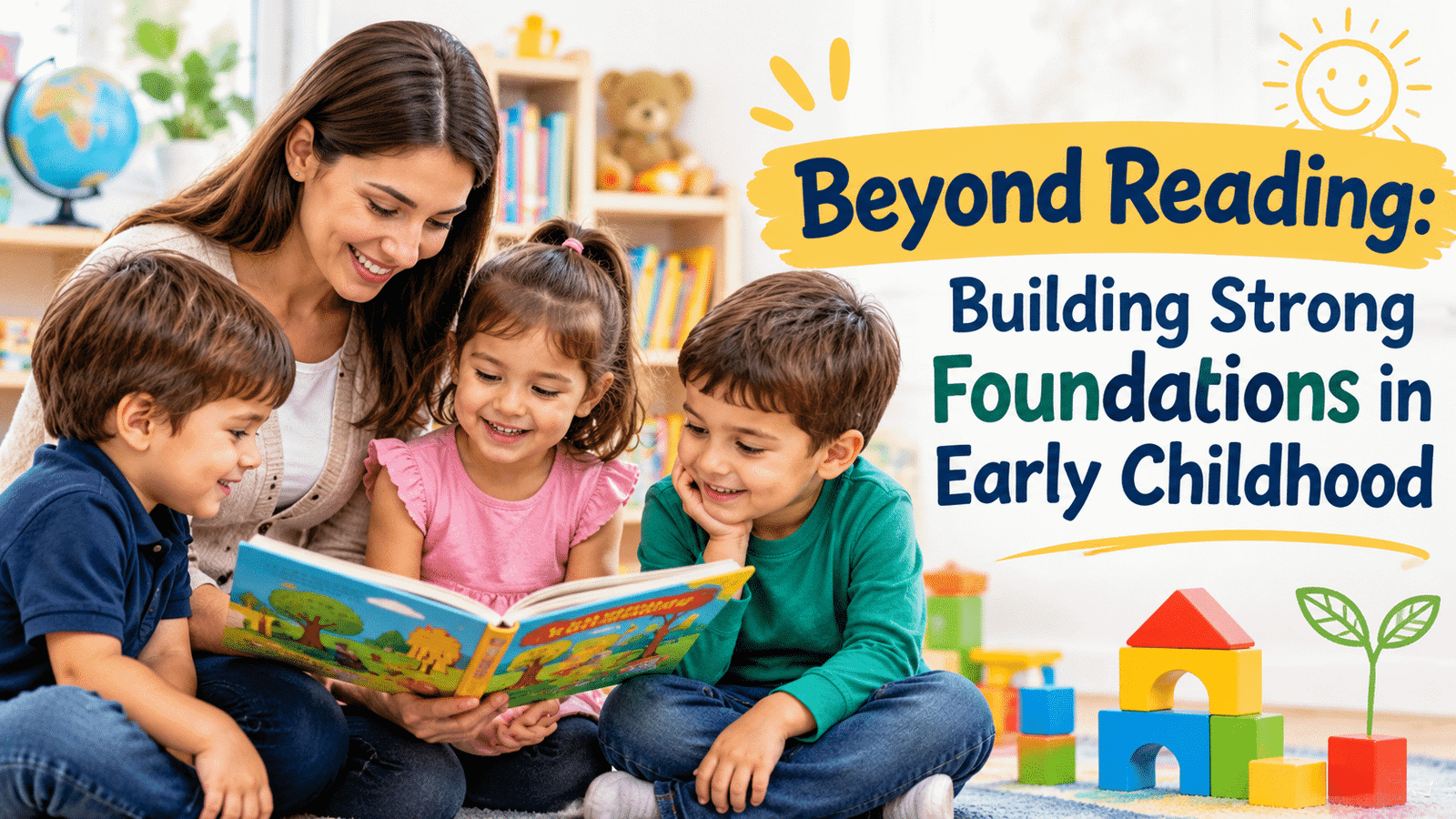
When parents visit a preschool, one of the first questions they often ask is, “Will my child learn to read?” It is an understandable concern. Reading is an important milestone, and parents naturally want their children to develop the skills they need to succeed in school. However, focusing too heavily on early reading can overlook something even more important: the foundations that make reading and lifelong learning possible.
The years between three and six are a remarkable period of development. During this time, children are learning to communicate, explore their surroundings, manage their emotions, build relationships, and understand the world around them. These experiences prepare them for reading, writing, mathematics, and many other academic skills.
A quality early childhood education program recognizes that learning is about much more than recognizing letters or memorizing words. It creates an environment where children develop the confidence, curiosity, and essential abilities that support their future education.
Language Development Comes Before Reading
Before children can understand written words, they need opportunities to develop spoken language. Vocabulary, listening skills, communication, and the ability to express ideas all contribute to early literacy.
Preschool children develop these abilities through everyday conversations, storytelling, songs, discussions, and imaginative play. For example, when a teacher reads a story aloud and asks children what they think might happen next, children learn to listen, understand meaning, make predictions, and communicate their thoughts.
Simple activities such as describing pictures, discussing daily experiences, and telling stories also introduce children to the structure of language.
Parents and teachers can support this development by giving children time to speak, asking open-ended questions, and showing genuine interest in their answers. These interactions help children understand that language is a valuable tool for expressing ideas and connecting with others.
Curiosity Makes Learning Meaningful
Young children are naturally curious. They want to know why things happen, how objects work, and what they can discover through exploration. A good preschool encourages this curiosity rather than expecting children to learn everything through structured lessons.
For instance, children playing with water may begin asking why some objects float while others sink. A teacher can turn this simple activity into an opportunity to explore observation, comparison, prediction, and problem-solving.
Similarly, outdoor activities allow children to examine plants, observe insects, collect leaves, and notice changes in the environment.
These experiences help children develop an interest in learning. Instead of simply receiving information, they begin asking questions and discovering answers independently.
An educational approach that values exploration helps children understand that learning is an active process. This attitude can benefit them throughout their academic journey.
Self-Control Is an Important Part of School Readiness
Another essential skill developed during the preschool years is self-regulation. Children gradually learn to manage their emotions, control impulses, follow instructions, and remain focused on activities.
These abilities are sometimes overlooked when parents evaluate school readiness, but they have a significant influence on how children experience classroom learning.
For example, a child who can wait for a turn during a group activity is developing patience and impulse control. A child who can return to a puzzle after making a mistake is learning persistence. Similarly, a child who can express frustration using words rather than reacting physically is developing emotional awareness.
Preschool teachers support these skills through consistent routines, cooperative games, group activities, and positive guidance.
Children do not develop self-control overnight. They need time, encouragement, and opportunities to practise. A supportive learning environment allows them to make mistakes while gradually becoming more independent.
Confidence Develops Through Everyday Experiences
Confidence is another important foundation for future academic success. Children who feel safe, respected, and supported are generally more willing to explore new activities and attempt unfamiliar tasks.
Preschool provides many opportunities for children to build this confidence. They may learn to put away their belongings, complete a simple activity independently, participate in group discussions, or share their ideas with classmates.
Even small achievements can make a meaningful difference.
Teachers play an important role by recognizing effort rather than focusing exclusively on correct answers. When children understand that mistakes are part of learning, they become more comfortable taking risks and trying again.
This approach also helps develop resilience. Rather than giving up when something becomes difficult, children gradually learn to approach challenges with patience and determination.
Play Is One of the Most Effective Ways to Learn
Play is sometimes misunderstood as an activity separate from education. In reality, meaningful play supports several areas of early childhood development at the same time.
Building blocks, for example, can introduce children to shapes, balance, patterns, measurement, and spatial awareness. Pretend shops encourage communication, counting, cooperation, and imaginative thinking. Drawing and painting strengthen creativity and fine motor skills.
Group games also help children understand rules, cooperate with others, solve disagreements, and develop social awareness.
A well-designed preschool environment combines purposeful play with guidance from experienced educators. Teachers observe children’s interests and introduce activities that encourage further exploration.
This balance allows children to develop important skills without making learning feel like a constant academic test.
What Should Parents Look for in a Preschool?
When choosing a preschool, parents should consider more than whether children are learning letters and numbers at an early age. The overall learning environment deserves equal attention.
A good preschool should provide:
- Language-rich experiences: Children should have regular opportunities to listen, speak, ask questions, and enjoy stories.
- Purposeful play: Activities should encourage creativity, exploration, cooperation, and problem-solving.
- Emotional support: Teachers should help children understand and manage their feelings.
- Age-appropriate routines: Daily schedules should provide structure while allowing flexibility for individual needs.
- Positive relationships: Children should feel comfortable communicating with teachers and interacting with classmates.
- Opportunities for independence: Children should gradually develop confidence in completing everyday tasks.
Parents can also ask teachers how they assess development, support different learning needs, and communicate children’s progress.
Educational approaches such as IPC Education can be part of this wider conversation about creating meaningful learning experiences. Understanding the educational philosophy behind a preschool can help parents evaluate whether its approach supports children’s overall development rather than concentrating only on early academic performance.
Preparing Children for a Successful Future
The years between three and six are not a race to see which child can read first. They are an opportunity to develop the abilities that make future learning more enjoyable and effective.
Language helps children understand and communicate ideas. Curiosity encourages them to explore and ask questions. Self-control supports positive classroom participation, while confidence gives them the courage to attempt new challenges.
Together, these foundations prepare children for the academic and social experiences they will encounter in primary school and beyond.
When parents tour a preschool, asking about reading is perfectly reasonable. However, it is equally important to ask how the school develops communication, independence, emotional awareness, creativity, and a genuine love of learning.
A child who enters school feeling confident, curious, and ready to explore has already taken an important step toward becoming a successful lifelong learner. Reading will follow as part of that journey, supported by the strong foundations built during the early years.