Bar stools are the most frequently mis-bought seat in the home, and the reason is almost always height. A stool that is an inch or two off will leave feet dangling or knees jammed under a counter, and no amount of handsome design fixes a chair that is uncomfortable to climb into. The good news is that the solution is arithmetic, not taste. Once you know your counter height, the right seat height follows within a narrow range, and then you can shop by shape, material, and stability. This article covers the measurements that matter, the difference between counter and bar height, how to choose a base that will not tip, and how to keep stools comfortable over lunch, homework, and long conversations. Consider it a checklist you can carry into the store.
Getting the Height Right First
Height is the one specification you cannot negotiate after purchase. Too low and the stool disappears under the counter; too high and knees collide with the overhang. The standard guidance is simple: the seat should sit roughly nine to twelve inches below the counter surface, leaving enough room for the thighs to clear and the feet to rest on a rung or the floor.
Counter-height stools are designed for counters around thirty-six inches high, with seats typically landing in the mid-twenties. Bar-height stools pair with taller bars near forty-two inches, with seats around thirty inches. If you are unsure which you have, measure from the floor to the top of the counter before you shop — the difference between a kitchen island and a breakfast bar is often just enough to send you home with the wrong pair. Bar stools that match the height of your counter feel natural to climb into and easy to slide out of, which is the whole point.
Measure the Counter, Not the Catalog
It also helps to think about who will use the stools. A tall adult and a small child rarely share the same ideal seat height, so a family may do better with a set that offers an adjustable range or with two heights used in different spots. Guests are another factor: a stool that suits a six-foot visitor may be uncomfortable for someone shorter, which is one reason a footrest and a modest back make a set easier to share.
Catalog descriptions use the terms loosely, so trust your own tape measure. Note the counter height, the depth of the overhang, and how much knee space is available beneath. A deep overhang allows a stool to tuck in further, which is helpful in narrow rooms, while a shallow one limits how far the seat can sit under the surface. Also check whether the counter has a raised edge or a lip that could catch a stool’s armrest or back. Write the numbers down; they are the filter that eliminates half the catalog before you get distracted by finishes.
Footrests and the Dangling-Feet Problem
A footrest is not decorative — it is what makes a high seat comfortable. When feet cannot reach a support, the legs hang and the body’s weight presses into the thighs, which becomes uncomfortable within minutes. Look for a stool with a well-placed footrest, whether a rung between the legs or a built-in foot ledge under the seat. The rung should sit at a height where the feet can rest with a slight bend in the knee, and it should be wide enough to be a real target rather than a narrow bar. Stools with adjustable seat height can fine-tune this, but even a fixed stool can be comfortable if the footrest and counter height line up.
Shape, Base, and Stability
Once height is solved, the next question is how the stool will behave in daily use. A stool is climbed onto, leaned on, and swiveled far more than a dining chair, so stability and a forgiving base matter as much as the seat.
Backless, Low-Back, or Full-Back
Backless stools tuck neatly under the counter and keep sightlines open, which suits small kitchens and anyone who prefers a clean look. They are less supportive for long meals, though, and guests often end up leaning forward. Low-back and full-back stools offer more comfort for extended sitting and are safer for children and older guests. A good compromise is a low-back design that supports the lower spine without blocking the view across the island. If the stools are primarily for quick breakfasts and homework, backless is fine; if dinner often migrates to the counter, choose a back.
Legs, Pedestals, and Swivel Bases
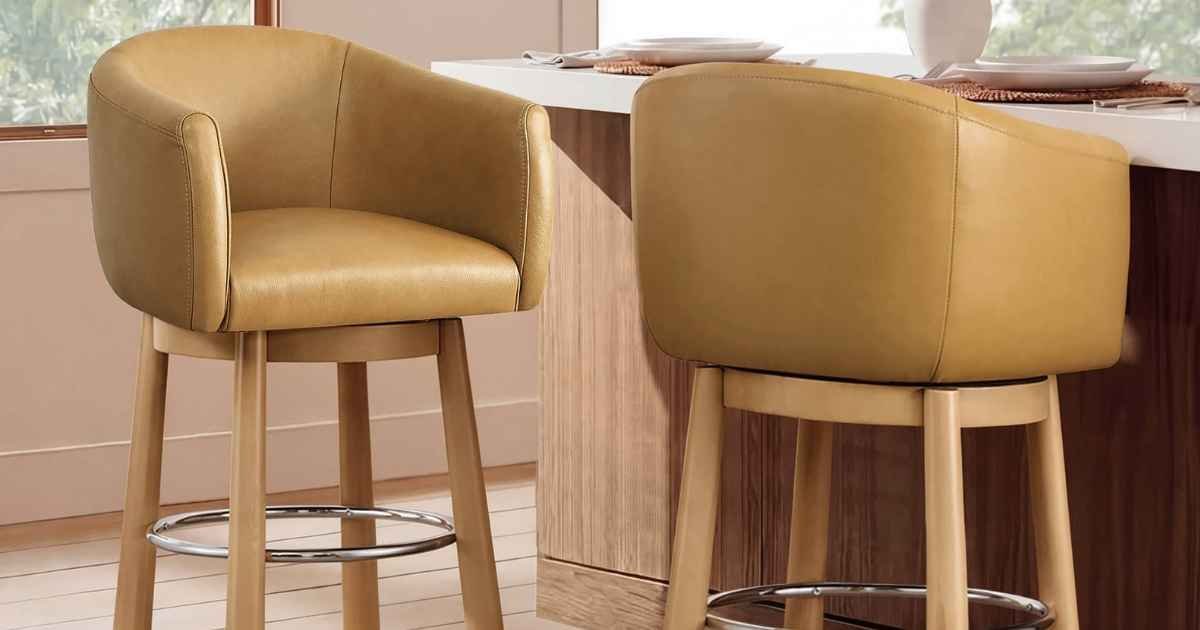
Four-legged stools are the most stable and the easiest to move aside for cleaning. Pedestal bases with a broad foot save knee space and look sleek, but the footprint needs to be wide enough to prevent tipping. Swivel mechanisms are wonderful at a counter where people turn to talk to a cook or a neighbor, but they add a moving part that should feel solid rather than loose; test the rotation in the store and look for a base that stays planted. Whatever the design, check that the stool has a low center of gravity and some weight in the base — a light stool with a tall back is the one most likely to tip when someone leans back. For families with young children, four legs and a back are usually the safer combination.
Materials, Comfort, and Upkeep
Stools take more abuse than dining chairs because they are often used for quick, informal meals — a bowl of cereal, a laptop, a glass of wine while cooking. The materials should be chosen with that casual, messy reality in mind.
Seat Materials for Real Kitchens
Leather and performance fabrics wipe clean and hold up to spills, which makes them a sensible choice where food and drinks regularly land. Woven rattan and wood bring warmth and suit relaxed, natural-looking kitchens, but they need a little care if they sit near a sink or a stove. Metal seats are durable and easy to sanitize, though they can feel cold and may scratch floors without protectors. Upholstered stools with a firm seat are the most comfortable for long sitting, while wooden saddle seats mold to the body over time but offer less padding. In every case, look at the joinery where the legs meet the seat; that is the stress point on a stool and the first place a cheap one fails.
Cleaning and Everyday Care
Consider the counter’s overhang before choosing arms. Stools with armrests are more comfortable for long meals, but the arms may not clear a shallow overhang or a drawer front, forcing the stool to sit too far out. Measure the overhang depth, then sit in a stool with the same arm height to confirm it slides in as far as you want.
High seats gather dust and crumbs in places a broom misses, so choose stools you can wipe down without disassembling them. Keep a microfiber cloth nearby and clean the seat and the footrest regularly, since the footrest collects scuffs from shoes. Check the tightness of leg bolts every few months, especially on swivel and pedestal designs, and tighten anything that has worked loose. If the stools sit on a hard floor, add felt pads to protect the finish. For outdoor or covered patio counters, confirm that the materials are rated for moisture and temperature swings — not every attractive stool can live outside. A small amount of upkeep keeps a set looking new for years and prevents the wobble that makes people stop using them. A set of well-built stools, like the counter and bar-height options from CHITA LIVING, tends to hold up to that routine far better than a decorative pair bought on impulse.
Stools That Earn Their Place at the Counter
Bar stools are simple pieces of furniture, and the decisions that make them work are equally simple: match the seat height to the counter, give the feet a place to rest, and choose a base that will not tip. From there, let the room decide the rest — backless for a small kitchen that needs to feel open, a supportive back if the counter doubles as a dining table, and materials that can handle a spilled drink without a crisis. Measure before you buy, test the swivel and the footrest in the store, and check the leg joints rather than the cushion cover. A good stool disappears into the rhythm of the kitchen: easy to climb into, easy to leave, and comfortable enough that nobody minds lingering over coffee.
Disclaimer: This article is for general informational purposes only and does not constitute professional interior design, furniture, or safety advice. Counter heights, seat-height ranges, overhang depths, and stool specifications vary by product and installation, and may change without notice—readers should measure their own counter and confirm exact dimensions with the retailer before purchasing. Stability and tipping risk depend on base design, center of gravity, and use; families with young children should prioritize stable four-legged designs with a back and follow the manufacturer’s safety guidance. Material performance and suitability for outdoor or moisture-exposed areas vary by product—confirm ratings with the supplier. Any mention of specific brands (including CHITA LIVING) does not imply endorsement. The author and publisher disclaim any liability for decisions made based on this content.
Looking for content that turns your curiosity into confidence? Explore our insight-driven articles—clear, useful, and always worth your time.