For most of the last decade, packaging strategy meant picking a box, picking a print method, and negotiating a unit price. That framework is breaking down. In 2026, the biggest forces acting on ecommerce packaging aren’t creative; they’re regulatory, geopolitical, and computational, and they’re arriving at the same time.
I track this space closely, and what strikes me this year isn’t any single trend but how fast they’re compounding. A brand that gets its custom boxes’ dimensions wrong now pays for it three times over: once in freight, once in a state compliance fee, and once in wasted material, a new regulation just made more expensive to landfill. Here are the ten custom ecommerce packaging trends actually driving decisions in 2026, and what each one means operationally.
1. Dimensional weight math just got less forgiving
Carriers price parcels on the space they occupy, not just their weight, and in 2026, that math tightened. Following a policy update in July, USPS aligned with UPS and FedEx on a standard dimensional weight divisor of 139 for most domestic services, closing a gap shippers had used to their advantage for years. A box with more than a little empty space now shows up directly on the freight invoice.
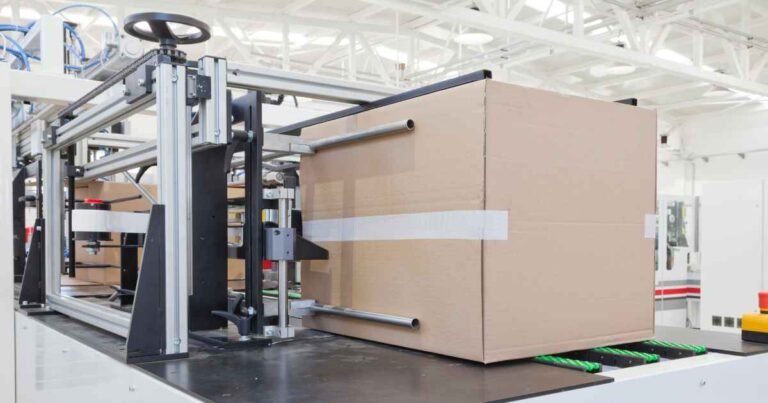
The response has been a wave of automated, on-demand box-forming: 3D scanners measure the item, software calculates the smallest workable carton, and a machine builds it on the spot. Companies running these systems report cutting shipping spend by 15% to 35% simply by removing dead air. Notably, this isn’t only a cost story; the EU’s incoming packaging rule (more on that below) includes an enforceable cap limiting empty space to 40% of a parcel’s volume, meaning the cost argument and the compliance argument now point in exactly the same direction.
2. The US EPR patchwork stopped being theoretical
Extended producer responsibility, or EPR, shifts the cost of managing packaging waste onto the businesses that put it on the market. Seven states now run active packaging EPR programs: California, Colorado, Oregon, Washington, Maine, Maryland, and Minnesota, and six of them shared a major reporting deadline of May 31, 2026.
What makes 2026 different is that fees are no longer hypothetical. Programs are eco-modulated: packaging that’s hard to recycle, multi-material, or unrecyclable in practice gets charged at the highest tier, while mono-material, recycled-content, or reusable formats qualify for lower rates or outright bonuses. Oregon’s program, for instance, pays qualifying brands up to $20,000 per SKU toward their fees for supporting lifecycle-assessment data.
California’s rules have been especially contentious: its producer responsibility act became enforceable on June 1, 2026, and is currently being challenged in federal court by a coalition of other states, a reminder that this landscape is still actively being litigated, not settled. Details for each state are tracked by the Washington State Department of Ecology, which publishes one of the clearer public breakdowns of how these phased requirements work.
3. The EU’s PPWR is forcing a redesign that reaches past Europe
The EU’s revised Packaging and Packaging Waste Regulation entered into force in February 2025 and became directly applicable across all member states on August 12, 2026, just weeks ago as of this writing. Because it’s a regulation rather than a directive, it applies uniformly without each country passing its own version, which is part of why it’s moving faster than many brands expected.
Two details matter most for ecommerce specifically. First, recycled-content minimums for plastic packaging begin phasing in from 2030, starting at 30% for contact-sensitive PET packaging, so material sourcing decisions made now will need to hold up under those targets later. Second, and more immediately relevant, online marketplaces are explicitly named as responsible parties when they handle packaging or fulfillment on behalf of third-party sellers, meaning a US brand fulfilling through an EU-based warehouse or marketplace program can be pulled into compliance obligations without ever opening a European entity. The European Parliament’s legislative summary is the most direct primary source for the regulation’s actual text and targets.
4. Tariff volatility made sourcing geography a packaging decision
2026 has been a genuinely unstable year for packaging input costs. Section 232 tariffs on steel, aluminum, and copper, layered Section 301 duties on Chinese-origin goods, and a temporary blanket surcharge introduced under Section 122 in February have all moved at different times and by different amounts, and industry coverage has repeatedly noted that any specific rate quoted today should be treated as provisional. On top of that, containerboard capacity cuts and oil-driven resin price swings tied to unrelated geopolitical disruptions have pushed base material costs up independent of tariffs entirely, as Packaging Dive has reported throughout the year.
The practical shift isn’t a single fix; it’s optionality. Brands are qualifying domestic suppliers alongside overseas ones, mapping which materials carry the most tariff exposure, and building the ability to shift sourcing quickly rather than betting on any one country’s trade status holding steady.
5. Mono-material construction is replacing the mixed-material mailer
Consumers are done guessing which parts of a package are recyclable. The padded mailer with a plastic bubble layer laminated to a paper exterior, long an ecommerce staple, is exactly the kind of packaging that state EPR fee schedules now penalize hardest, since multi-material laminates are difficult to separate at material recovery facilities and are classified accordingly.
The fix brands are converging on is genuinely mono-material design: paper cushioning instead of plastic bubble lining, single-polymer mailers instead of laminated ones, fiber-based void fill instead of foam. It’s a real materials-engineering shift, not a labeling change, because a mono-material structure has to protect the product without the performance boost that mixing materials used to provide. The Association of Plastic Recyclers has been one of the more consistent voices tracking why this shift matters for actual recovery rates, not just marketing claims.
6. Reusable packaging’s unit economics finally work, for the right category
Returnable packaging has been pitched as the future for years without quite arriving. What changed in 2026 is that the numbers are starting to hold up in specific categories. Outdoor apparel brand Toad&Co’s program with reusable shippers made from upcycled billboard vinyl reportedly reaches cost parity once a bag completes roughly two cycles a month, with clear savings beyond that. European retailers running RePack’s reusable packaging option have reported higher average order values meaningfully among shoppers who choose it at checkout. Broader circular-economy research has found per-shipment packaging costs dropping 20% to 40% after a reusable container’s third cycle.
The catch is that this only pencils out where package sizing is consistent and return rates are high; apparel, subscription boxes, and premium goods are where it’s working, not general merchandise with wildly varying dimensions.
7. Packaging is becoming a data carrier, not just a container
QR codes on shipping boxes have gone from novelty to expectation; care instructions, reorder links, warranty registration, and personalized thank-you videos are now routine uses. Premium categories like cosmetics and electronics are layering in NFC and RFID for authentication and richer engagement.
There’s a bigger pattern underneath the marketing use case. The infrastructure this requires- unique identifiers, scannable data carriers, structured product information is the same infrastructure the EU’s forthcoming Digital Product Passport framework will eventually require packaging to carry, as that framework extends beyond its initial battery and electronics categories later in the decade. Brands adopting smart packaging now for engagement reasons are, often without realizing it, building toward a compliance requirement that hasn’t landed yet.
8. Warehouse automation is dictating structural design
Labor availability, not creativity, is now a leading constraint on packaging design. Manual box-forming and hand-taping are the slowest steps on most packing lines, so structural engineering has shifted to remove them: auto-lock bottoms that snap into shape without tape, water-activated tape that fuses permanently to the carton rather than peeling off (which does double duty as tamper evidence), and carton geometries designed to be picked and formed by robotic arms rather than human hands.
This means a box now has to satisfy three audiences at once: the automated line that forms it, the carrier that bills it, and the customer who eventually opens it, and increasingly, the first two are dictating the terms.
9. Variable data printing makes real personalization affordable
Because digital presses image every sheet independently with no plates involved, changing the artwork from one unit to the next costs essentially nothing extra. That’s turning personalization from a premium gimmick into a standard option: region-specific messaging, seasonal variants, flavor or SKU-specific artwork, and even name-personalized runs for gifting occasions can all print in a single pass instead of requiring separate production runs.
Combined with AI-assisted layout tools that can generate and test variant artwork faster than a design team working manually, brands are running more packaging versions per year than they were three years ago, without a proportional increase in cost.
10. Low minimum orders are becoming a competitive requirement
Testing a new SKU or a limited-edition drop used to mean committing to thousands of units of custom packaging to make the plate or die cost worthwhile. Digital printing and more flexible short-run suppliers have broken that link. Brands can now order small, branded runs to test a concept before committing capital to a size they haven’t validated yet.
The effect compounds with trend nine: cheap variable artwork plus low minimums means packaging can now move at the speed of a marketing campaign instead of a manufacturing cycle. For scaling DTC brands, a supplier’s flexibility on order size is becoming as important a selection factor as their price per unit.
The common thread across these ecommerce packaging trends
None of these ten forces are optional add-ons anymore. Regulation is setting material floors, carriers are pricing space more aggressively than ever, tariffs are making sourcing itself a live risk to manage, and technology is quietly doing double duty, solving today’s marketing or labor problem while building the infrastructure tomorrow’s compliance requirement will need. The brands handling 2026 well aren’t the ones chasing every trend individually. They’re the ones treating packaging as a system that touches procurement, compliance, fulfillment, and brand experience at once, because at this point, it genuinely is one.
Frequently asked questions
1. What’s the single biggest packaging cost most ecommerce brands underestimate?
Dimensional weight. The box price is often the smallest line item once oversized shipments are billed against a 139 divisor across every carrier. Right-sizing typically pays for itself faster than any other change on this list.
2. Do US-only sellers need to worry about the EU’s PPWR?
If every sale, fulfillment point, and marketplace relationship is purely domestic, not directly. But any EU-based fulfillment center, EU marketplace program, or distance-selling relationship can pull a seller into scope, since the regulation names online marketplaces as responsible parties in their own right.
3. Is reusable packaging realistic for a small or mid-size brand?
It depends heavily on category and return frequency. Consistent package sizing and a high enough cycle rate matter more than company size; mid-size apparel and outdoor brands have run profitable programs without enterprise-level volume.
4. What exactly counts as a “producer” under state EPR laws?
It varies by state, but generally includes brand owners, licensees, importers, and in some cases distributors who place packaged goods into that state’s market regardless of where the packaging itself was manufactured.
5. Will tariffs keep driving packaging costs up through the rest of 2026?
Treat this as genuinely uncertain rather than a fixed trajectory; rates and coverage have already changed multiple times this year, and litigation and negotiation are ongoing. Diversified sourcing is a hedge against that uncertainty, not a bet on any particular outcome.
6. Which of these ten trends is easiest to act on first?
Right-sizing. It doesn’t require a new regulation to comply with or a new supplier relationship to build, just an honest audit of how much empty space is currently shipping in your average box.
Disclaimer: The information provided in this article is for general informational and educational purposes only. It does not constitute professional legal, compliance, or business advice. Packaging regulations (including state EPR programs and the EU PPWR) are complex, evolving, and vary by jurisdiction; readers should consult qualified legal counsel for their specific obligations. The author and publisher disclaim all liability for any compliance failures, financial losses, or operational decisions arising from reliance on this content. Always verify current requirements with official sources. This article does not guarantee specific cost savings or regulatory outcomes.
Uncover the rhythm of balanced living—our balance frameworks bring harmony to your busy life.