Graphite is an important industrial material because it combines useful electrical, thermal, and mechanical characteristics. It is used in steel production, foundries, electrical equipment, lubrication products, battery manufacturing, and specialized engineering applications. A graphite manufacturer helps businesses obtain materials in suitable grades, shapes, and specifications for these different purposes.
Although graphite products may look similar, their properties can vary significantly. Natural graphite powder, synthetic graphite blocks, electrodes, and precision-machined components are produced through different processes and serve different functions.
Understanding these differences helps industrial buyers select materials that meet their performance requirements.
Why Graphite Is Used in Industry
Graphite has a layered carbon structure that contributes to its characteristic properties. Depending on its grade and processing, it can offer electrical conductivity, thermal conductivity, resistance to many chemical environments, and lubricating behavior.
Its performance at elevated temperatures makes it useful in selected industrial processes. However, graphite can oxidize in air at sufficiently high temperatures, and its suitability depends on the surrounding atmosphere and operating conditions.
These characteristics explain why graphite appears in applications ranging from furnace equipment to conductive products and industrial lubricants.
A buyer should identify the specific property required for the application rather than assuming that every graphite grade performs equally well.
Steelmaking and Metallurgy
Steelmaking is one of the important applications for industrial graphite. Graphite electrodes are used in electric arc furnaces, where they conduct electrical current to generate the heat required for processing metal.
Electrode performance depends on several factors, including electrical resistivity, mechanical strength, dimensions, and resistance to thermal stress. Consistent material quality is important because electrode performance can influence furnace operation and production efficiency.
Graphite materials are also used in selected metallurgical and refractory applications. Their suitability depends on temperature, contact with molten materials, atmosphere, and the chemical conditions of the process.
When sourcing graphite products for metallurgy, buyers should provide furnace specifications and the operating conditions under which the material will be used.
Foundry and Casting Operations
Foundries use graphite in several applications, including selected molds, release materials, and casting-related products. Graphite’s behavior under suitable thermal conditions can make it useful in processes where conventional materials may be unsuitable.
The required product depends on the metal being cast, the casting temperature, the mold design, and the expected production volume.
A graphite manufacturer may offer powder, blocks, or custom shapes for different foundry requirements. Buyers should confirm whether the product is intended for direct contact with molten metal or for another role within the process.
Testing is recommended when changing grades or introducing a new supplier, especially where surface quality and contamination are important.
Electrical and Electronic Applications
Graphite’s electrical conductivity makes it useful in certain electrodes, electrical contacts, brushes, and specialized components.
Different applications require different levels of conductivity, mechanical strength, purity, and wear resistance. For example, a component exposed to repeated movement may need different characteristics from a stationary electrode.
Some graphite grades are also used in specialized electronic and semiconductor manufacturing processes. These applications may require close control of impurities and material consistency.
Before placing an order, specify the electrical requirements and any limits on contamination. A supplier should be able to provide relevant technical information about the recommended grade.
Battery Manufacturing
Graphite is an important anode material in many lithium-ion batteries. Both natural and synthetic graphite can be used in battery-related applications, but the materials must meet demanding specifications.
Battery-grade graphite may require carefully controlled particle size, purity, morphology, and surface characteristics. Natural graphite often requires additional processing to achieve the properties needed for anode production.
Not all industrial graphite powder is suitable for battery manufacturing. Buyers working in this sector should identify the intended battery application and request technical documentation confirming the material’s suitability.
The manufacturer should also explain the grade, processing method, and quality controls relevant to the supplied product.
Industrial Lubrication
Graphite is used in certain lubricating formulations because its layered structure can support low-friction behavior under appropriate conditions.
Industrial graphite powders may be used in applications involving machinery, metalworking, or selected high-temperature processes. The right product depends on particle size, purity, compatibility with other ingredients, and the operating environment.
Graphite is not a universal lubricant. Some applications may require a different formulation or lubricant technology, particularly where contamination, food contact, or specific chemical conditions are involved.
Buyers should check the manufacturer’s recommendations before using graphite in an unfamiliar system.
Selecting an Industrial Graphite Supplier
Choosing a graphite manufacturer requires a clear understanding of product specifications and manufacturing capabilities.
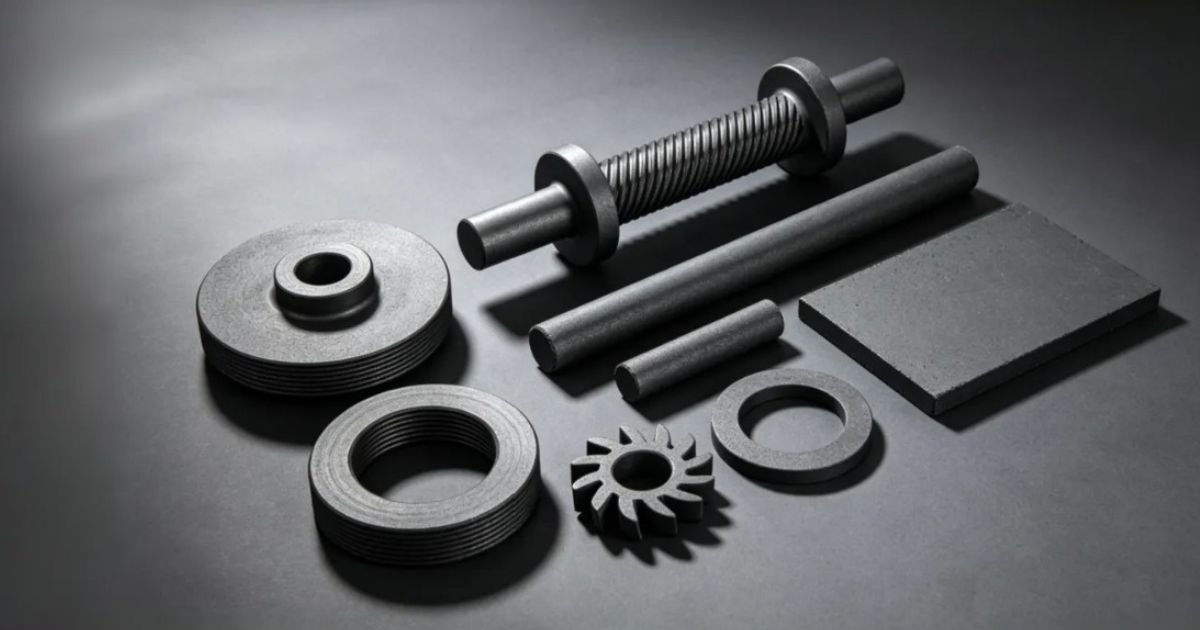
First, identify the required grade and form. Determine whether the application needs powder, an electrode, a block, a rod, or a custom-machined component.
Next, request a technical data sheet. Depending on the application, relevant details may include carbon content, ash content, density, particle size, electrical resistivity, mechanical strength, or dimensional tolerances.
Ask whether the supplier can maintain consistency across repeat orders. For production environments, batch traceability and documented inspection procedures can be valuable.
Also compare minimum order quantities, delivery schedules, packaging, technical support, and total cost. The lowest initial price may not provide the best value if the material creates processing difficulties or requires frequent replacement.
The Role of Quality Control
Industrial graphite products must meet the requirements of their intended applications. Quality control may include raw material inspection, process monitoring, finished-product testing, and dimensional verification.
Powder products may need particle-size analysis and impurity checks. Machined components may require dimensional reports, while electrodes may be evaluated against specified electrical and mechanical properties.
The appropriate tests depend on the product. Buyers should agree on critical specifications before production and clarify how any deviations will be handled.
For demanding applications, sample testing under realistic operating conditions can help verify that the selected grade performs as expected.
Storage and Handling
Graphite products should be handled and stored according to their form and application. Blocks and machined parts can chip or crack if dropped, while powders may require sealed packaging to limit contamination and dust release.
Follow the supplier’s instructions for storage conditions and workplace handling. Industrial dust controls may be necessary when opening, transferring, or machining graphite materials.
For high-purity applications, use appropriate packaging and handling procedures to prevent contamination before installation.
Frequently Asked Questions
What industries use graphite products?
Graphite is used in steelmaking, metallurgy, foundries, battery manufacturing, electrical equipment, lubrication, and specialized industrial engineering.
Can one graphite grade be used for every application?
No. Different applications require different combinations of purity, conductivity, density, strength, particle size, and thermal performance.
Is synthetic graphite always better than natural graphite?
No. Each material has advantages depending on the application. Buyers should compare technical specifications, cost, and processing requirements.
How can industrial buyers verify graphite quality?
Request technical data sheets, relevant test reports, batch information, and samples when appropriate. Test the material against the requirements of the actual process.
Conclusion
Graphite supports many industrial processes because of its useful thermal, electrical, and lubricating properties. However, performance depends on selecting the correct grade and form for each application.
A graphite manufacturer can help buyers identify suitable products, explain material specifications, and provide customized solutions where needed. Clear requirements, reliable quality checks, and realistic operating tests help businesses make better sourcing decisions.
Disclaimer: This article is for general informational purposes only and does not constitute professional, technical, or engineering advice. Graphite grades, properties, specifications, and performance vary by manufacturing process, source, and application, and may change without notice. Suitability for a specific use—including high-temperature, electrical, battery, or contact-sensitive applications—must be verified through appropriate technical documentation, testing, and consultation with qualified engineers or materials specialists. Graphite dust and handling may require workplace safety controls. Readers should confirm all specifications, safety requirements, and quality documentation directly with the manufacturer before purchasing. Any mention of specific applications or products does not imply endorsement. The author and publisher disclaim any liability for decisions made based on this content.
Fuel your curiosity and never stop learning—our knowledge hubs bring you fresh ideas worth exploring.