Protecting the outside of a property is a different challenge than covering an indoor room. Rain, direct sun, temperature swings, and curious wildlife all test equipment in ways that never come up indoors. Homeowners who want reliable coverage of driveways, side yards, and entry points need to think beyond resolution numbers and consider how a camera will actually hold up outside, day after day, season after season.
Small business owners face a similar problem on a larger scale. A loading dock, a parking area, or a storefront exterior each has its own lighting conditions and its own blind spots. Choosing outdoor video surveillance cameras that match the specific layout of a space, rather than picking whatever is popular, makes the difference between footage that actually helps and footage that just exists.
This guide walks through the practical factors that matter most when selecting exterior cameras, from weather resistance to placement strategy, so the final setup does its job without constant troubleshooting.
Weatherproofing Is Not Optional
Any camera marketed for outdoor use should carry a clear ingress protection rating, and it’s worth checking that rating rather than trusting the word “outdoor” on a box. A camera sitting under a covered porch faces different conditions than one mounted on an open fence line exposed to wind-driven rain. For fully exposed locations, look for housings rated to handle direct water contact and a wide operating temperature range, since a camera that freezes up in winter or overheats in summer stops being useful exactly when it’s needed most.
Sun exposure deserves its own consideration too. Plastic housings can fade, warp, or develop hairline cracks after a couple of years in direct sunlight, which eventually lets moisture in. A well-built exterior camera uses UV-resistant materials and sealed cable entry points, both details that rarely show up in a spec sheet but show up quickly in performance.
Cable Management and Power Considerations
Even weatherproof cameras can fail early if the power connection isn’t protected. Exposed cable junctions are a common point of water intrusion, so routing cables through conduit or using weatherproof connectors at every joint matters as much as the camera housing itself. For anyone choosing between wired and battery-powered options, it helps to map out how far the mounting point is from a power source before committing, since long cable runs add both cost and points of potential failure.
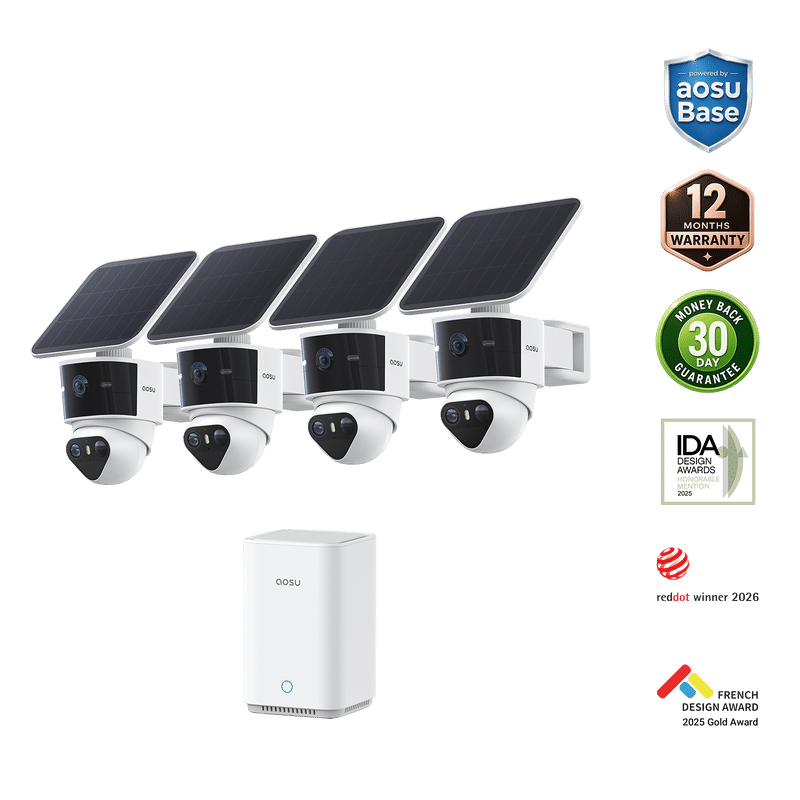
Brands like outdoor video surveillance cameras from AOSU are built specifically around these exterior demands, which is worth keeping in mind when comparing units that look similar on paper but differ in how their housings and seals are engineered.
Night Vision That Actually Performs
Most break-ins and package thefts happen after dark, which makes night performance one of the most important factors in any outdoor setup. Infrared night vision is standard, but the effective range varies widely between models, and a camera that claims a generous range in marketing material may only produce usable detail at half that distance. Where possible, look at sample night footage rather than relying on stated specs alone.
Color night vision, which uses a combination of low-light sensors and supplemental lighting, has become more common and offers a real advantage for identifying details like clothing color or vehicle color that black-and-white infrared simply can’t capture. For driveways and street-facing areas where identifying a person or vehicle matters, this feature is worth prioritizing over a slightly higher megapixel count.
Motion Detection Accuracy
Outdoor motion detection has to deal with wind-blown branches, passing cars, and neighborhood animals, all of which can trigger false alerts if the system isn’t tuned well. Cameras with person or vehicle detection, rather than generic motion sensing, cut down dramatically on notification fatigue. This matters practically because a system that sends dozens of irrelevant alerts a day quickly gets ignored, defeating the purpose of having it in the first place.
Placement Strategy Matters More Than Camera Count
It’s tempting to assume more cameras automatically means better coverage, but poor placement undermines even the best equipment. Entry points deserve priority: front doors, back doors, and any ground-level windows should be covered before adding cameras to less critical areas. Mounting height also affects both coverage and vandalism resistance, since cameras placed too low are easier to tamper with, while cameras placed too high can lose facial detail.
Overlapping fields of view at key chokepoints, like a single driveway or side gate that anyone approaching the house must pass through, gives more useful coverage than scattering cameras evenly across a property. For businesses, this same logic applies to loading areas and employee entrances, where consistent traffic patterns make optimal placement easier to identify.
Working With Existing Lighting
Motion-activated floodlights paired with a camera can improve both deterrence and image quality, since additional light reduces the reliance on infrared alone. When planning camera placement, it helps to walk the property at night to see where existing lighting creates strong shadows or glare, both of which can interfere with clear footage regardless of how capable the camera itself is.
Storage and Ongoing Reliability
Local storage options like a memory card offer footage access even during an internet outage, while cloud storage protects footage if a camera is stolen or damaged. Many households end up using a mix of both for redundancy. Beyond storage, checking how a manufacturer handles firmware updates gives a good signal of long-term reliability, since outdoor cameras that go without updates for years are more likely to develop both security gaps and performance issues over time.
Building Coverage That Holds Up Outside
Choosing the right outdoor surveillance setup comes down to matching equipment to the specific conditions of a property rather than chasing the highest spec numbers available. Weatherproofing, night performance, smart motion detection, and thoughtful placement all matter more than raw camera count. A smaller number of well-placed, well-built cameras consistently outperforms a larger number of poorly positioned ones.
Taking the time to walk the property, identify real entry points and chokepoints, and verify weather ratings before buying saves both money and frustration down the line. The goal isn’t just recording footage, it’s having a system that keeps working reliably through every season without demanding constant attention.