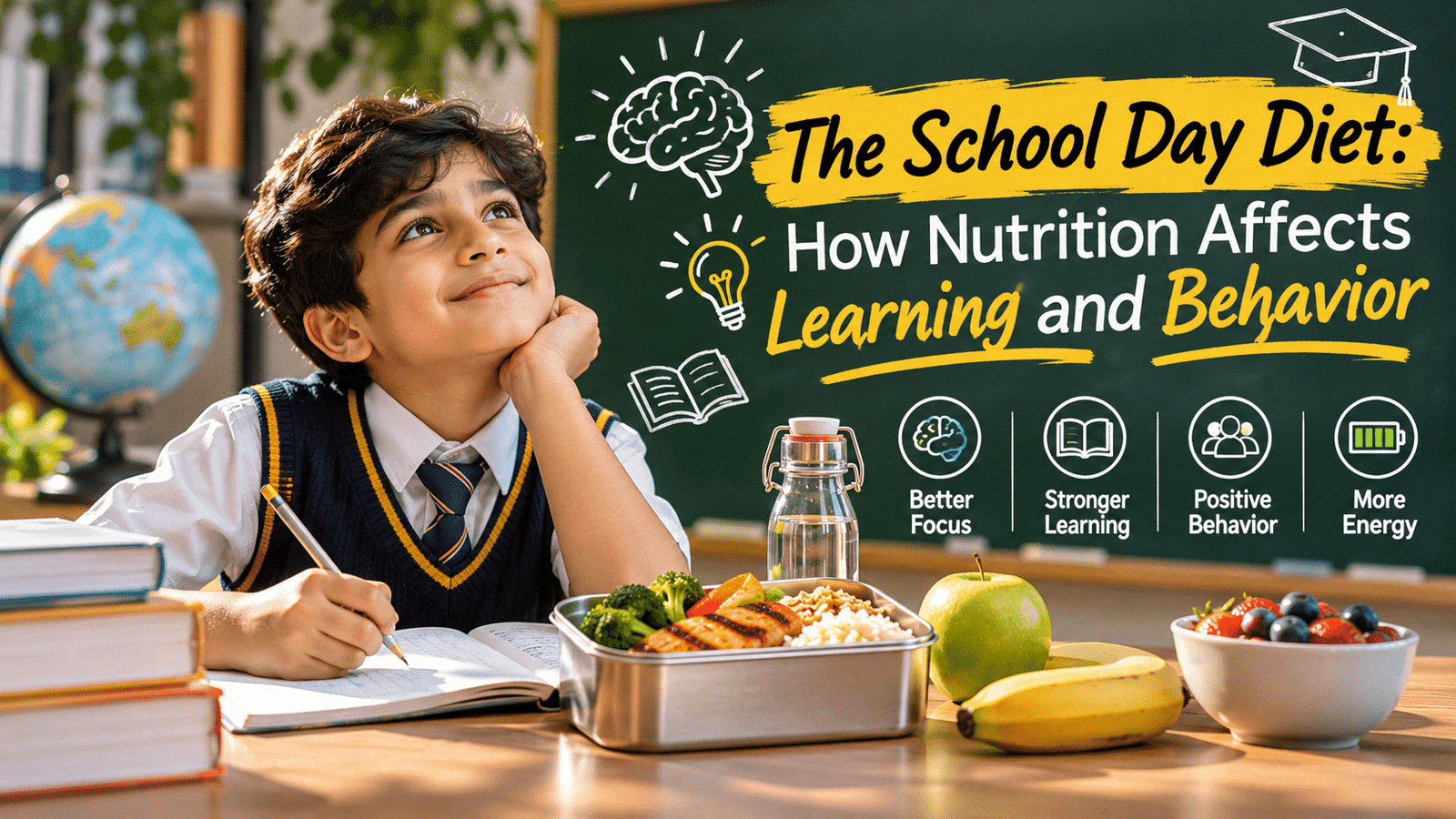
The brain uses roughly 20% of the body’s energy while making up only about 2% of its weight, so what a child eats directly shapes how well they think. A 2022 review in Frontiers in Neuroscience linked diets high in refined sugar and low in micronutrients with weaker working memory and slower processing speed in children. This is why school education researchers increasingly treat nutrition as an academic variable, not only a health one. The effect is especially visible around middle school, when rapid growth and busier schedules often push proper meals aside.
Blood sugar is the key mechanism. Sugary snacks cause a fast glucose spike followed by a crash, and that crash is associated with irritability, shorter attention spans, and weaker emotional regulation. Lower glycemic index foods release glucose gradually, supporting steadier mood and focus across lesson blocks. This matters because UK National Diet and Nutrition Survey data show that children aged 4 to 10 still get about 13% of their energy from free sugars, against a recommended maximum of 5%. Teachers often notice behavioral dips shortly after sugary break-time snacks, which fits this pattern closely.
School Meals and the Breakfast Effect
Meal quality matters at whole-school level too. A study in the Journal of School Health found that pupils in schools with improved lunch nutrition standards achieved higher standardized test scores, even after controlling for socioeconomic factors. Hunger itself also plays a role, since pupils who arrive hungry spend more mental effort on discomfort than on the lesson. Breakfast shows an even clearer effect: an Education Endowment Foundation trial of breakfast clubs in England found that pupils made roughly two months of additional progress in reading, writing, and maths. A well-run private school breakfast programme can therefore function as an academic intervention, not just a convenience.
The pattern across breakfast types is consistent:
| Breakfast Type | Energy Pattern | Likely Classroom Effect |
| Skipped | Low, unstable | Reduced attention, early fatigue |
| High-sugar | Spike, then crash | Brief focus, mid-morning dip |
| Protein + complex carbs | Gradual, sustained | Steady focus through late morning |
Practical Lunchbox Strategies Based on Research
Translating this research into daily practice does not require a dietary overhaul. Nutritionists generally recommend pairing protein with fibre, which slows glucose absorption and extends steady energy through the afternoon. Many schools, Trinity School among them, now design menus around these combinations rather than convenience alone. Appealing lunches are also more likely to be eaten, which matters because an uneaten healthy lunch delivers no benefit. Families can apply the same logic when packing lunches:
- Pair carbohydrates with protein, such as fruit with nut butter or yogurt
- Choose whole grains over refined options to slow glucose release
- Keep high-sugar snacks to small portions rather than banning them
- Include water, since mild dehydration also impairs concentration
- Rotate options weekly to avoid nutrient gaps
These adjustments work best as gradual habit-building rather than strict rules, since children are more likely to keep eating patterns they helped choose. Involving them in shopping and packing builds food literacy alongside better focus. It also helps to remember that lunch is only one part of the picture: consistent sleep, hydration, and regular meal timing all interact with what is eaten, so a balanced lunchbox cannot fully offset a skipped breakfast or a very late night. Schools can reinforce the same message by scheduling snack breaks sensibly, offering water access in every classroom, and communicating clearly with parents about nutrition. Ultimately, the evidence suggests nutrition is a foundational input to learning alongside sleep and teaching quality, and a private school or any institution that treats the school day diet as part of its academic strategy gives pupils a real, low-cost advantage in how they think, focus, and behave. Strong school education depends on well-fed minds.