AI is writing more code than ever before, not just autocompleting lines, but planning features, running tests, and opening pull requests on its own. For students, junior developers, and engineering leaders alike, understanding what these tools actually do (and where they still need a human) has become a core professional skill rather than a nice-to-have. This guide breaks down how AI coding assistants work, where they genuinely help, where they fall short, and how to build them into a responsible, productive workflow in 2026.
What Is an AI Coding Assistant?
An AI coding assistant is a tool built on a large language model (LLM) that helps developers write, review, debug, or explain code using natural language. Instead of typing every line manually, a developer can describe an outcome, “add input validation to this form”, and the assistant proposes or directly makes the change.
How it works, at a basic level, involves a few layered components:
- LLMs trained on vast amounts of code and documentation generate the actual suggestions
- Context – your open files, repository structure, and instructions – shapes what the model produces
- IDE or terminal integration lets the assistant read and edit files directly, rather than living in a separate chat window
- Documentation grounding helps the model reference real APIs and libraries instead of guessing
- Code generation is the final output: a completion, a diff, a new file, or an entire pull request
The category has moved well past simple autocomplete. Many tools can now plan a task, execute it across multiple files, run the project’s test suite, and only then hand the result back for human review.
Why AI Coding Is Growing So Fast
Adoption has accelerated because the tools have shifted from “helpful suggestion” to genuinely agentic behavior. GitHub’s Copilot, for example, now spans a cloud agent that runs inside a sandboxed environment, pushes commits to a draft pull request, runs tests, and requests review once finished, all without the developer needing to be at their desk. That kind of asynchronous, “assign it like a ticket” workflow was science fiction two years ago; today it’s a standard feature tier.
Enterprise adoption is following the same curve. Platforms are increasingly positioning themselves as orchestration layers rather than single-model products; GitHub’s Agent HQ, for instance, coordinates agents from multiple AI labs across the IDE, CLI, and mobile under one subscription, reflecting how central these tools have become to everyday engineering work rather than a side experiment.
Benefits of AI Coding Assistants
- Faster development– boilerplate, CRUD scaffolding, and repetitive patterns can be generated in seconds
- Better documentation – assistants can draft docstrings, README sections, and API references from existing code
- Debugging support – pasting an error and stack trace often produces a plausible root cause and fix
- Test generation – unit tests for existing functions can be scaffolded quickly, though coverage still needs human judgment
- Learning new frameworks – assistants can explain unfamiliar syntax or conventions in context, which is especially useful for students and career-switchers
- Code explanation – walking through legacy or unfamiliar code becomes far less intimidating with an assistant summarizing intent
Where AI Still Falls Short
None of this makes AI a replacement for engineering judgment. Common failure points include:
- Hallucinations – confidently inventing functions, parameters, or libraries that don’t exist
- Security issues – generated code can introduce injection vulnerabilities, weak auth patterns, or insecure defaults if not reviewed
- Context limitations – even large context windows can miss cross-service dependencies in sprawling systems
- Architecture decisions – assistants are better at implementing a plan than originating one; system design still needs a human lead
- Legacy systems – undocumented, decades-old codebases remain a weak spot for pattern-matching models
- Compliance – regulated industries (healthcare, finance) require review processes AI cannot substitute for
The AI Coding Workflow Every Developer Should Follow
- Plan – describe the feature or fix in plain language before generating anything
- Generate – let the assistant produce a first draft, whether that’s a function, a file, or a multi-file change
- Review – read every line; treat AI output like a pull request from a fast but occasionally careless teammate
- Test – run existing tests and add new ones, ideally with the assistant’s help
- Deploy – ship with normal CI/CD safeguards; AI-generated code should not skip review gates
Best Use Cases
AI assistants tend to perform best on well-scoped, pattern-heavy work:
- Building REST or GraphQL APIs
- Frontend components and UI scaffolding
- Documentation generation
- Unit test creation
- Code refactoring within a single service
- SQL query generation
- Automation and glue scripts
- Learning a new programming language by example
Best AI Coding Tools in 2026
The market has diversified well beyond “chatbot vs. autocomplete.” Here’s how the major players compare today:
| Tool | Best For | Notable 2026 Capability |
| ChatGPT / Codex | Intent-driven, single-file tasks | Codex CLI runs on GPT-5-Codex and is strongest at understanding developer intent and matching existing code patterns |
| GitHub Copilot | Teams standardized on GitHub/VS Code | Copilot CLI reached general availability in February 2026, adding a Plan mode, a fully autonomous Autopilot mode, and parallel specialized sub-agents |
| Claude (Claude Code) | Complex, multi-file refactoring and deep reasoning | Claude Code leads on complex multi-file refactoring, using agentic search so the model decides which files to read |
| Gemini CLI / Antigravity | Massive codebases, large context needs | Gemini’s standout feature is its 1-million-token context window, letting it hold most of a monorepo in context at once |
| Cursor | Developers who want AI woven into a full IDE | Cursor in 2026 is a VS Code fork with Tab as one of the best autocomplete implementations in the industry, plus Agent mode with Plan Mode and Checkpoints |
| Windsurf | Greenfield projects and rapid prototyping | Windsurf has matured into a genuine Cursor alternative with over 1 million users, offering broad model selection including Claude, GPT, and Gemini variants |
The honest takeaway: there’s no single “best” tool anymore. Teams increasingly mix an IDE-native assistant for daily coding with a terminal-based agent for larger, less-supervised tasks, the same way most developers already carry more than one tool in their stack.
Common Mistakes Developers Make
- Copy-pasting AI code without reading it line by line
- Ignoring security implications of generated auth, database, or input-handling logic
- Skipping tests because the code “looks right”
- Poor prompts, vague requests produce vague, often wrong, results
- No documentation, assuming AI-generated code is self-explanatory for future maintainers
Future of AI Software Engineering
Three trends are shaping where this goes next:
- AI agents are moving from single-task helpers to long-running, semi-autonomous collaborators that own a task from spec to verified output
- Context engineering, carefully structuring project instructions, memory files, and documentation, is becoming as important as prompt writing itself
- Multi-agent coding, where specialized sub-agents handle planning, implementation, and review separately, is starting to replace single-model workflows
- Human + AI collaboration remains the throughline: the tools are getting more autonomous, but review, architecture, and accountability still sit with the developer
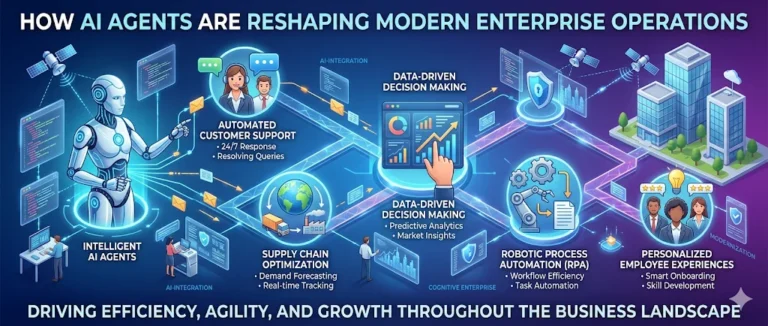
Businesses exploring this shift are already deploying dozens of specialized agents across their operations, a trend worth understanding in more depth if you’re evaluating how AI technologies fit your own roadmap.
Conclusion
AI coding assistants have moved from novelty to infrastructure. They speed up boilerplate, documentation, and debugging, and are increasingly capable of handling entire tasks with limited supervision. But they don’t remove the need for engineering judgment; security review, architectural decisions, and testing remain firmly human responsibilities. The developers getting the most value in 2026 are the ones treating AI as a fast, occasionally fallible collaborator, not an autopilot. Used well, with a clear plan-generate-review-test-deploy discipline, these tools free up time for the work that still genuinely needs a human mind.
Disclaimer: The information provided in this article is for general informational and educational purposes only. It does not constitute professional software development, security, or career advice. AI tools and their capabilities evolve rapidly; readers should test them in their own environments and review all generated code carefully. The author and publisher disclaim all liability for any errors, security vulnerabilities, or other consequences arising from reliance on AI-generated content. Always follow your team’s coding standards and review processes. This article does not endorse any specific tool or platform.
Explore fresh content that brings value—start reading and feel your soul breathe again.