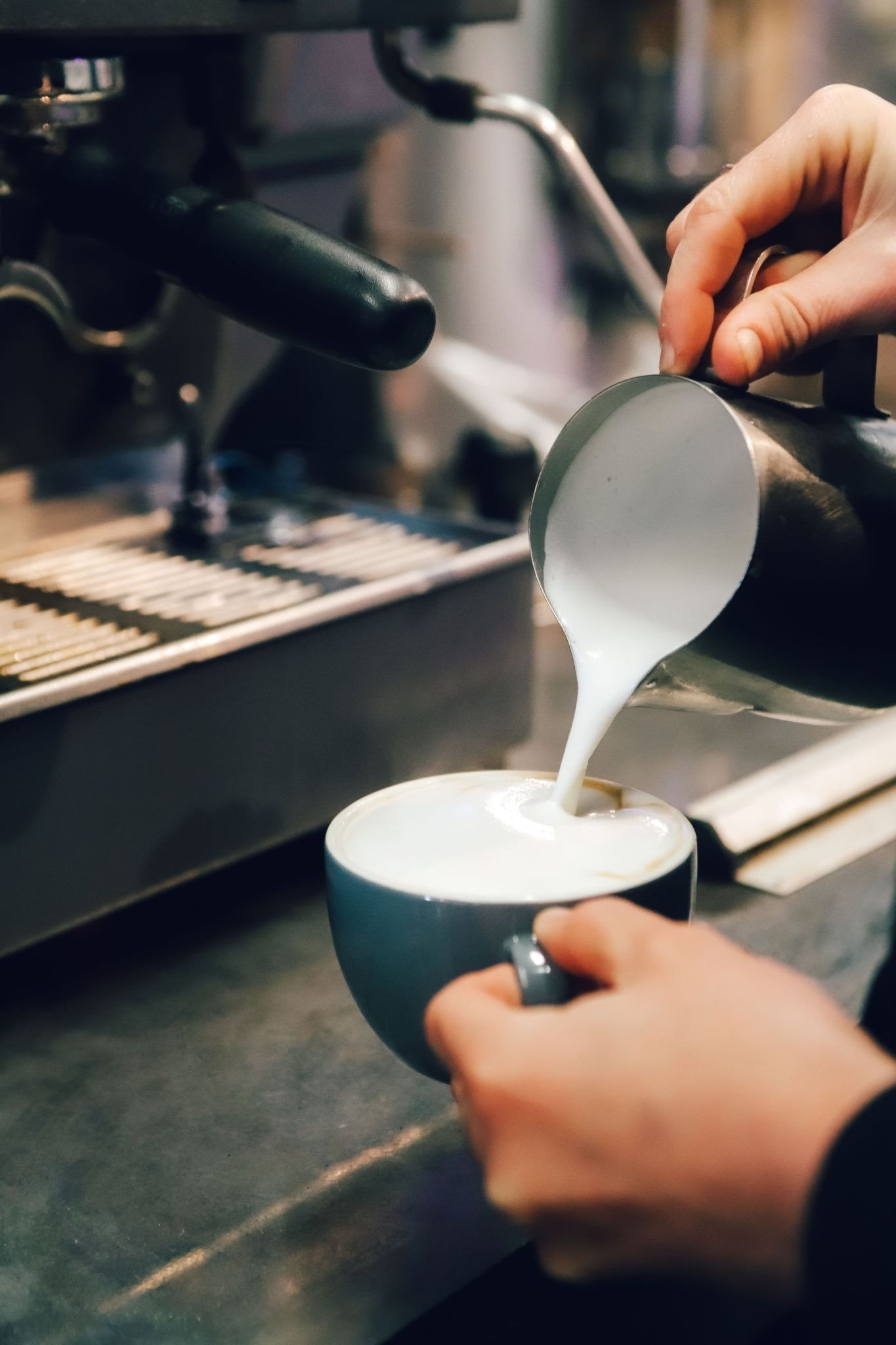
Home baristas chase one thing above all else: milk that pours like liquid velvet. The surface stays glossy. Tiny bubbles stay suspended instead of rising into a stiff white cap. That texture turns a plain shot into a latte, a flat white, or a cappuccino that holds a simple heart or tulip. Most people try cheap whisks first. They get big bubbles that collapse in seconds. They heat milk on the stove and guess the temperature. The result tastes flat or scalded. Real microfoam needs the right shear, the right temperature window, and a tool that keeps the vortex stable. The search for the best milk steamers for home baristas comes down to those details.
Discover the precision milk tools built for glossy, pourable microfoam that rivals a café steam wand.
What Actually Defines a Great Milk Steamer
Microfoam quality sits at the center. True microfoam looks like wet paint. The bubbles measure in microns. Proteins (casein and whey) stretch around each one and hold the structure. Fat adds the silky mouthfeel. Whole milk at about 3.5 percent fat still foams best for most home baristas when the temperature stays controlled. Oat “barista” blends perform well too because of added proteins and oils. Almond and soy need more practice or the right flow settings.
Temperature decides both taste and stability. Baristas and food scientists point to 55–65 °C (131–149 °F) as the sweet spot for dairy milk. In that range the lactose tastes sweeter and the foam stays stable for the minutes it takes to drink a cup. Push past 70 °C and whey proteins start to denature. The foam collapses faster and a cooked note appears. Studies on steam-frothed milk show the best bubble distribution and stability often land near 50–60 °C for pasteurized whole milk. Automatic units that stop inside that window remove the guesswork.
Other practical factors matter just as much. Capacity should match real drinks,enough for one large latte or two small ones without wasting milk. Cleaning must be fast. Non-stick or ceramic interiors help, but so do designs that rinse clean under running water. Noise, counter space, and whether the tool heats while it foams all affect daily use. A unit that forces a separate heating step adds time. One that finishes in one to two minutes keeps the morning moving.
Types of Milk Steamers Home Baristas Actually Use
Automatic countertop steamers heat and texture at the same time. Many use a magnetic impeller that spins at high speed inside a sealed jug. The impeller shears the milk instead of simply whipping large air pockets. One standout in this category uses a patented magnetic drive that reaches up to 8,000 RPM, paired with interchangeable flow controllers tuned for dairy or plant milks. Programs adjust aeration time and heat so a 100 ml drink gets fine foam while a larger pour gets more volume. Capacity sits in the 100–220 ml range. Final temperatures stay within a precise band that tops out near 70 °C. The jug stays splash-resistant (IPX-5 on newer versions), and the base uses a sealed connector. Owners get consistent results without learning wand technique.
Handheld foamers work differently. They need milk already warmed to roughly 55–65 °C. A high-RPM motor spins a screen or impeller that cuts bubbles down to microfoam size. Models built around a fine NanoScreen produce glossy, paint-like texture that pours latte art. They stay portable, run on USB-C or batteries, and clean with a quick rinse. They suit people who already own a simple espresso maker or Moka pot and just need better milk. They also make excellent cold foam for iced drinks.
Steam wands on full espresso machines still deliver the highest control once the user masters the technique. The learning curve runs longer, and the machine itself costs more. For many home setups the separate steamer or foamer solves the problem faster.
Key Factors When Choosing the Best Milk Steamer
Start with the drinks people actually make. A household that wants one large flat white every morning needs different capacity than one that makes two small cappuccinos. Check the temperature range. Units that lock into 55–65 °C (or let the user stop there) protect flavor. Look at how the tool handles plant milks. Dedicated flow controllers or speed settings make a real difference.
Ease of cleaning ranks high in real-world use. Milk residue turns hard fast. Designs with removable lids, magnetic impellers, and brush access win. Check warranty and spare parts availability. A tool that can be repaired or upgraded lasts longer.
Here is a quick comparison of practical specs home baristas weigh most:
| Feature | Automatic Magnetic Impeller Units | Handheld Screen Foamers | Basic Whisk Frothers |
| Heats milk | Yes, simultaneous | No (pre-heat required) | No |
| Microfoam quality | Fine, glossy, pourable | Fine with proper screen | Coarse, large bubbles |
| Typical capacity | 100–300 ml | Jug size limited by hand | Small |
| Time per drink | 1–2 minutes | 10–30 seconds after heating | 20–40 seconds |
| Plant milk performance | Good with flow controllers | Good with practice | Variable |
| Best for | Daily hands-free use, latte art | Portability, existing setup | Occasional foam |
The table shows why many home baristas move past basic whisks. The jump in bubble size and stability changes the drink.
How to Get Café Texture at Home
Cold milk from the fridge starts best. Warm it slowly if using a handheld tool. Stop when the jug feels hot but still holdable. For automatic units, fill only to the marked lines. Overfilling kills the vortex. Whole milk or a barista oat blend gives the most forgiving results while learning.
After foaming, swirl the jug once and tap it lightly on the counter. That folds any large bubbles back in. Pour right away. Microfoam begins to separate within a few minutes. For iced drinks, use the cold setting or a handheld tool on refrigerated milk. The foam stays thicker and sits nicely on top.
Clean immediately. Rinse the impeller or screen under warm water while it still spins if the design allows. A weekly soak with a little vinegar or milk cleaner keeps scale and residue away. Hard water areas need more frequent descaling.
Best Milk Steamers for Home Baristas in 2026
| Rank | Brand / Model | Detailed Description |
| 1 | Subminimal NanoFoamer PRO | The Subminimal NanoFoamer PRO functions as an automatic microfoam generator built for home baristas who want glossy, paint-like milk without a traditional steam wand. A contactless magnetic impeller reaches high rotational speeds and works with a NanoScreen mesh to shear milk into ultra-fine bubbles, producing stable texture suitable for latte art. Five program modes pair precise temperature targets with aeration levels, while interchangeable flow controllers adapt the vortex for dairy or plant-based milks such as oat and almond. An adjustable impeller height, thick heat diffuser, and IPX-5 splash-resistant construction support even heating and straightforward rinsing. Users obtain repeatable results across drink sizes with minimal technique, and the compact footprint fits typical kitchen counters alongside an espresso setup or pour-over station. |
| 2 | Breville Milk Café BMF600XL | The Breville Milk Café employs induction heating across a stainless-steel jug to create even temperature distribution without scalding. A dial selects from cold-stir through warm, optimum, and hot settings, while two interchangeable frothing discs produce distinct textures: a finer pourable foam for lattes and a denser head for cappuccinos. Capacity reaches roughly 500 ml for frothing and higher for heating alone, supporting multiple servings. The jug, lid, and discs are dishwasher-safe, and an automatic shut-off plus measuring cap simplify operation and hot-chocolate preparation. Home baristas appreciate the control over both temperature and foam density, yielding reliable microfoam that integrates well with espresso for consistent café-style drinks. |
| 3 | Nespresso Aeroccino 4 | The Nespresso Aeroccino 4 provides four dedicated modes covering cold foam, hot milk without foam, airy hot foam, and denser hot foam. A single whisk remains in place, and the ceramic-coated jug with handle and pour spout improves pouring control compared with earlier models. Heating reaches the typical 60–70 °C range in about a minute, with automatic shut-off. The jug, lid, and whisk are dishwasher-safe up to a moderate temperature limit, reducing daily cleanup. Compact dimensions suit small counters, and the unit works independently of any Nespresso machine. It delivers reliable everyday foam for lattes, cappuccinos, and iced drinks with minimal user intervention. |
| 4 | SIMPLETASTE 4-in-1 Milk Frother | The SIMPLETASTE 4-in-1 offers preset modes for thick foam, light foam, cold foam, and heat-only operation inside a stainless-steel jug with non-stick interior. Auto shut-off and clear capacity markings support single-serve or modest multi-drink batches. The design emphasizes quick cycles and easy rinsing of the whisk and jug. Home baristas find the foam consistent across dairy and many plant milks, with sufficient body for basic latte art after a brief rest. Its straightforward button interface and compact footprint make it practical for daily use alongside any espresso method that lacks a powerful steam wand. |
| 5 | Maestri House DualFro 600 | The Maestri House DualFro 600 provides variable temperature settings and multiple froth-thickness levels in a roughly 600 ml jug. Touch controls and a memory function allow users to store preferred combinations for repeated drinks. Induction-style heating and a magnetic drive whisk produce even results, while dishwasher-safe components simplify maintenance. The larger capacity suits households preparing several beverages in one cycle. Texture remains adjustable enough for both silky lattes and denser cappuccino foam, and the unit handles common plant-based milks with reasonable consistency for home barista routines. |
| 6 | DREO Milk Frother | The DREO unit focuses on fine microfoam through a specialized impeller and mesh system that targets very small bubble sizes. Multiple speed and temperature options, including presets for different drink styles, appear on a digital interface. The stainless construction and magnetic drive support even heating and straightforward rinsing. Users report glossy, stable foam suitable for pours, with good performance on both dairy and barista-style oat milk. The design balances automation with enough adjustability for home baristas refining texture without full manual steam-wand technique. |
| 7 | Secura Automatic Milk Frother | The Secura Automatic model delivers one-touch operation for hot foam, hot milk, and cold foam in a stainless-steel jug with non-stick coating. Capacity typically covers a single generous serving or two smaller ones. Auto shut-off and a quiet motor support quick morning routines. Foam quality is reliable for everyday cappuccinos and lattes, though less specialized for advanced latte art than induction or mesh-focused units. Cleaning is simple with a removable whisk and dishwasher-safe parts, making it a practical secondary tool for home baristas who already own an espresso machine. |
| 8 | Instant Pot 4-in-1 Milk Frother | The Instant Pot 4-in-1 combines heating and frothing modes in a compact jug with WhisperQuiet operation and dishwasher-safe components. Presets cover thick foam, light foam, cold foam, and plain heating. The non-stick interior and auto shut-off reduce supervision. Capacity supports single or dual servings, and the foam holds reasonably well for basic drinks. Home baristas appreciate the familiar brand reliability and straightforward controls when they need consistent heated milk without dedicating significant counter space or learning a steam wand. |
| 9 | PSIIDAN 4-in-1 Large Capacity | The PSIIDAN model emphasizes higher volume, often approaching 900 ml, with four modes for foam density and temperature. An LED touch interface and stainless construction support larger batches for multiple drinks. Non-stick coating and auto shut-off aid cleanup and safety. Foam remains usable for lattes and cappuccinos across dairy and plant milks, though texture is more serviceable than ultra-fine microfoam. It suits home baristas preparing for guests or households that consume several milk-based coffees in quick succession. |
| 10 | Smeg Milk Frother | The Smeg Milk Frother pairs retro-styled housing with induction heating and multiple foam programs in a stainless jug. Modes typically include hot foam, hot milk, and cold foam, with automatic shut-off. The design prioritizes aesthetics alongside functional whisk action and non-stick surfaces for easier cleaning. Capacity covers standard single or dual servings. Home baristas who value countertop appearance receive consistent everyday foam suitable for lattes and cappuccinos, with the unit operating independently of any espresso machine. |
| 11 | Bodum Bistro Electric Milk Frother | The Bodum Bistro features a glass body with stainless accents and offers hot and cold foam modes plus plain heating. Auto shut-off and a removable whisk simplify use and cleaning. Capacity is modest, suited to single servings. Foam quality is adequate for casual cappuccinos and lattes, with the transparent jug allowing visual monitoring of volume and texture. It appeals to home baristas seeking a compact, stylish option that pairs with any coffee method and requires minimal storage space. |
| 12 | Zulay Kitchen Milk Boss Handheld | The Zulay Kitchen Milk Boss is a battery-powered handheld wand with a high-RPM stainless whisk that creates foam in under 30 seconds once milk is pre-heated. A included stand keeps it upright, and the design works with both dairy and many plant milks. It does not heat milk itself, so users warm liquid separately on the stove or in a microwave. Foam is thicker than basic battery whisks yet less refined than dedicated microfoam systems. Home baristas use it as a portable backup or travel tool when counter space is limited or a full steamer is unavailable. |