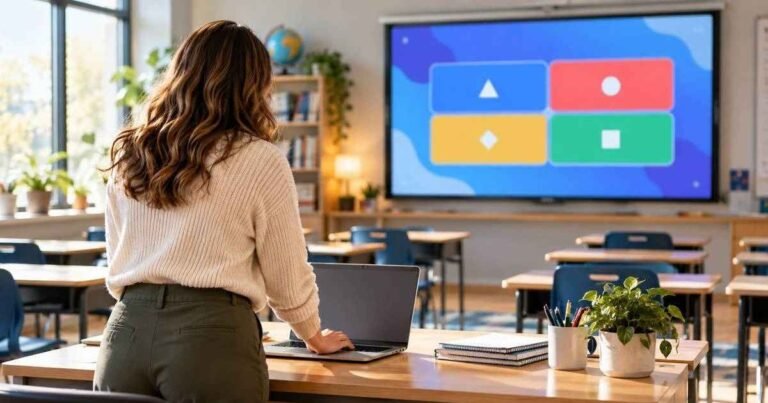
After a loud, fast Blooket round, the room is buzzing. Kids are still arguing about who stole whose tokens, the teacher’s voice is a little hoarse, and nobody is quite ready to open a textbook. That energy is exactly why game-based learning works. It’s also why it leaves a recovery cost that most lesson plans ignore.
Students, teachers, and parents running game night at home all hit the same wall. High engagement is tiring. The best complement to a competitive quiz session isn’t another screen or another game; it’s a quiet, structured creative break that lets everyone come down at their own pace and get ready to focus again.
Why Game-Based Learning Works, and Why Students Need a Wind-Down
Think of a teacher who runs a Friday review game and then watches half the class stay wound up for the next twenty minutes. A calm hobby station can fix that, and one easy option is a paint by numbers kit from a paint by numbers website that sells canvases with numbered sections and matching paints. No drawing skill is needed, and nobody has to compete.
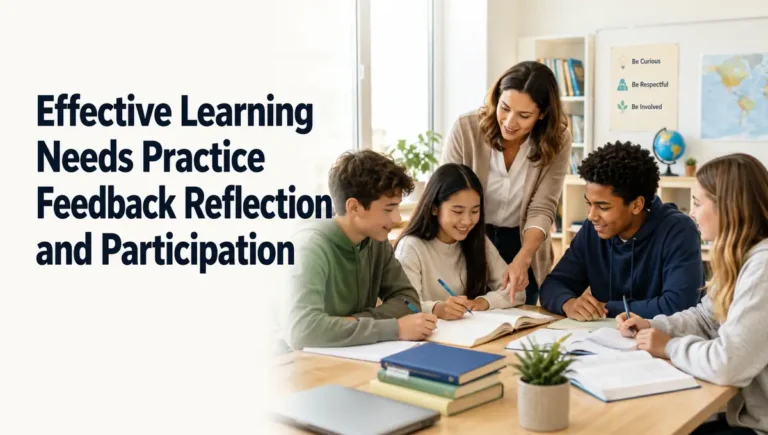
The case for the games themselves is strong. The Clever Classroom of the Future Report 2025, a survey of more than 2,500 US educators summarized by Kahoot!, found that 60% of teachers rank gamification as the most effective engagement strategy. Engaging visuals came next at 47%, followed by student choice at 40% and instant feedback at 38%.
Those numbers describe why a Blooket session feels so lively. Points, streaks, and quick feedback keep attention locked on the screen. But sustained attention at that pitch has a ceiling, and the cost shows up afterward as restlessness, short tempers, and foggy focus.
What Art Making Does for Stress and Focus
The research on creative breaks is modest but encouraging. In a 2016 study published in Art Therapy, Girija Kaimal and colleagues at Drexel University had 39 adults make art for 45 minutes. Cortisol, a stress-linked hormone, dropped in 75% of participants, according to Drexel’s summary of the study. Prior art experience made no difference to the result.
Keep the limits in mind. It was a small pilot, cortisol is only a proxy for stress, and the participants weren’t students coming off a quiz game. It doesn’t prove that painting will fix a rowdy classroom. It does suggest that the benefit doesn’t depend on talent, which matters when you’re asking a room of nine-year-olds to try something new.
The same team later linked 45 minutes of art making to higher self-efficacy and more positive mood. Students who finish something with their own hands tend to walk back into the next lesson a bit steadier, and that steadiness is what you want before a reading block or a test review.
Why Paint by Numbers Fits Game-Minded Kids
Open-ended art can stall a student who’s used to clear goals. A blank page asks for a hundred decisions; a numbered canvas asks for one. Pick a number, find the matching color, fill the shape.
That loop will feel familiar to anyone who plays Blooket. There’s a visible target, a small win every few minutes, and a canvas that fills in as progress builds. The difference is that nothing is timed, nobody is ranked, and the only opponent is a stubborn patch of tiny shapes.
Decision fatigue drops too. Kids who’ve spent forty minutes choosing answers under pressure get a task where the choices are already made. For a student who struggles with open-ended art, that structure is a relief rather than a limit. Number Artist is one of several shops offering kits that suit this approach, and any beginner-friendly set with clear numbering will do the job.
Simple Ways to Work It Into Your Week
You don’t need a big plan. Small, repeatable slots work better than one-off art days.
A Classroom Reset Station
Set up one table with a few canvases for early finishers or for a Friday wind-down. If you already know how Blooket game modes work, you can pair a solo mode round with a ten-minute painting turn so the quiet activity feels like part of the reward rotation rather than a punishment.
A Family Evening Habit
After homework and a game or two, set a timer for 15 or 20 minutes and paint together. Short chunks beat a marathon, and a half-finished canvas on the table gives kids something to come back to tomorrow. Parents get the same wind-down benefit, which is half the point.
Teacher Self-Care
Hosting a live game is draining. Anyone who has seen what a typical Blooket session looks like from the host’s chair knows the juggling involved: managing the lobby, watching the leaderboard, answering “wait, what’s the code?” for the fifth time. Fifteen quiet minutes with a brush after school is a cheap, screen-free way to reset. If you want the full 45-minute dose from the Drexel study, a weekend afternoon is plenty.
Pairing Play With Quiet
Game-based learning earns its place in the classroom because it gets students excited to take part. But excitement needs somewhere to land. A structured, low-stakes creative break gives it that place, and it costs far less than most classroom tools.
Don’t treat painting as a replacement for the games. Treat it as the counterweight. A class that plays hard and then settles into a calm, focused task will probably get more out of both than a class that only ever runs at full speed.
Disclaimer: This article is for general informational and educational purposes only and does not constitute professional educational, medical, or psychological advice. The research cited—including the 2016 Art Therapy study by Kaimal et al. and the Clever Classroom of the Future Report 2025—is described in general terms and should be verified against the original sources; the cortisol study was a small pilot, cortisol is only a proxy for stress, and participants were adults rather than students. No claim is made that art-making will resolve classroom behaviour issues. Classroom activities should be adapted to student age, needs, and school policies, and any art materials used should be age-appropriate and non-toxic. Any mention of specific websites, brands, or products (including Number Artist and Blooket) does not imply endorsement. The author and publisher disclaim any liability for decisions made based on this content.
Turn your next idea into your next breakthrough—our idea-to-execution guides help you move from thinking about it to doing it.